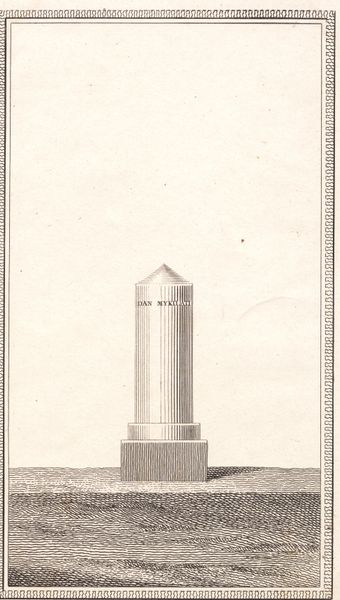
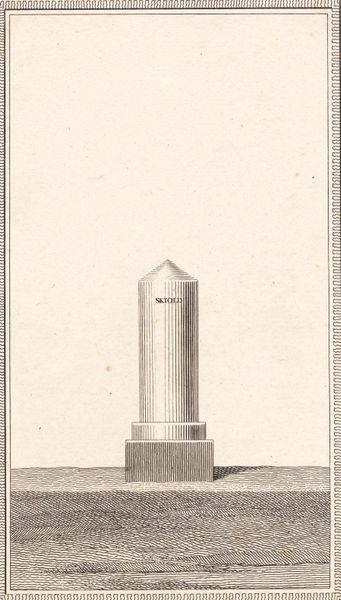
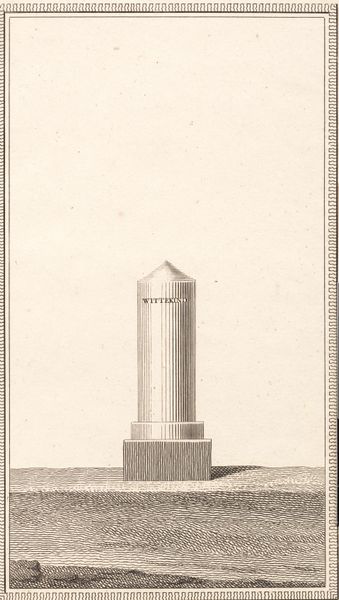
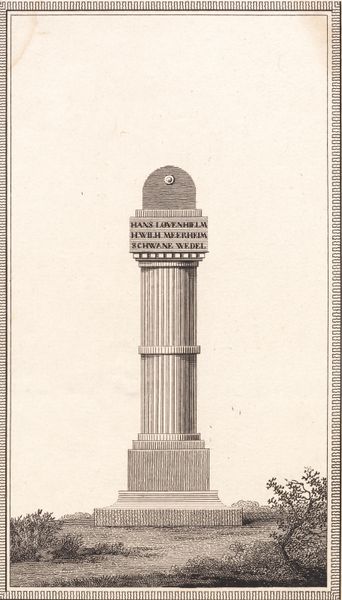
print, etching
#
aged paper
#
toned paper
#
photo restoration
# print
#
etching
#
old engraving style
#
old-timey
#
stylized text
#
19th century
#
golden font
#
historical font
#
columned text
Dimensions: 178 mm (height) x 103 mm (width) (billedmaal)
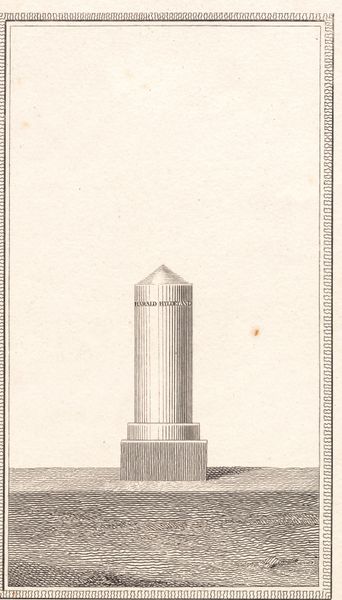
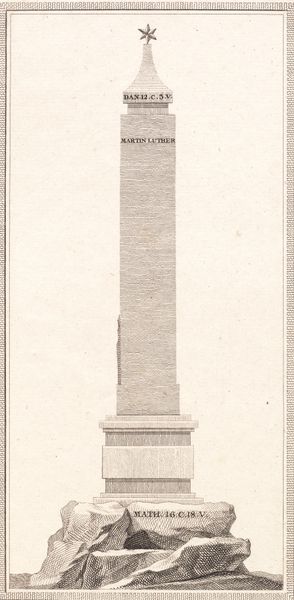
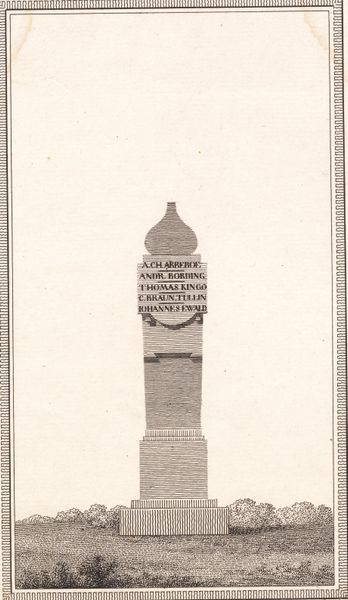
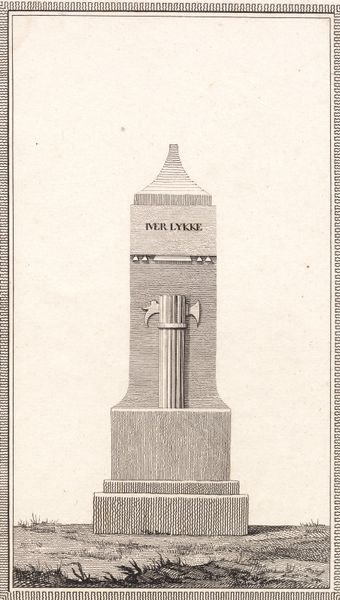
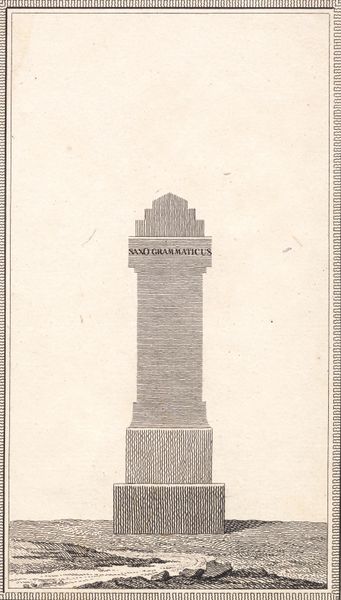
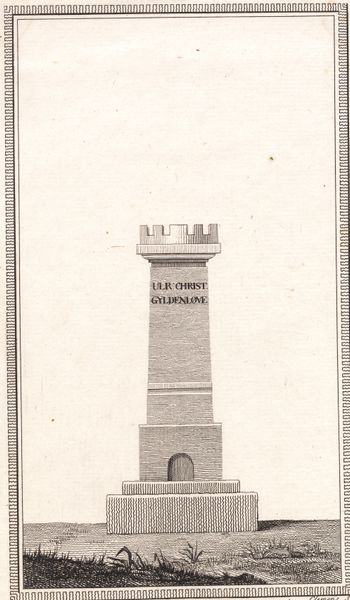
Editor: So, this etching is called "Holger Rosenkrantz," made by J.F. Clemens between 1779 and 1781. It reminds me a bit of a classical monument. What do you see in this piece, especially considering the historical context? Curator: This print presents an opportunity to examine the power dynamics embedded within commemoration. Consider the figure of Holger Rosenkrantz himself – what did he represent in late 18th-century Danish society, and for whom was this image intended? The clean lines and classical form certainly evoke a sense of authority, but does that authority resonate differently depending on who is viewing it? How might class, gender, or even political affiliation shape one’s understanding of this image? Editor: That's fascinating. I hadn’t thought about the viewer's role in shaping the meaning so directly. So it's not just about who Rosenkrantz *was*, but also about how his image functions within society? Curator: Precisely. And consider the medium: etching. Who had access to prints like this, and what kind of cultural capital did owning or displaying it signify? We need to think critically about how images like these both reflect and reinforce existing power structures. Is this image challenging norms, or cementing them? Editor: It really shifts my perspective. It’s almost like the image is participating in a larger conversation about power and representation. It gives you something to ponder. Curator: Absolutely. And that's what makes engaging with art history so exciting – uncovering these layers of meaning and understanding how artworks actively participate in shaping our understanding of the world around us. Editor: Thanks, that was a super useful discussion, seeing this print from an intersectional point of view has been great.
Comments
No comments
Be the first to comment and join the conversation on the ultimate creative platform.
 Collect
 React
React Comment
More like this