About this artwork
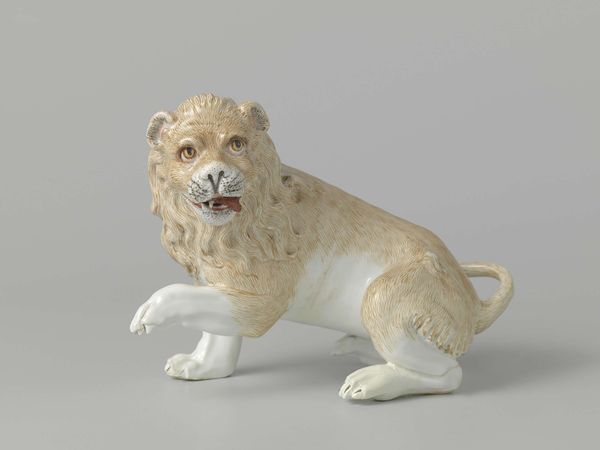
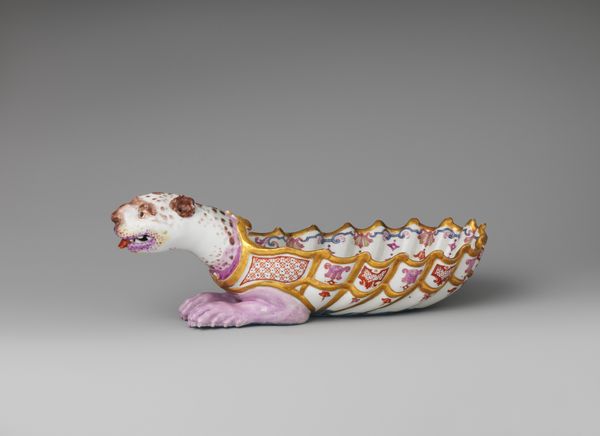
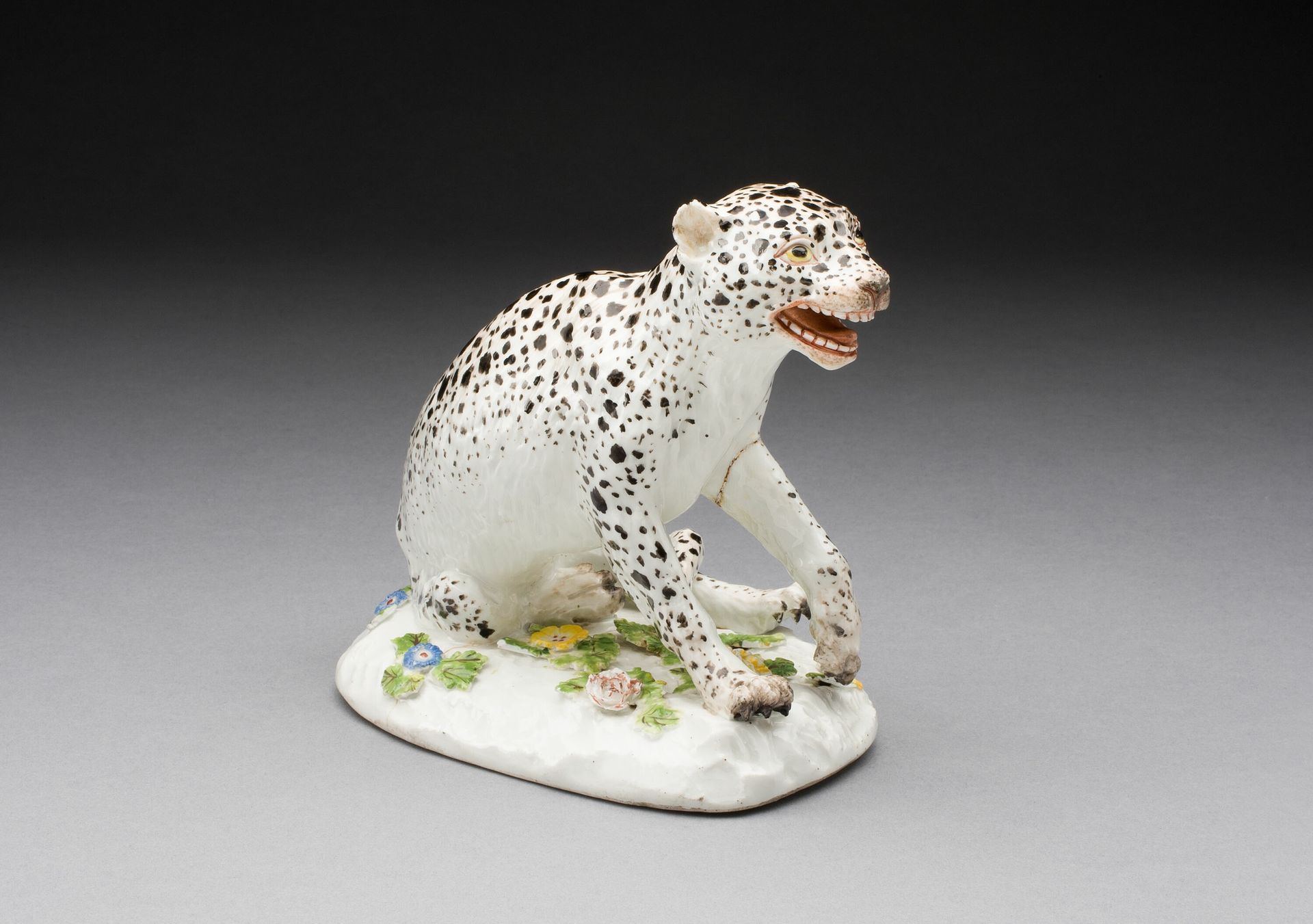
Curator: Well, this is unsettling. The open mouth, the stiff posture... it's not how I expect to see a decorative porcelain figure. Editor: I find the pathos quite remarkable, actually. This small sculpture, “Wounded Leopard,” dates from around 1745. It was produced at the Meissen Porcelain Manufactory, masters of the rococo style. Curator: Rococo? I’d expect a certain lightness, but the obvious tension here undercuts any feeling of prettiness. A symbol, perhaps, of something deeper than courtly pleasure? Editor: Indeed. Leopards, especially wounded ones, often symbolized the vulnerability of power, or the precariousness of the aristocracy itself. It’s worth remembering that porcelain at Meissen was directly under the control of the Saxon court. This object whispers anxieties. Curator: Let's consider that porcelain itself—a manufactured substance, yet made to resemble something organic and powerful. The labor! Creating such a complex, fragile object speaks to both mastery and fragility. The social and material contrast highlights anxieties in a society undergoing change. Editor: The animal's speckled skin, carefully rendered in paint on porcelain, takes on an almost metaphorical quality. Like the elite themselves—are those marks wounds, or mere decorative flourishes? Is its status innate or applied? And it’s all crafted with extreme skill; these Meissen artisans held their process closely guarded. Curator: There's the tension. Beauty and brutality interwoven, in this object made for display. Editor: Exactly. What appeared initially decorative is now deeply symbolic, imbued with the unease of an era. It goes to show, sometimes beauty hides the beast and beast can reveal underlying wounds of class.
Wounded Leopard c. 1745

Meissen Porcelain Manufactory
@meissenporcelainmanufactory
The Art Institute of Chicago
The Art Institute of ChicagoArtwork details
- Medium
- ceramic, porcelain, sculpture
- Dimensions
- 14.3 × 14 × 9.5 cm (5-3/8 × 5-1/2 × 3-3/4 in.)
- Location
- The Art Institute of Chicago
- Copyright
- Public Domain
Tags
animal
ceramic
porcelain
sculpture
decorative-art
rococo
Comments
No comments
About this artwork
Curator: Well, this is unsettling. The open mouth, the stiff posture... it's not how I expect to see a decorative porcelain figure. Editor: I find the pathos quite remarkable, actually. This small sculpture, “Wounded Leopard,” dates from around 1745. It was produced at the Meissen Porcelain Manufactory, masters of the rococo style. Curator: Rococo? I’d expect a certain lightness, but the obvious tension here undercuts any feeling of prettiness. A symbol, perhaps, of something deeper than courtly pleasure? Editor: Indeed. Leopards, especially wounded ones, often symbolized the vulnerability of power, or the precariousness of the aristocracy itself. It’s worth remembering that porcelain at Meissen was directly under the control of the Saxon court. This object whispers anxieties. Curator: Let's consider that porcelain itself—a manufactured substance, yet made to resemble something organic and powerful. The labor! Creating such a complex, fragile object speaks to both mastery and fragility. The social and material contrast highlights anxieties in a society undergoing change. Editor: The animal's speckled skin, carefully rendered in paint on porcelain, takes on an almost metaphorical quality. Like the elite themselves—are those marks wounds, or mere decorative flourishes? Is its status innate or applied? And it’s all crafted with extreme skill; these Meissen artisans held their process closely guarded. Curator: There's the tension. Beauty and brutality interwoven, in this object made for display. Editor: Exactly. What appeared initially decorative is now deeply symbolic, imbued with the unease of an era. It goes to show, sometimes beauty hides the beast and beast can reveal underlying wounds of class.
Comments
No comments