paper, ink
#
asian-art
#
landscape
#
paper
#
ink
#
line
Dimensions: height 61.2 cm, width 67.5 cm, height 1.2 cm, width 76.8 cm, width 85.8 cm, diameter 4.6 cm, diameter 3.8 cm, height 7.5 cm, width 8.0 cm, length 89.5 cm
Copyright: Rijks Museum: Open Domain
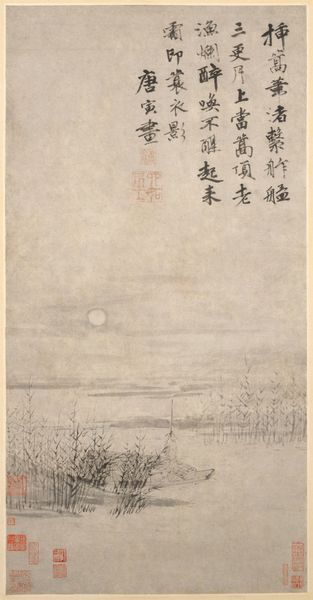
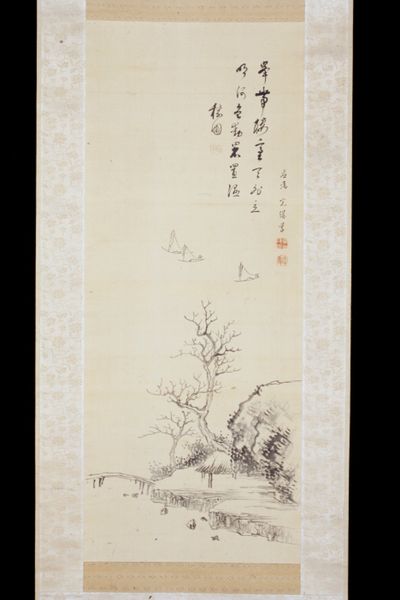
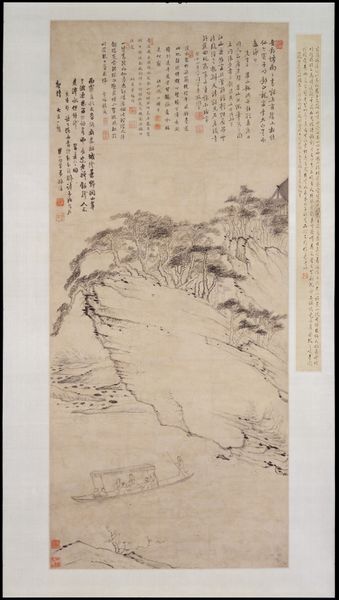
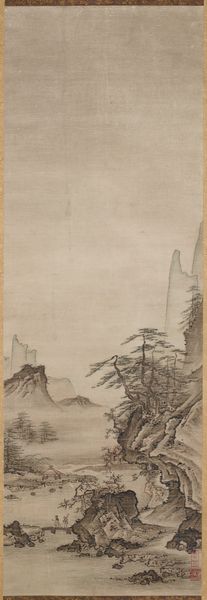
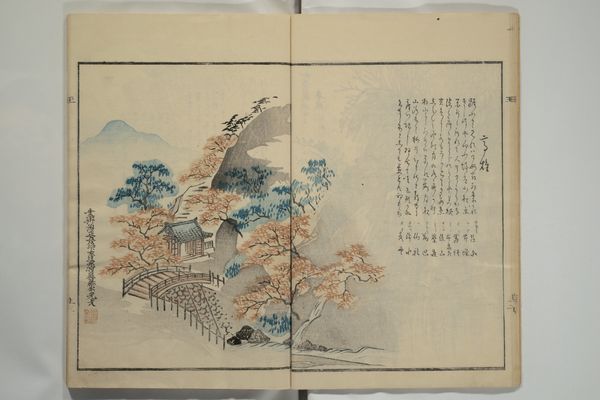
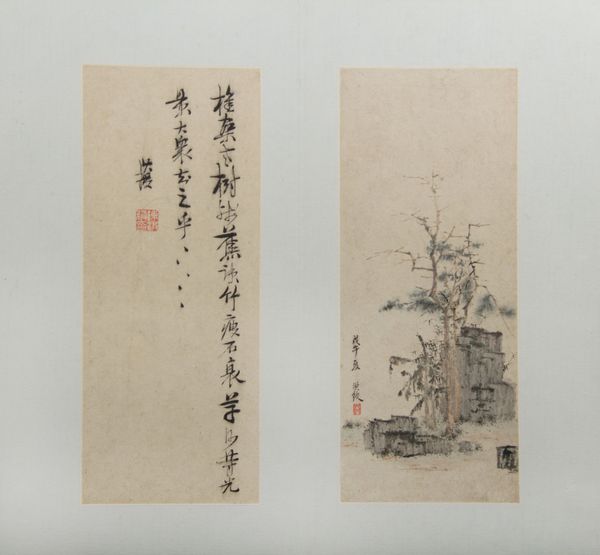
Curator: We are looking at "Moonlit River Landscape with Figures," believed to be created between 1750 and 1785 by Guan Xining. The medium is ink on paper, a style prevalent in much of Asian art. Editor: The quiet, almost monochromatic palette immediately strikes me. There's a delicate, ethereal quality to the entire piece, creating a scene that feels both distant and deeply personal. The subtle washes of ink suggest a world cloaked in moonlight. Curator: Absolutely. During the mid-Qing dynasty, landscape painting, such as this, served not merely as aesthetic enjoyment, but as a conduit for social commentary. Artists like Guan subtly voiced opinions through carefully chosen elements, all while navigating the scrutiny of the imperial court. Editor: Right, the soft execution speaks volumes about this restraint. Note also that figures seem so small compared to the breadth of nature. Do you see any message there regarding humanity’s place? Is it to celebrate humble existences or critique social structures? Curator: Both, perhaps. By rendering the figures so subtly, Xining likely encouraged viewers to meditate on the ephemeral nature of human existence in the vastness of time and the empire. The boats imply transient social relationships and trade, so maybe they represent wealth being moved across distances. Editor: The boat imagery here calls to mind themes of journey and displacement, common motifs that can often suggest the disruptions in social standing that can arise in any society. What do you observe of its presentation? Curator: As a hanging scroll, it would traditionally have been unrolled for private contemplation. The act of viewing was therefore deliberate, meant to foster self-reflection. The use of ink and paper further highlights its accessibility to scholar-officials, making art an integrated part of their lives. Editor: Thinking about who the likely viewer would have been helps reframe my modern sensibilities and what meaning-making and emotional engagement could be found within its symbols. This wasn’t just a scenic snapshot. It reflected on power, societal change, and individual identity all at once. Curator: Precisely, looking at it from our perspective today allows us to unravel its intended meaning and relate those ideas back to modern power structures that continue to create hierarchies within societies. Editor: A muted echo across centuries, reflecting and refracting truths about the ever-changing currents of culture. Curator: Yes, a quiet masterpiece, revealing layers of meaning when we consider its history and continued social relevance.
Comments

rijksmuseum about 2 years ago
⋮
The landscape in this painting is based on a story by the 9th-century poet Bai Juyi. One chilly autumn evening, while on a ferry the poet heard music from another boat. Enchanted, he asked the musician to come on board and play for him. If you do not know this story, you would simply see an ordinary landscape with a harbour on a river.


Join the conversation
Join millions of artists and users on Artera today and experience the ultimate creative platform.
 Collect
More like this