About this artwork
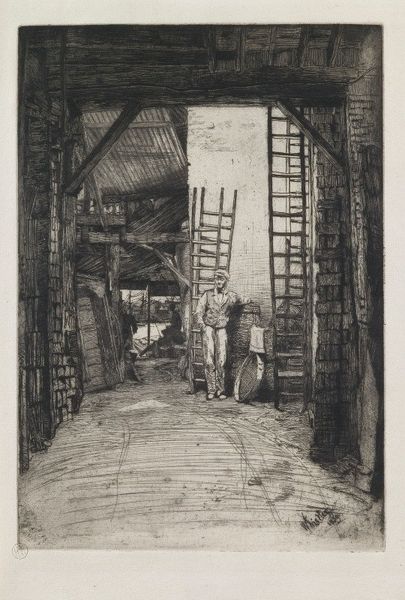
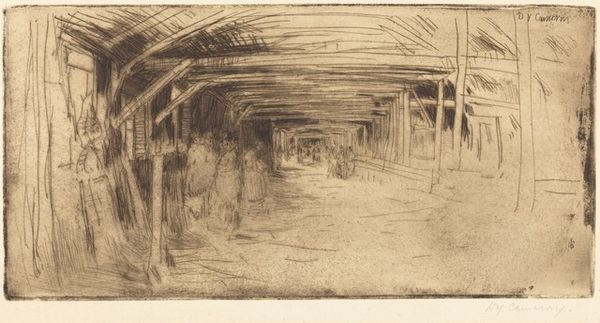
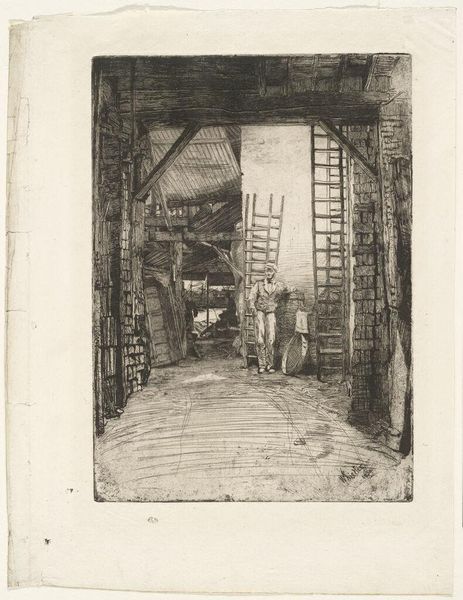
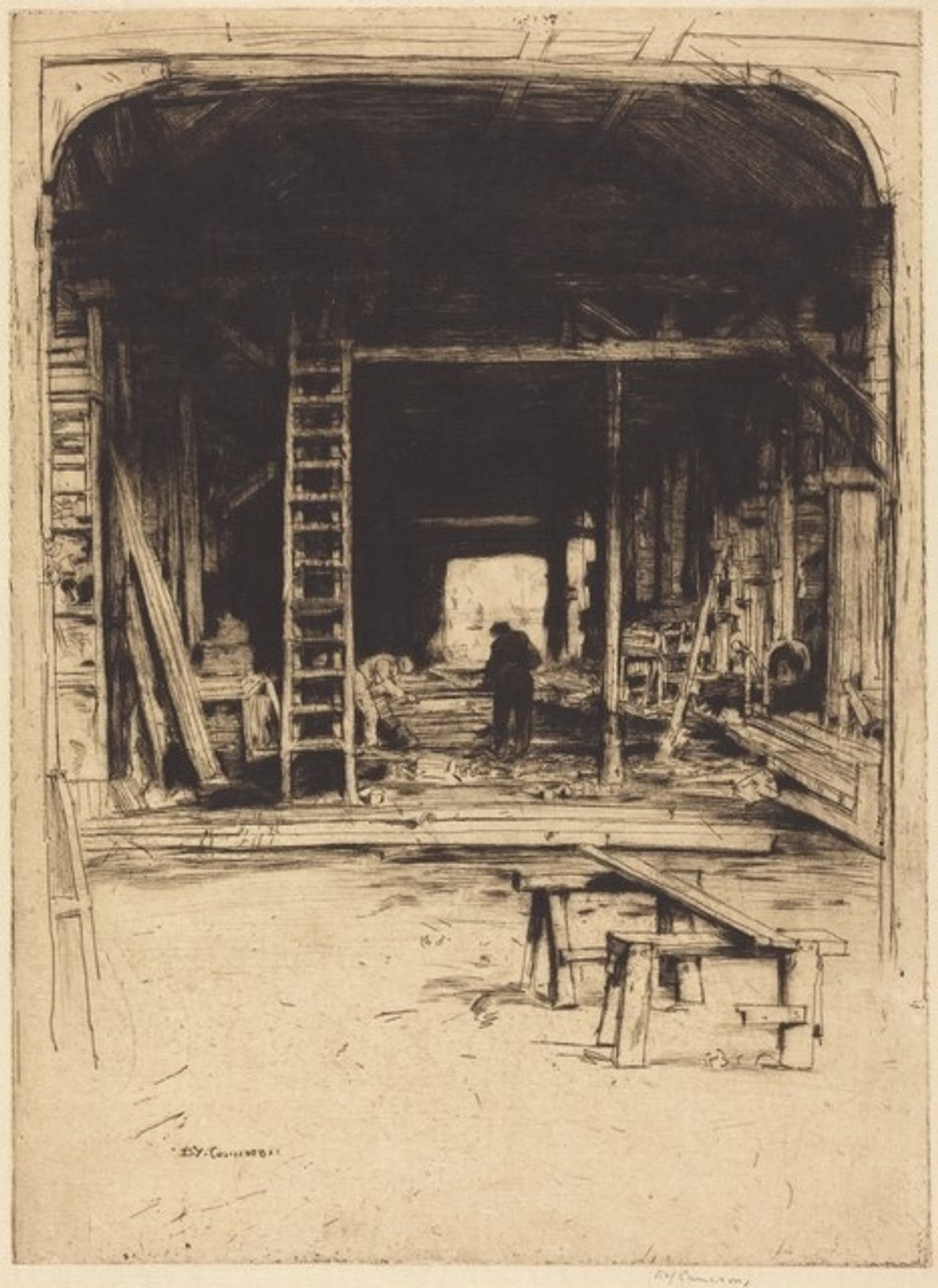
David Young Cameron made this etching, Robert Lee's Workshop, capturing a space that feels both intimate and expansive. Look at the way he uses line – so delicate, almost hesitant in places, then bold and decisive in others. For me, that's the magic of printmaking; the artist's hand is so present, even though there's a whole process involved. The texture Cameron achieves is incredible. See how the light catches on the rough-hewn wood? It's like he's not just showing us a workshop, but also the history embedded in these materials, the marks of labor and time. The dark space in the background draws you in, and the ladder, oh, that ladder! It's almost like a visual metaphor, connecting the earthly with the unknown. Think of Whistler's etchings, and how he also managed to create these moody, atmospheric scenes with such economy of line. Ultimately, art is a conversation across time. It’s not just about what we see, but how we feel, and what memories and associations the image stirs up within us.
Robert Lee's Workshop 1905


Artwork details
- Medium
- drawing, print, etching
- Copyright
- National Gallery of Art: CC0 1.0
Tags
drawing
etching
landscape
realism
monochrome
Comments
No comments
About this artwork
David Young Cameron made this etching, Robert Lee's Workshop, capturing a space that feels both intimate and expansive. Look at the way he uses line – so delicate, almost hesitant in places, then bold and decisive in others. For me, that's the magic of printmaking; the artist's hand is so present, even though there's a whole process involved. The texture Cameron achieves is incredible. See how the light catches on the rough-hewn wood? It's like he's not just showing us a workshop, but also the history embedded in these materials, the marks of labor and time. The dark space in the background draws you in, and the ladder, oh, that ladder! It's almost like a visual metaphor, connecting the earthly with the unknown. Think of Whistler's etchings, and how he also managed to create these moody, atmospheric scenes with such economy of line. Ultimately, art is a conversation across time. It’s not just about what we see, but how we feel, and what memories and associations the image stirs up within us.
Comments
No comments