1978
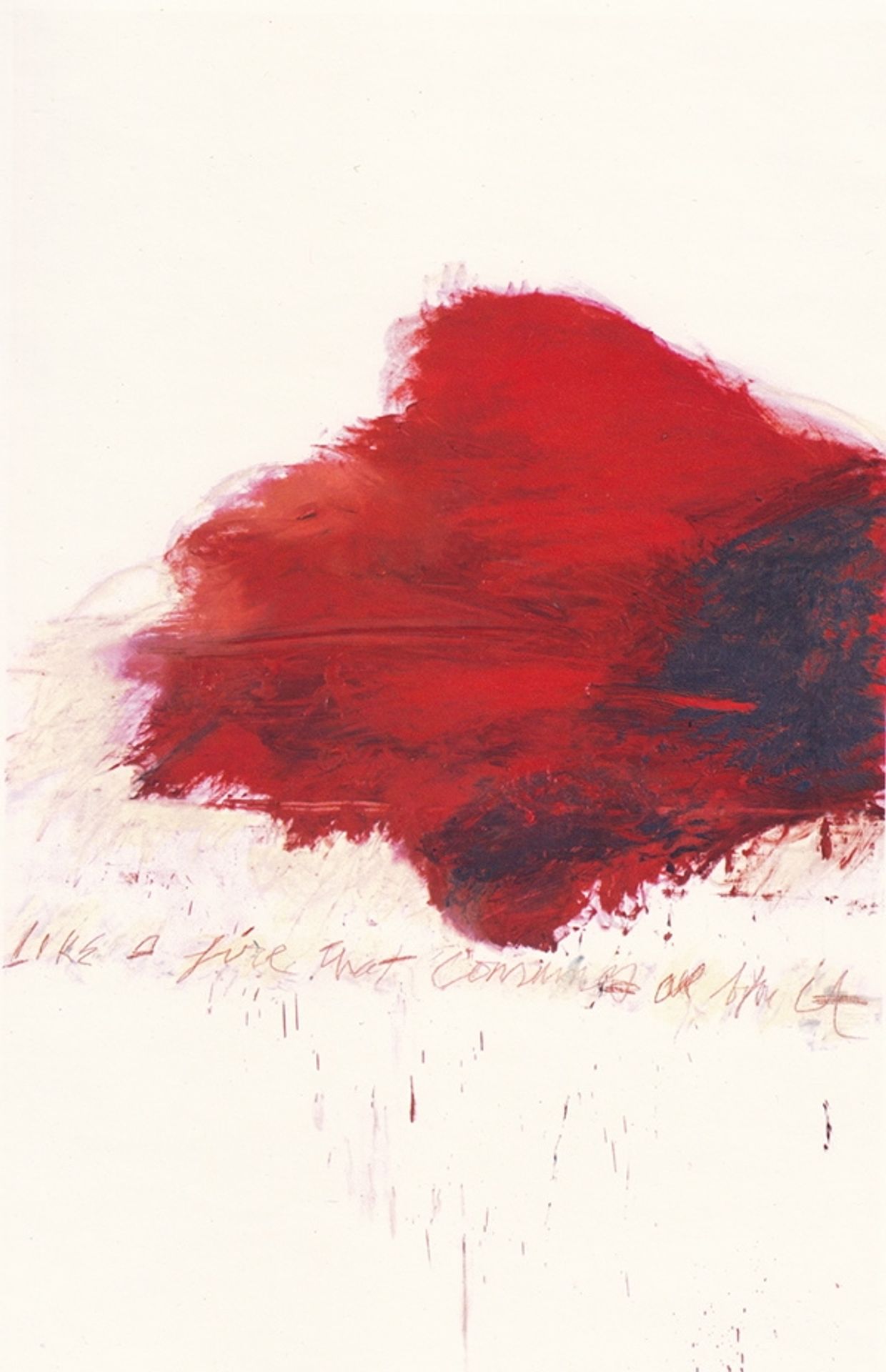
Fifty Days at Iliam. The Fire that Consumes All before It

Listen to curator's interpretation
Curatorial notes
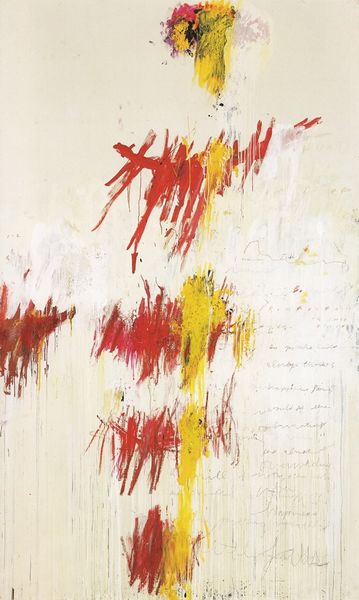
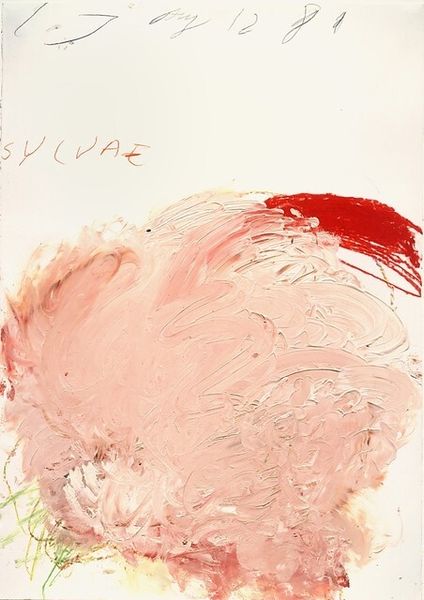
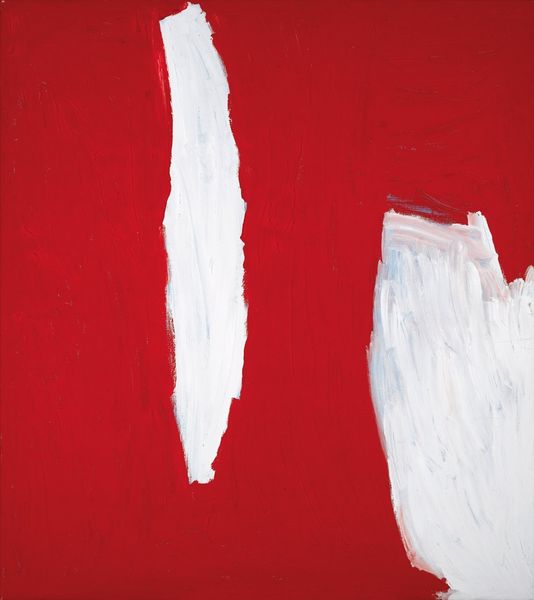
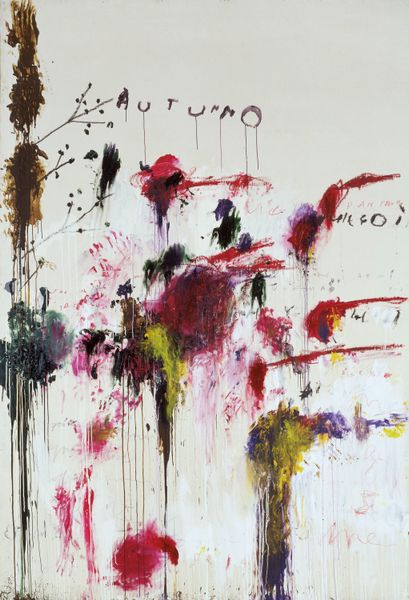
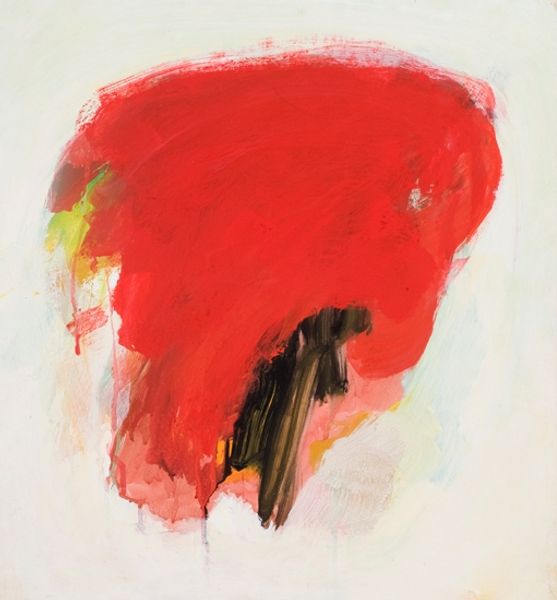
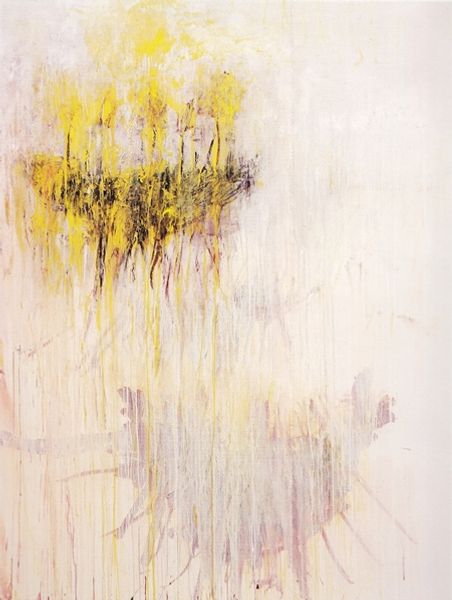
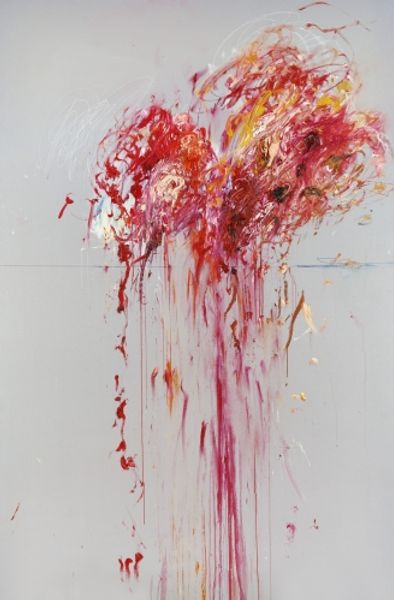
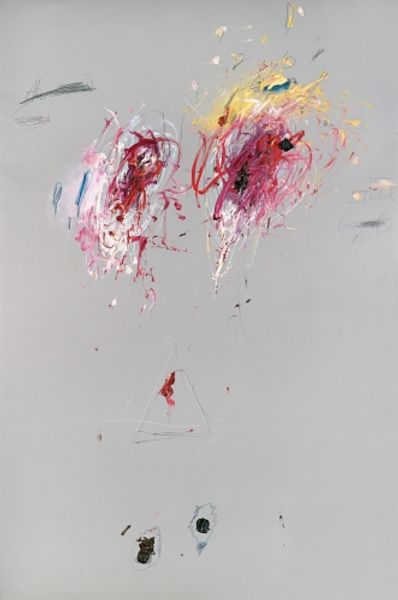
Curator: Let's turn our attention to Cy Twombly's “Fifty Days at Iliam. The Fire that Consumes All before It,” crafted in 1978 using oil paint. Editor: It hits you immediately, doesn't it? That concentrated blotch of red against the stark white… almost violent, a compressed rage. Curator: Precisely. Notice how Twombly manipulates the density of the pigment. The application ranges from almost transparent washes to thick, impasto sections. This creates a layered effect that destabilizes any fixed interpretation. Editor: And that fiery red… Red’s not just about anger; it can also signal passion, love, or even sacrifice. Given the title references the Trojan War, I wonder if it speaks to the consuming nature of conflict and its cost. Curator: Indeed. The title points us to classical mythology. But look closer at the deliberate drips and the frenetic inscription “LIKE a fire that CONSUMES all before it." It creates a stark textual contrast with the bold gestural brushstrokes. Editor: You know, that frantic inscription reminds me of cave paintings, echoing primal communication, a sort of urgent warning from the past. It speaks to the cyclical nature of history, perhaps? Curator: Perhaps, and what’s fascinating is how he juxtaposes this raw energy with a kind of compositional restraint, the relatively empty canvas… a void perhaps that enhances the visual weight. Editor: Ultimately, it's the power of that single, overwhelming blot, demanding your complete attention, embodying destruction. A stark and rather beautiful reckoning, wouldn't you say? Curator: I agree, a painting not just to be observed but experienced, an investigation into raw emotive power filtered through the structured chaos of abstraction. Editor: Absolutely. And seeing how those themes from ancient texts keep echoing into modern anxieties, the impact still feels immediate.