1647 - 1648
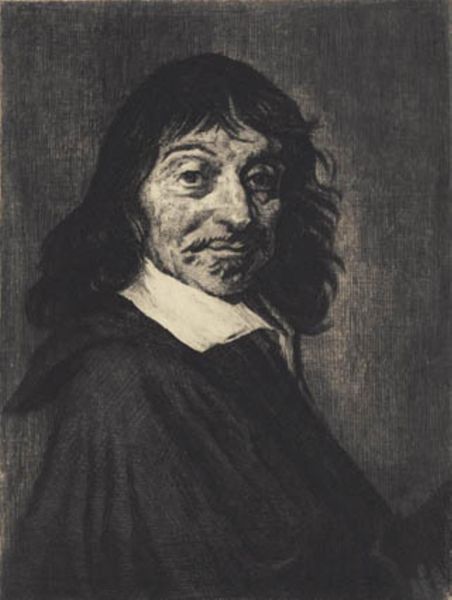
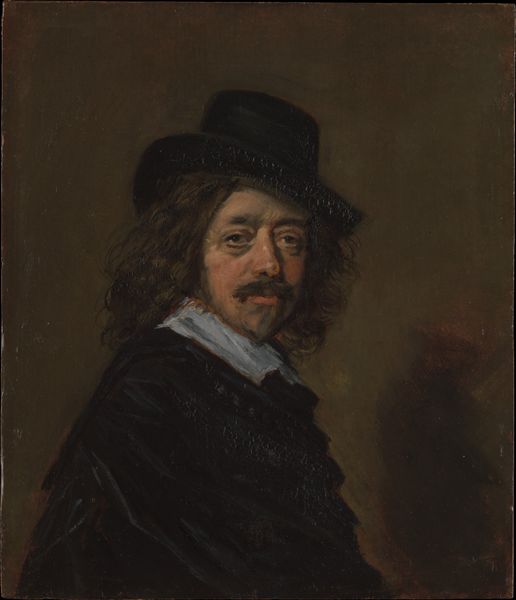
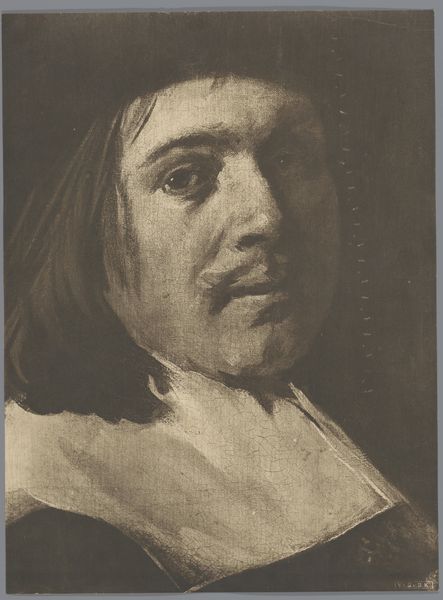
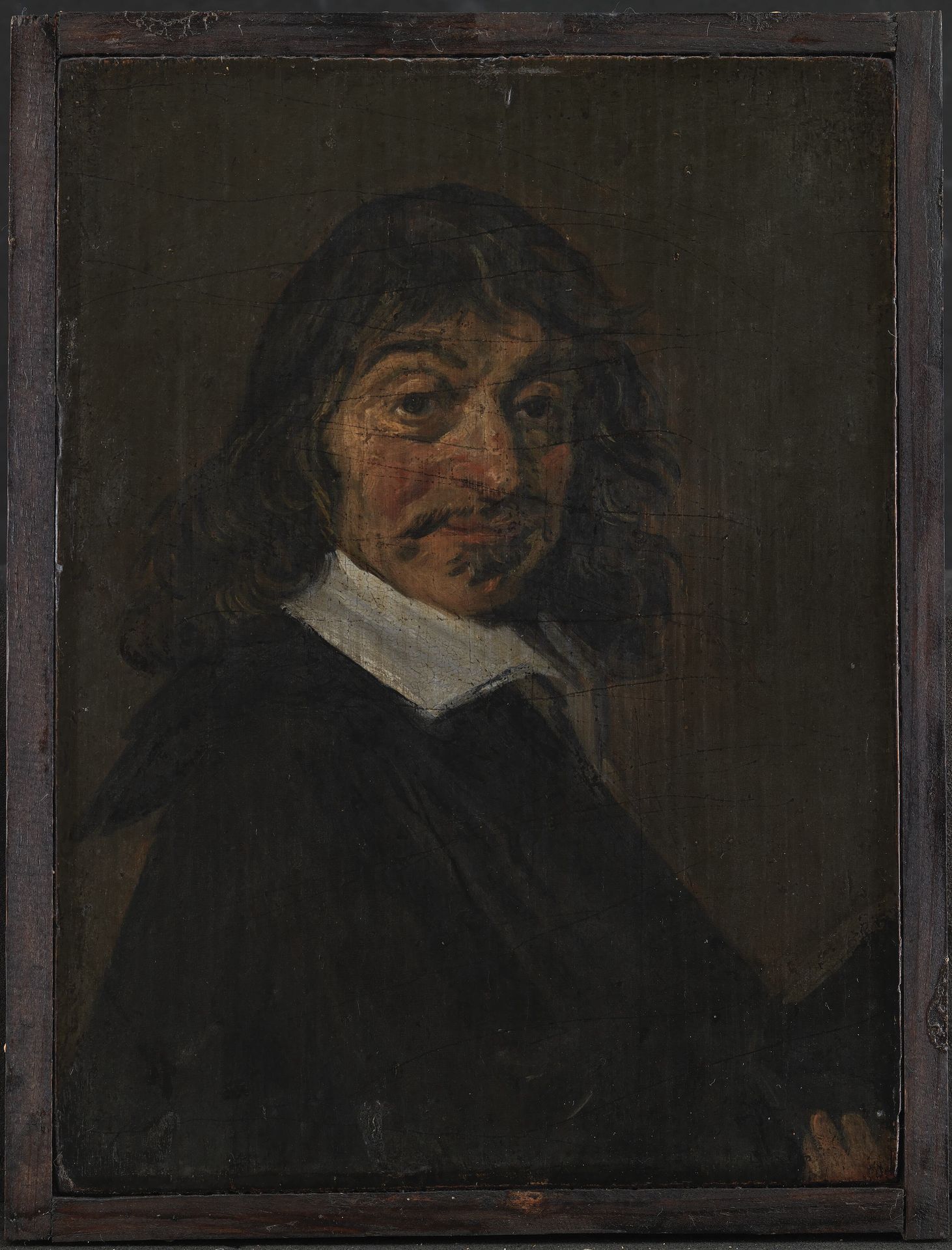
Portrait of René Descartes (1596-1650)


Listen to curator's interpretation
Curatorial notes
Editor: Here we have Frans Hals's oil on canvas portrait of René Descartes, likely completed around 1647 or '48. It feels intensely intimate, even with so much dark space dominating the composition. I’m curious, what catches your eye in this portrait? Curator: Well, aren’t we nose to nose with perhaps the most revolutionary mind in Western thought! What strikes me isn’t so much the darkness, but how Hals manages to capture the simmering intensity of Descartes' intellect. That gaze is absolutely laser-focused. But look closely – do you see a hint of mischief there, too? Maybe a secret knowledge that sets him apart. He’s like an owl in the night, always observing. And that hastily rendered collar--is it just me, or is it a delightful jab at academic stuffiness? Editor: A jab? I hadn't considered that. I just saw it as characteristic of Hals's style, loose and painterly. Do you think there’s a deliberate message there? Curator: Perhaps both. Hals was no stranger to a quickly applied brushstroke, and it's absolutely a hallmark of his style. But given Descartes's challenge to tradition, the undone collar becomes an artistic wink – a symbol of intellectual rebellion. After all, this is the guy who basically asked us to question everything! Editor: That’s a great reading of the painting! It gives it another level of depth, the little act of rebellion hiding right in the plain sight. Curator: Absolutely. Art is never really just *there*. It asks questions, plays tricks. Editor: Thanks for sharing this. I will look more carefully next time and also try to reveal what may be behind it.