About this artwork
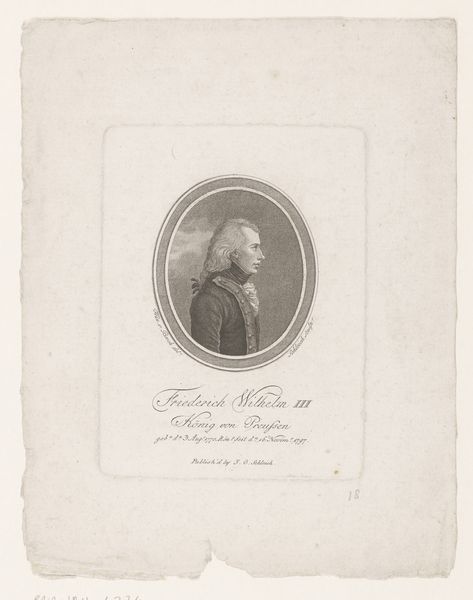
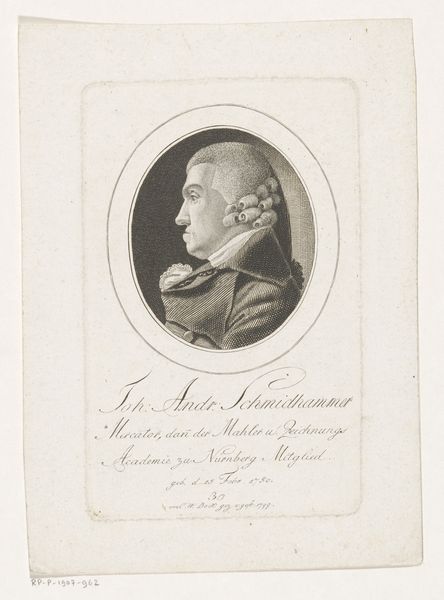
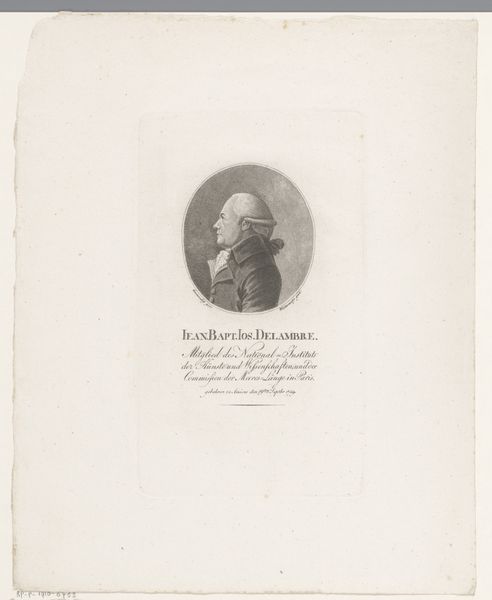
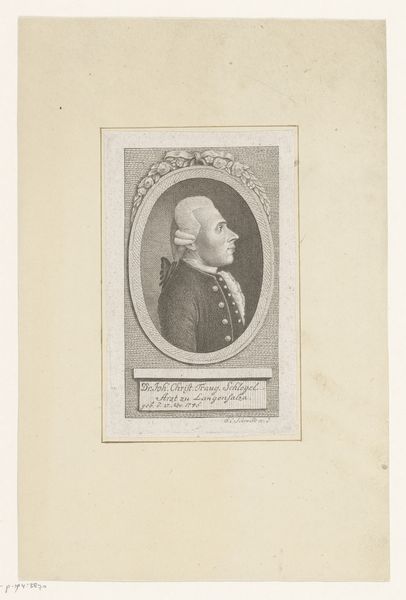
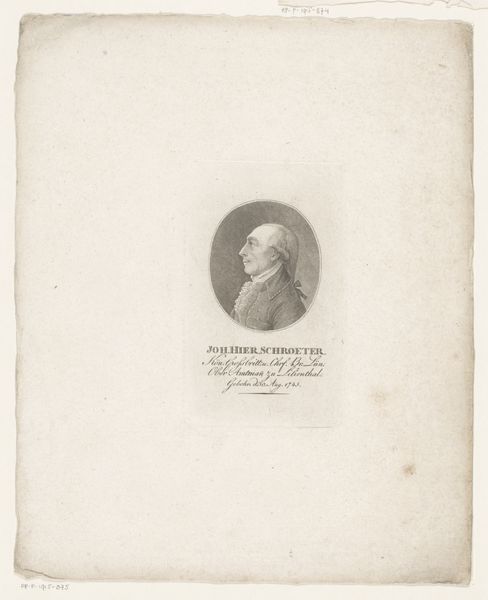
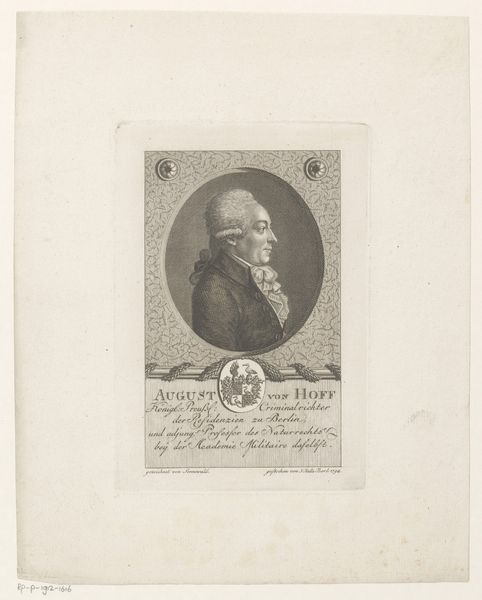
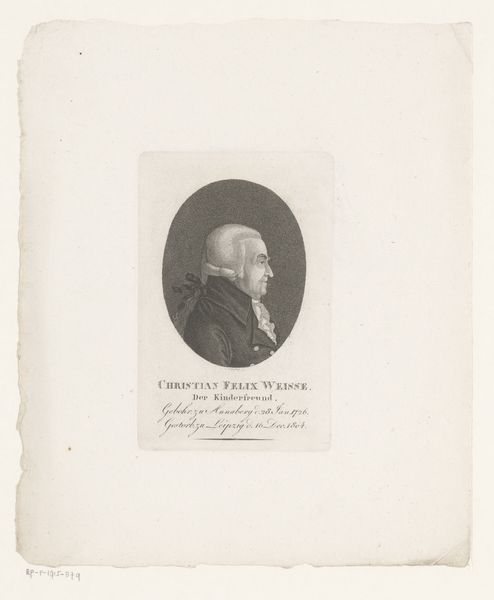
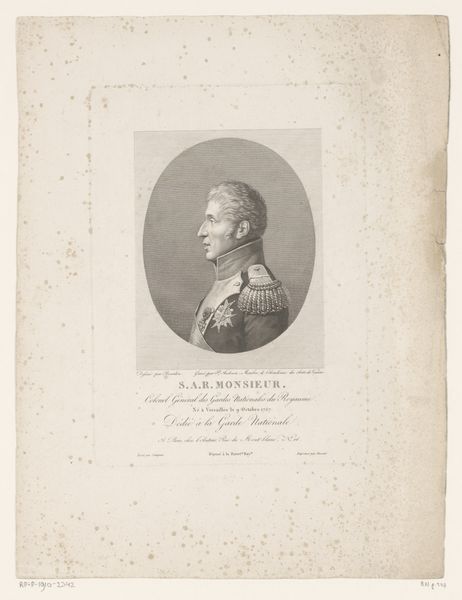
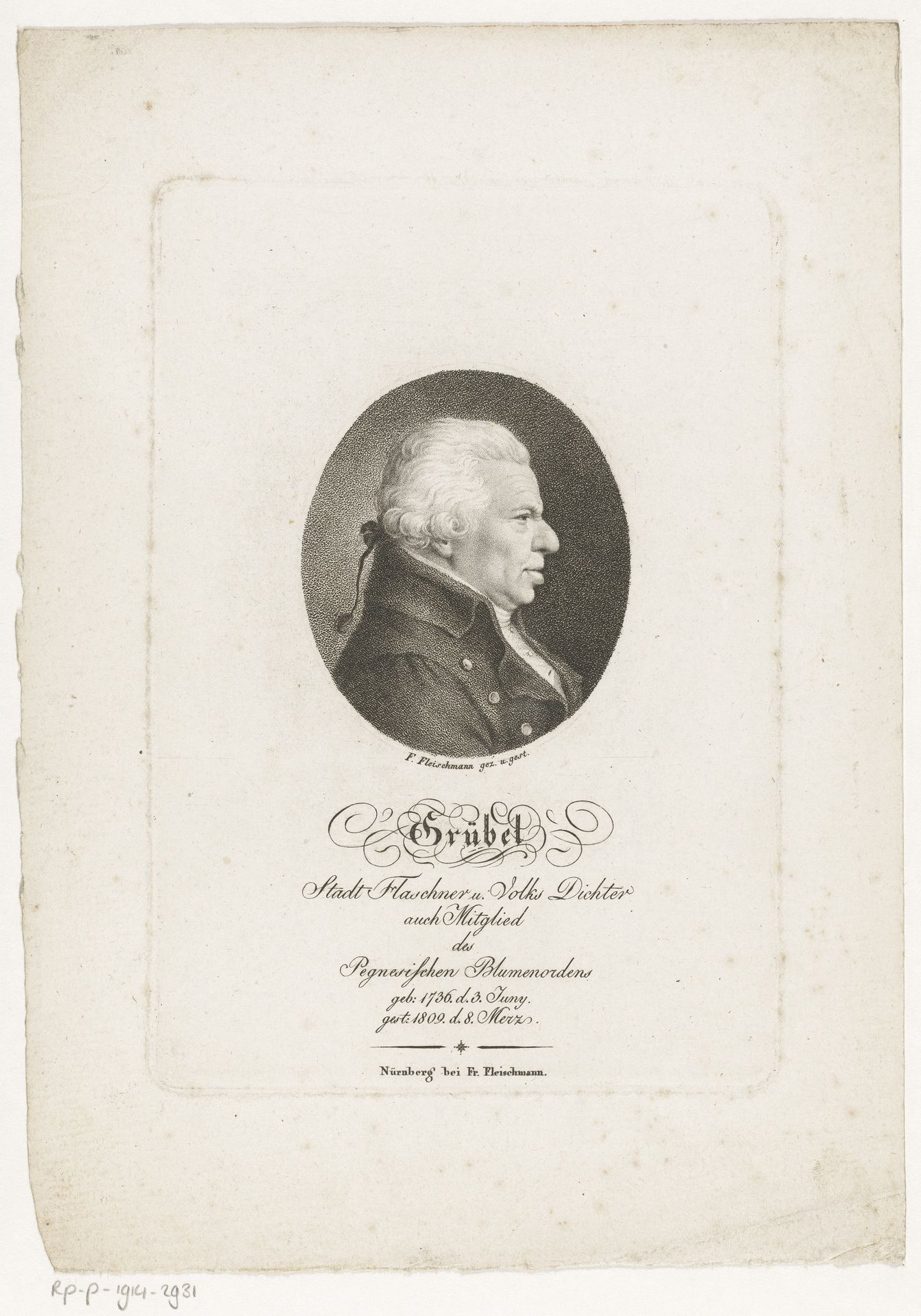
Friedrich Fleischmann created this portrait of Johann Conrad Grübel using etching and engraving techniques, sometime between 1791 and 1834. Grübel, a German folk poet, is captured in profile, his gaze directed towards an unseen future. Consider the historical context: Fleischmann, creating art in the late 18th and early 19th centuries, navigated a society undergoing immense change. The rise of nationalism and the burgeoning Romantic movement significantly influenced art and culture. Grübel, a man of the people, was celebrated as a voice for the common person, reflecting the era's growing interest in folk traditions and local identities. What does it mean to capture the likeness of a "folk poet" during this period? Fleischmann's rendering of Grübel elevates him, yet also seems to root him in his identity as a poet of the people. This portrait serves as a testament to the power of art in shaping and reflecting societal values, capturing the emotional and intellectual currents of its time.
Portret van Johann Conrad Grübel 1809 - 1834

Friedrich Fleischmann
1791 - 1834Location
RijksmuseumArtwork details
- Medium
- print, engraving
- Dimensions
- height 184 mm, width 127 mm
- Location
- Rijksmuseum
- Copyright
- Rijks Museum: Open Domain
Tags
neoclacissism
old engraving style
classicism
engraving
calligraphy
Comments
No comments
About this artwork
Friedrich Fleischmann created this portrait of Johann Conrad Grübel using etching and engraving techniques, sometime between 1791 and 1834. Grübel, a German folk poet, is captured in profile, his gaze directed towards an unseen future. Consider the historical context: Fleischmann, creating art in the late 18th and early 19th centuries, navigated a society undergoing immense change. The rise of nationalism and the burgeoning Romantic movement significantly influenced art and culture. Grübel, a man of the people, was celebrated as a voice for the common person, reflecting the era's growing interest in folk traditions and local identities. What does it mean to capture the likeness of a "folk poet" during this period? Fleischmann's rendering of Grübel elevates him, yet also seems to root him in his identity as a poet of the people. This portrait serves as a testament to the power of art in shaping and reflecting societal values, capturing the emotional and intellectual currents of its time.
Comments
No comments