About this artwork
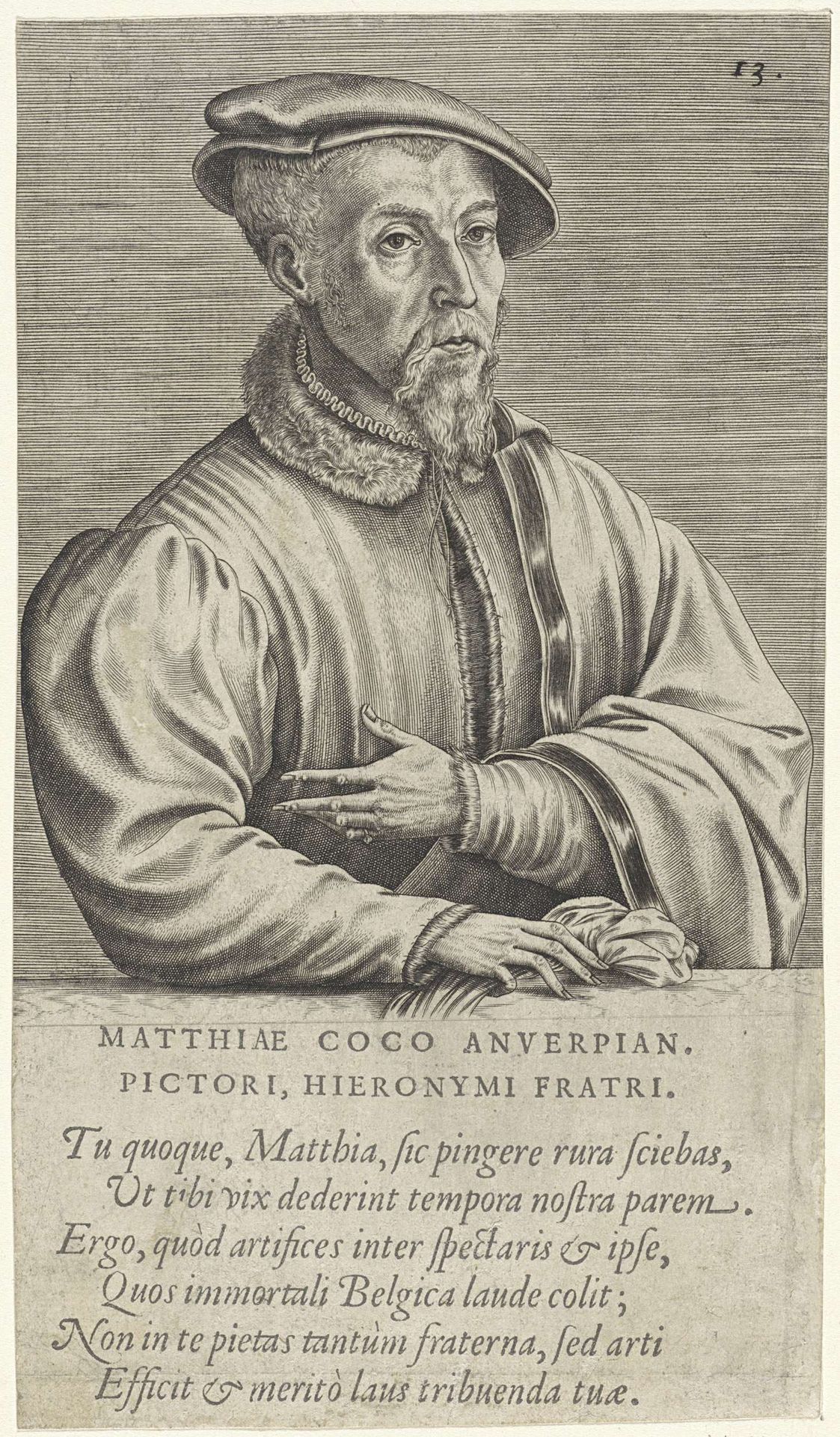
This engraving, now held in the Rijksmuseum, is a portrait of the painter Matthys Cock made around the turn of the 17th century by Hieronymus Wierix. During this time in the Netherlands, there was a growing sense of cultural and national identity which is very much reflected in the artwork itself. The portrait presents Cock with all the markers of a man of status: his clothing is rich, his pose confident. But look closer. Wierix was Cock’s brother, and the inscription below the image is a testament to their fraternal piety, a core value of the era. The text praises Cock’s artistic skill and virtues and references a sense of national pride. The idea of reputation and honor—for both the individual and the nation—was paramount in the social consciousness of the time. The artwork reflects a society grappling with issues of identity, not just personal but also national, during a period of significant social and political change. It highlights the intricate ways in which personal relationships, artistic expression, and national identity were intertwined.

Artwork details
- Medium
- drawing, print, metal, ink, engraving
- Dimensions
- height 215 mm, width 123 mm
- Location
- Rijksmuseum
- Copyright
- Rijks Museum: Open Domain
Tags
portrait
drawing
metal
11_renaissance
ink
northern-renaissance
engraving
Comments
No comments
About this artwork
This engraving, now held in the Rijksmuseum, is a portrait of the painter Matthys Cock made around the turn of the 17th century by Hieronymus Wierix. During this time in the Netherlands, there was a growing sense of cultural and national identity which is very much reflected in the artwork itself. The portrait presents Cock with all the markers of a man of status: his clothing is rich, his pose confident. But look closer. Wierix was Cock’s brother, and the inscription below the image is a testament to their fraternal piety, a core value of the era. The text praises Cock’s artistic skill and virtues and references a sense of national pride. The idea of reputation and honor—for both the individual and the nation—was paramount in the social consciousness of the time. The artwork reflects a society grappling with issues of identity, not just personal but also national, during a period of significant social and political change. It highlights the intricate ways in which personal relationships, artistic expression, and national identity were intertwined.
Comments
No comments