About this artwork
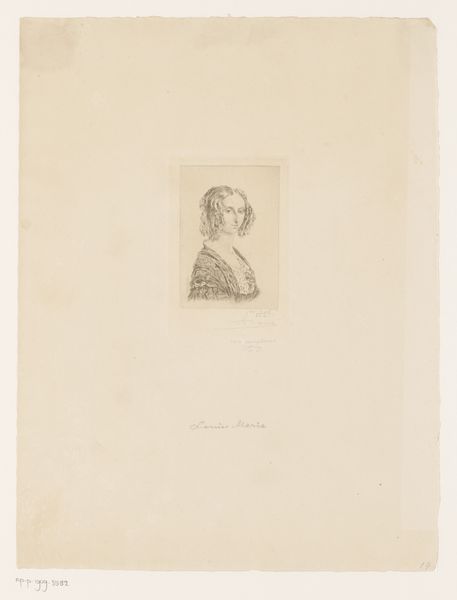
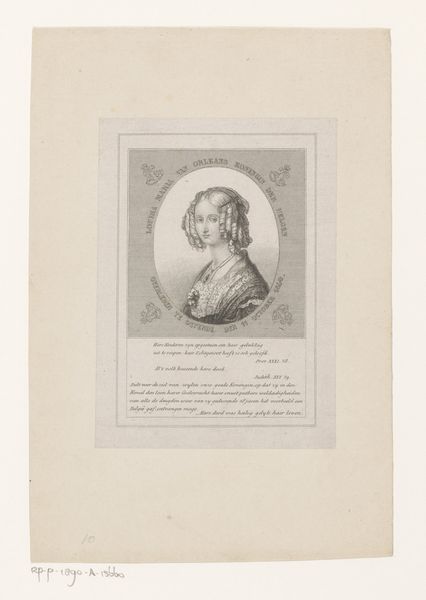
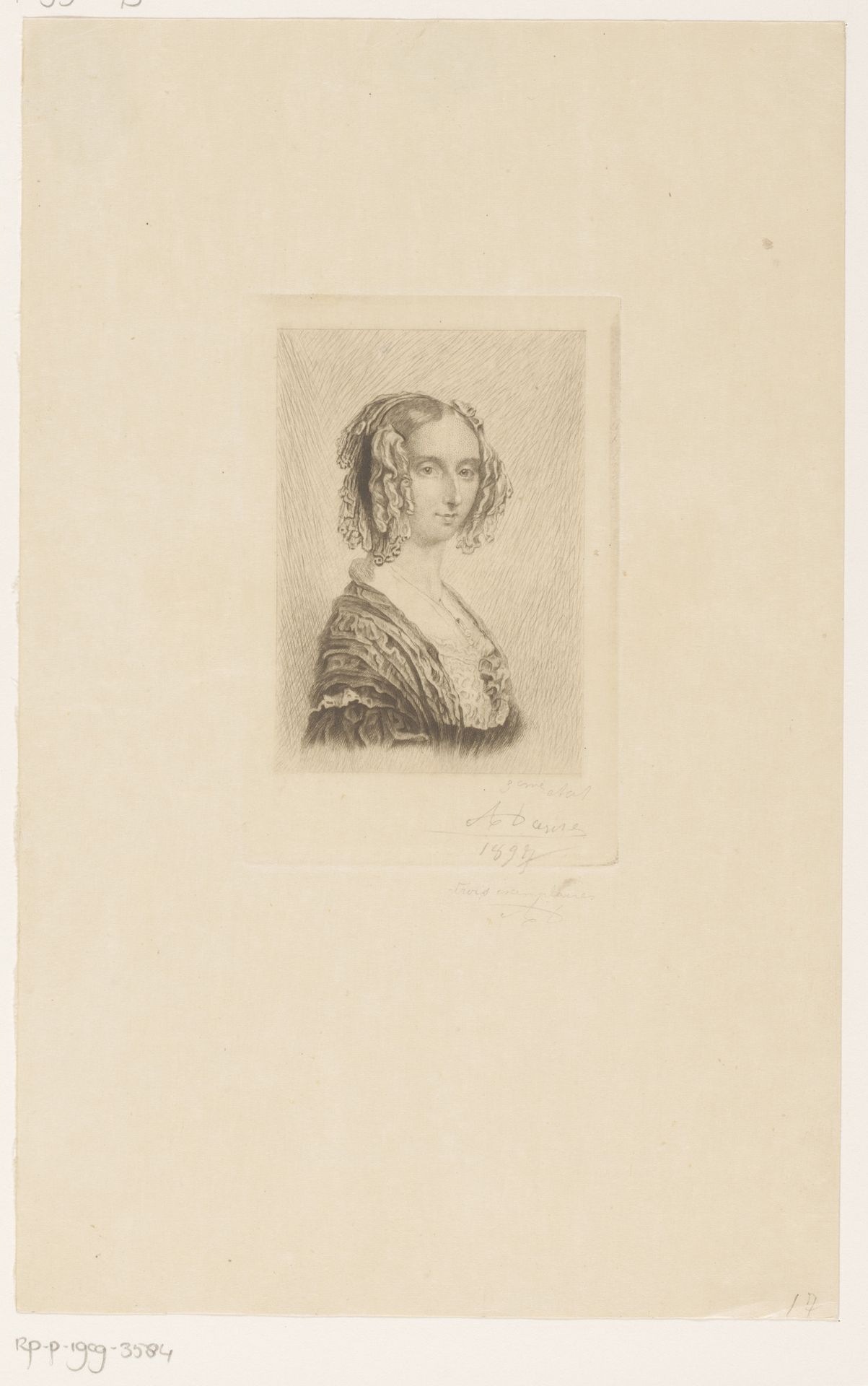
Curator: I’m immediately struck by how delicate this drawing is. It almost fades into the paper. Editor: Indeed. This is a portrait of Louise Marie van Orléans, the first Queen of the Belgians, rendered in pencil by Auguste Danse in 1897. It currently resides in the Rijksmuseum. Curator: The realism, particularly in the eyes, draws you in. Yet there's also an ethereal quality; her expression seems both knowing and melancholy. It’s as though she carries the weight of a crown, and the drawing gently reminds us of the transience of power and beauty. Editor: Notice the medium itself: pencil on paper. Consider the socio-economic context. In 1897, photography was gaining prominence, potentially threatening traditional portraiture. Pencil sketches might have represented a more affordable or accessible option, perhaps emphasizing intimacy over grand representation. The means of producing such a work certainly affect how it's consumed. Curator: I'm drawn to the lace details around her face and shoulders. They symbolize refinement and social status, naturally, but they also create a subtle frame that holds and perhaps even imprisons her. A delicate web reflecting the constraints of her role. Editor: Interesting point. Looking closely, one appreciates the skill involved in rendering lace with a pencil. It raises questions about labor; not just the artist's, but potentially the women who originally crafted such intricate fabric. Whose stories are rendered invisible through the focus on the royal subject? Curator: That’s a necessary question to ask. In any case, the rendering does have an incredible immediacy to it, making it seem to me as if it were a modern portrait. Editor: I agree, this seemingly simple portrait opens many interesting avenues of thought and investigation, even as it closes some as well. Curator: Absolutely. It leaves me contemplating the complexities of representation itself. Editor: Me too. The nuances are powerful in something as subtle as a pencil sketch.
Portret van Louise Marie van Orléans, eerste koningin der Belgen 1897

Auguste Danse
1829 - 1929Location
RijksmuseumArtwork details
- Medium
- drawing, pencil
- Dimensions
- height 120 mm, width 80 mm
- Location
- Rijksmuseum
- Copyright
- Rijks Museum: Open Domain
Tags
portrait
pencil drawn
drawing
pencil sketch
pencil
realism
Comments
No comments
About this artwork
Curator: I’m immediately struck by how delicate this drawing is. It almost fades into the paper. Editor: Indeed. This is a portrait of Louise Marie van Orléans, the first Queen of the Belgians, rendered in pencil by Auguste Danse in 1897. It currently resides in the Rijksmuseum. Curator: The realism, particularly in the eyes, draws you in. Yet there's also an ethereal quality; her expression seems both knowing and melancholy. It’s as though she carries the weight of a crown, and the drawing gently reminds us of the transience of power and beauty. Editor: Notice the medium itself: pencil on paper. Consider the socio-economic context. In 1897, photography was gaining prominence, potentially threatening traditional portraiture. Pencil sketches might have represented a more affordable or accessible option, perhaps emphasizing intimacy over grand representation. The means of producing such a work certainly affect how it's consumed. Curator: I'm drawn to the lace details around her face and shoulders. They symbolize refinement and social status, naturally, but they also create a subtle frame that holds and perhaps even imprisons her. A delicate web reflecting the constraints of her role. Editor: Interesting point. Looking closely, one appreciates the skill involved in rendering lace with a pencil. It raises questions about labor; not just the artist's, but potentially the women who originally crafted such intricate fabric. Whose stories are rendered invisible through the focus on the royal subject? Curator: That’s a necessary question to ask. In any case, the rendering does have an incredible immediacy to it, making it seem to me as if it were a modern portrait. Editor: I agree, this seemingly simple portrait opens many interesting avenues of thought and investigation, even as it closes some as well. Curator: Absolutely. It leaves me contemplating the complexities of representation itself. Editor: Me too. The nuances are powerful in something as subtle as a pencil sketch.
Comments
No comments