About this artwork
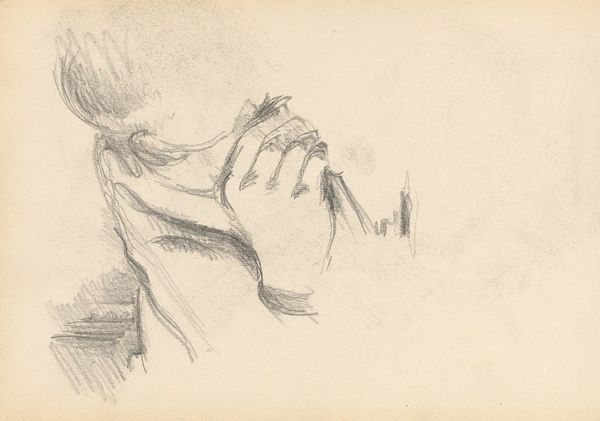
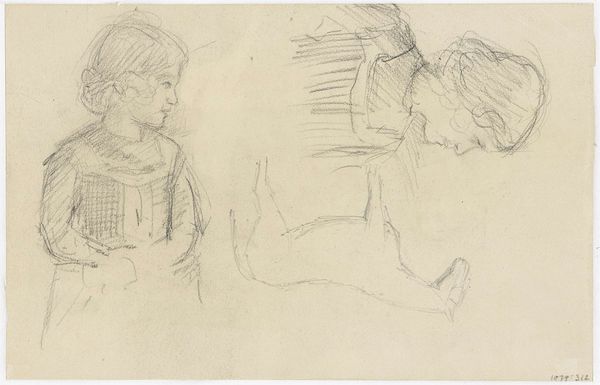
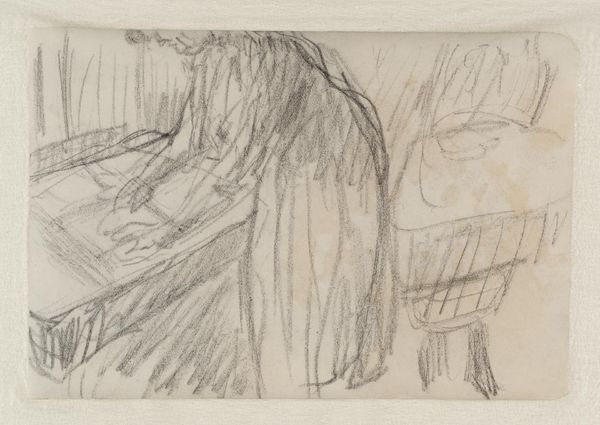
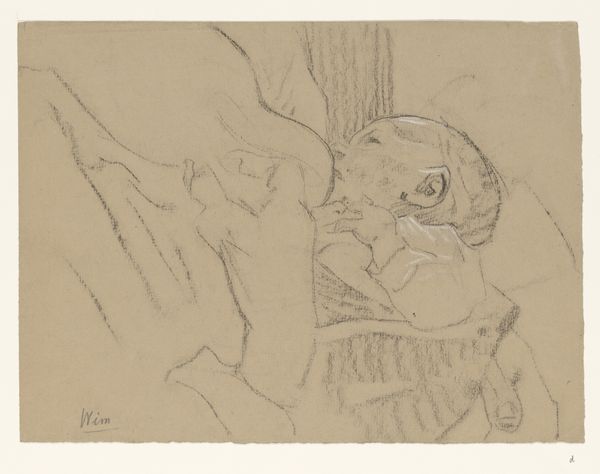
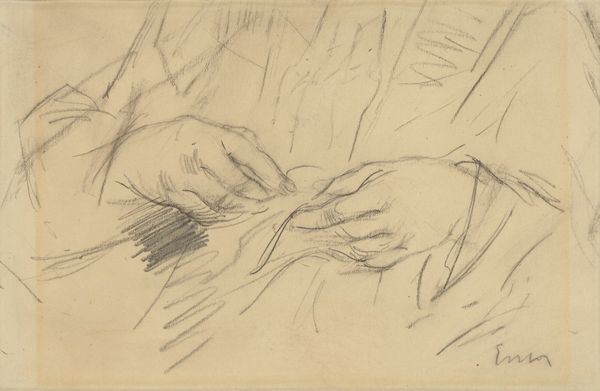
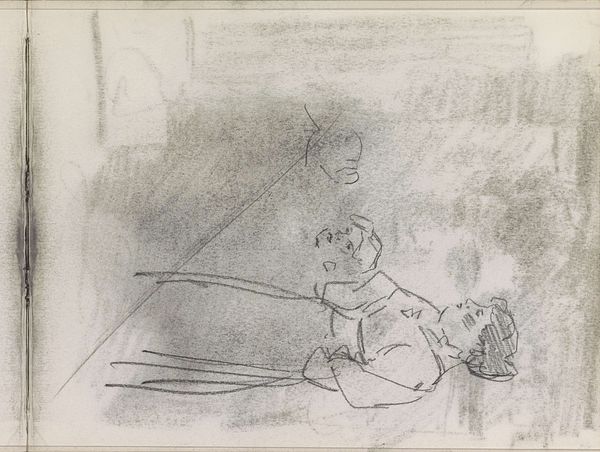
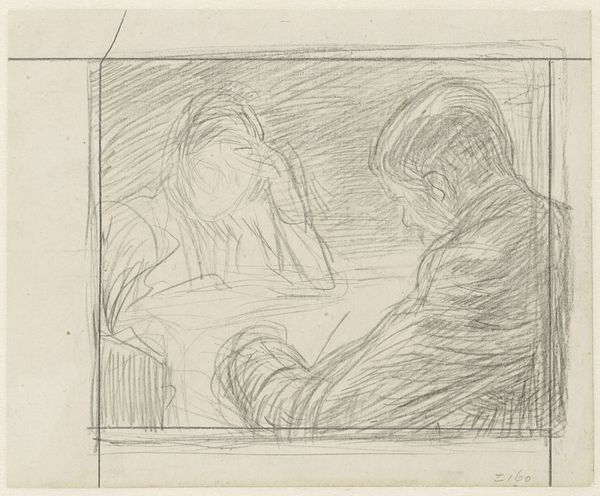
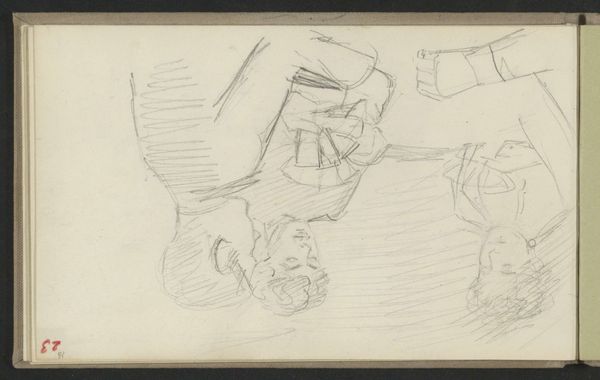
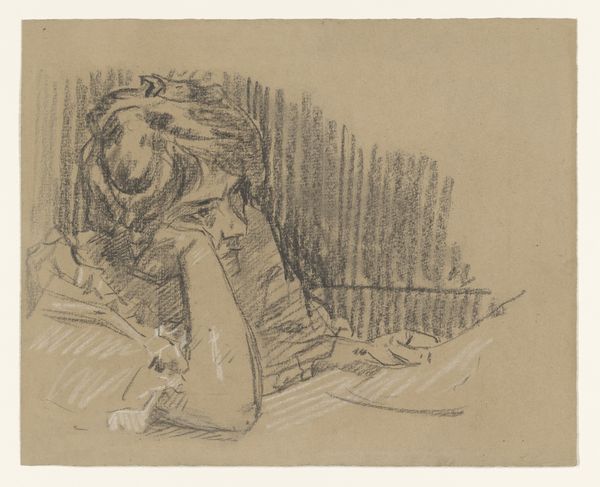
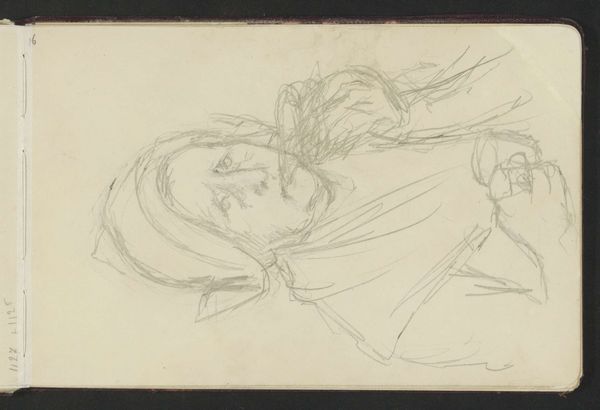
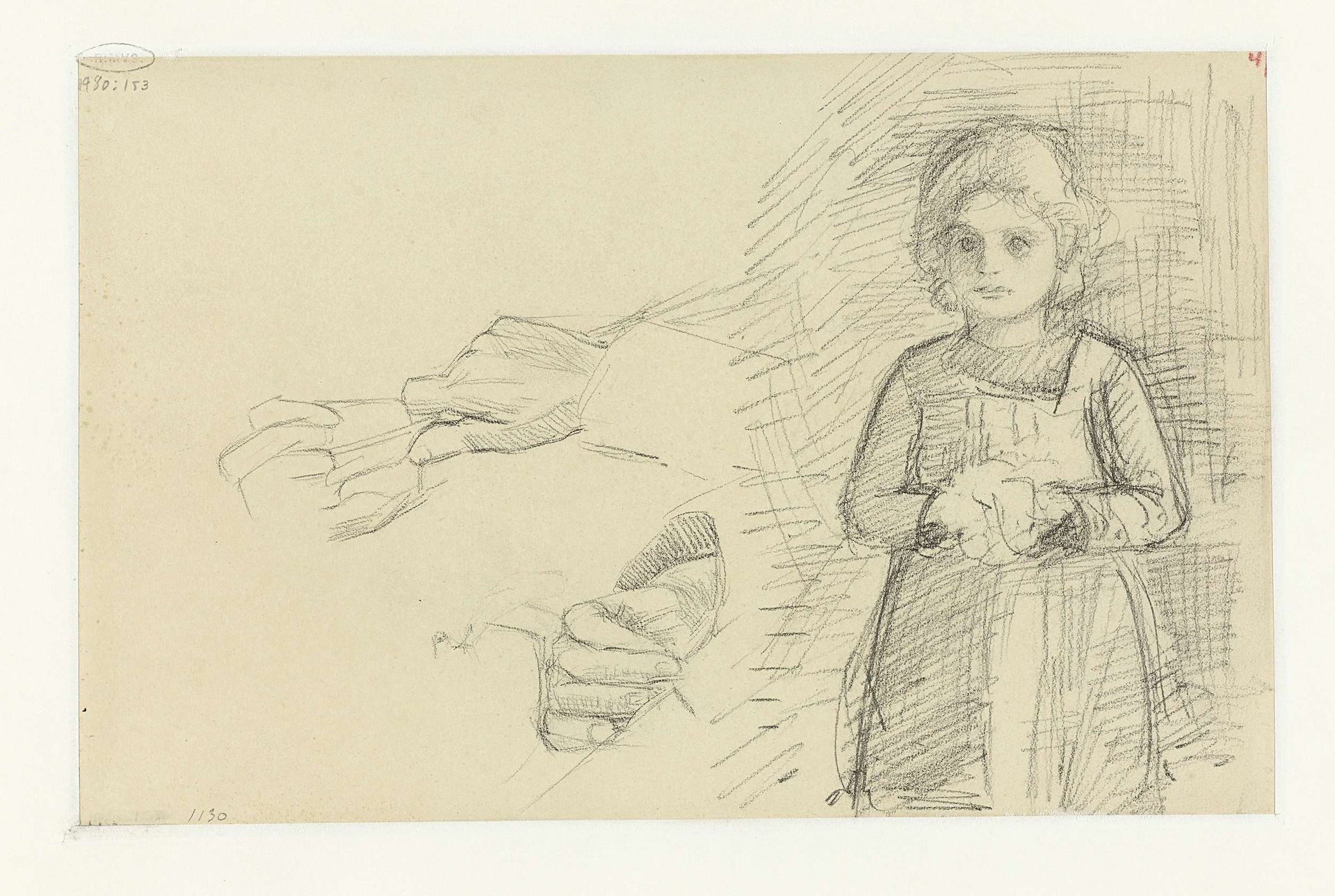
This is Jozef Israëls' "Study of a Standing Child and Hands", an undated drawing currently housed in the Rijksmuseum. The composition reveals a child rendered with delicate, tentative lines standing slightly off-center and two studies of hands to the side. The artist's marks, rendered in graphite, are quite visible. Israëls’ visible strokes aren't just about documenting visual reality, they're expressive, they function almost as a language. The structural juxtaposition of the child and the disembodied hands creates a visual tension. This tension between presence and absence, reality and representation, is a reflection of how we perceive and construct meaning. The lack of precise detail in the child’s face and the hands invites subjective interpretation, destabilizing fixed notions of identity and representation. Consider how the simple act of drawing becomes a profound exploration of seeing, representing, and understanding our world. It prompts us to consider the complexities inherent in the artistic process and the unstable nature of meaning itself.

Artwork details
- Medium
- drawing, pencil
- Dimensions
- height 290 mm, width 190 mm
- Location
- Rijksmuseum
- Copyright
- Rijks Museum: Open Domain
Tags
portrait
pencil drawn
drawing
pencil sketch
figuration
pencil
pencil work
realism
Comments
Be the first to share your thoughts about this work.
About this artwork
This is Jozef Israëls' "Study of a Standing Child and Hands", an undated drawing currently housed in the Rijksmuseum. The composition reveals a child rendered with delicate, tentative lines standing slightly off-center and two studies of hands to the side. The artist's marks, rendered in graphite, are quite visible. Israëls’ visible strokes aren't just about documenting visual reality, they're expressive, they function almost as a language. The structural juxtaposition of the child and the disembodied hands creates a visual tension. This tension between presence and absence, reality and representation, is a reflection of how we perceive and construct meaning. The lack of precise detail in the child’s face and the hands invites subjective interpretation, destabilizing fixed notions of identity and representation. Consider how the simple act of drawing becomes a profound exploration of seeing, representing, and understanding our world. It prompts us to consider the complexities inherent in the artistic process and the unstable nature of meaning itself.
Comments
Be the first to share your thoughts about this work.