About this artwork
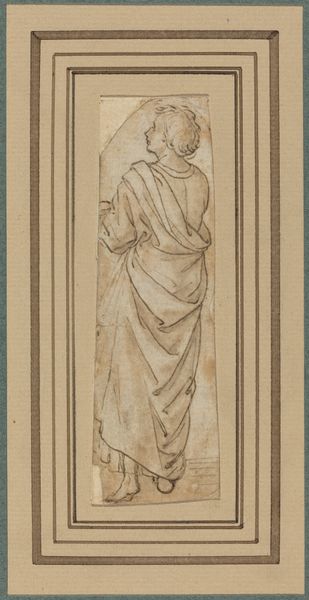
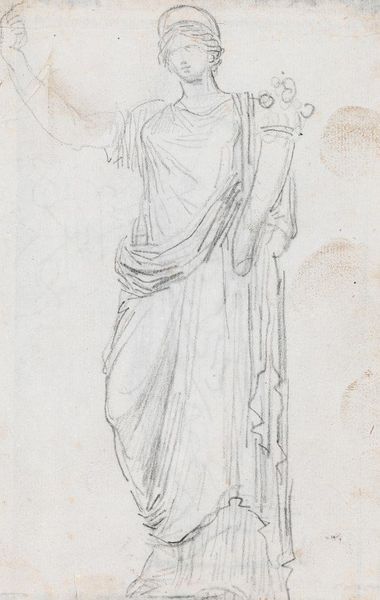
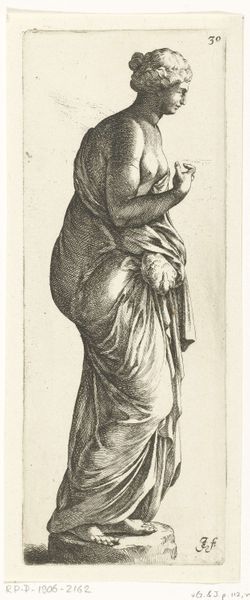
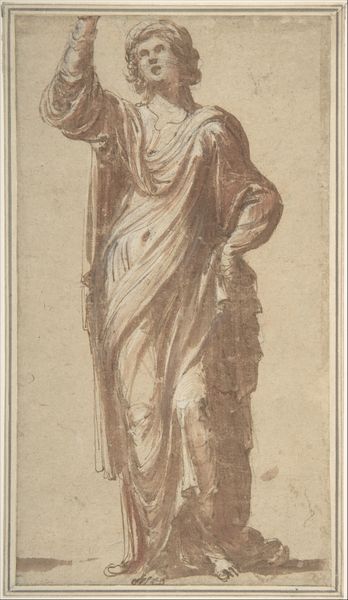
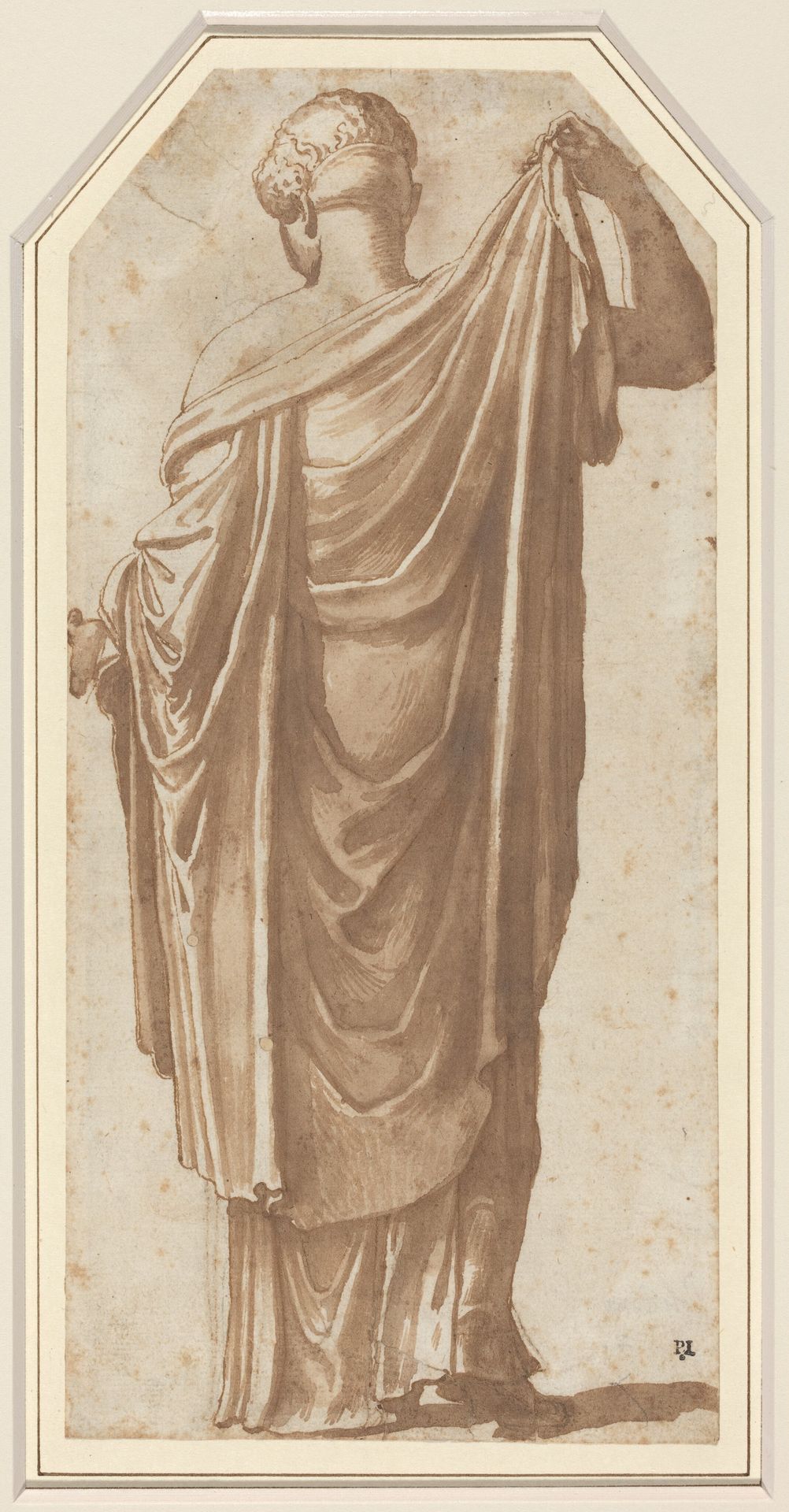
Nicolas Poussin created this sepia drawing of a Female Roman Statue Seen from the Back. The statue stands, draped in fabric, with a striking weight and balance; the texture of the drapery is depicted through dense, rhythmic lines that cascade down the figure, creating a sense of dynamic movement despite the statue’s stillness. The drawing is an exercise in form, with Poussin meticulously rendering the play of light and shadow across the statue’s surface. This approach reflects a broader interest in classical antiquity and the pursuit of ideal forms. Poussin uses the statue to explore themes of representation and reality, engaging with the philosophical idea that art can capture and elevate the essence of nature. The back view denies the viewer a direct gaze, instead inviting contemplation on the structure and mass of the figure. This is less about the individual and more about the enduring qualities of classical art.
Female Roman Statue Seen from the Back


Artwork details
- Medium
- drawing, paper, ink
- Dimensions
- overall (lunette): 25 x 11.9 cm (9 13/16 x 4 11/16 in.)
- Copyright
- National Gallery of Art: CC0 1.0
Tags
portrait
drawing
greek-and-roman-art
figuration
paper
ink
ancient-mediterranean
history-painting
academic-art
nude
Comments
Be the first to share your thoughts about this work.
About this artwork
Nicolas Poussin created this sepia drawing of a Female Roman Statue Seen from the Back. The statue stands, draped in fabric, with a striking weight and balance; the texture of the drapery is depicted through dense, rhythmic lines that cascade down the figure, creating a sense of dynamic movement despite the statue’s stillness. The drawing is an exercise in form, with Poussin meticulously rendering the play of light and shadow across the statue’s surface. This approach reflects a broader interest in classical antiquity and the pursuit of ideal forms. Poussin uses the statue to explore themes of representation and reality, engaging with the philosophical idea that art can capture and elevate the essence of nature. The back view denies the viewer a direct gaze, instead inviting contemplation on the structure and mass of the figure. This is less about the individual and more about the enduring qualities of classical art.
Comments
Be the first to share your thoughts about this work.