About this artwork
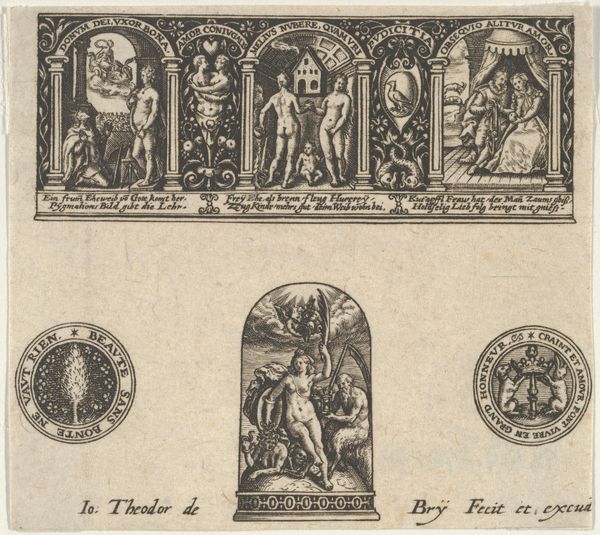
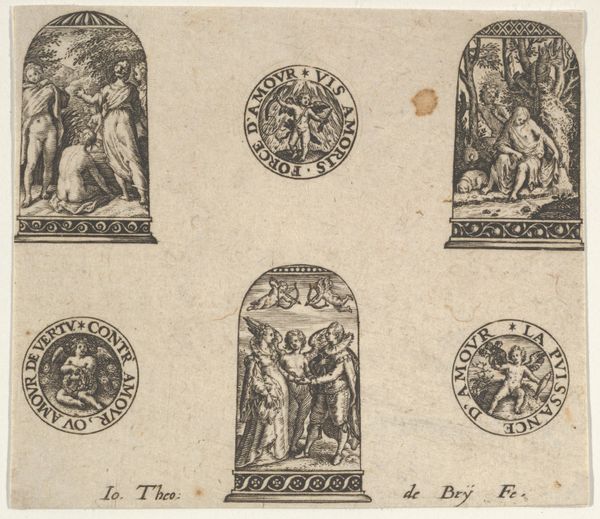
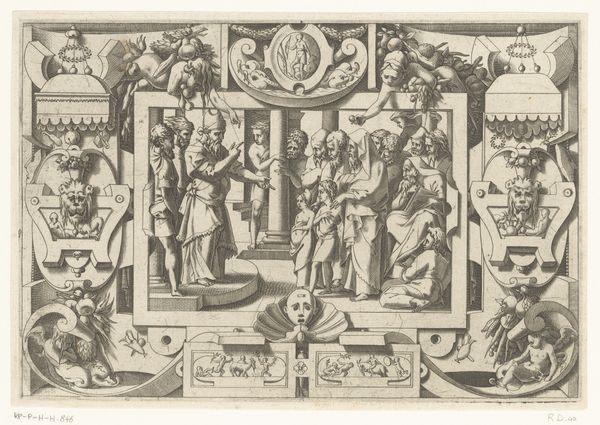
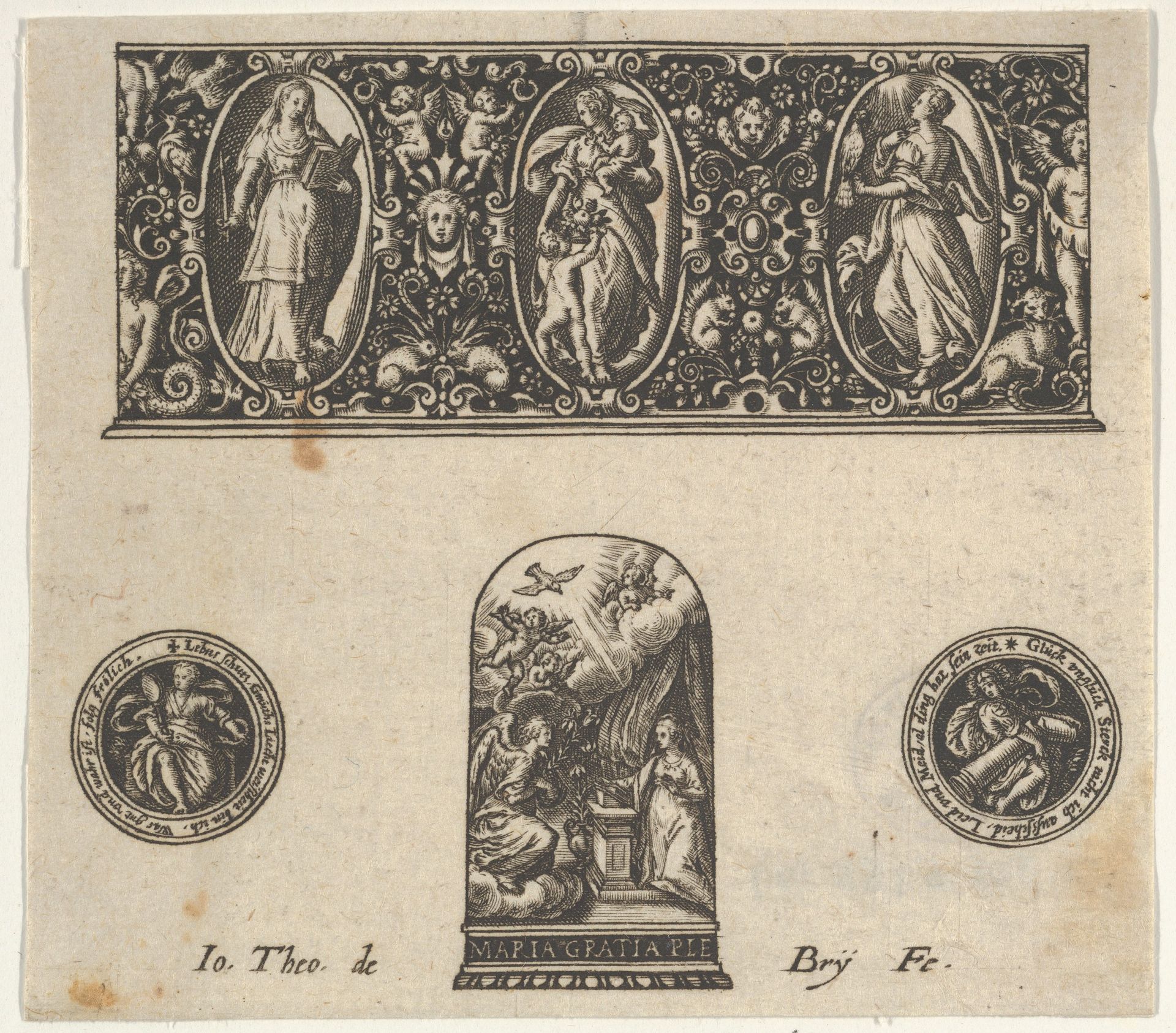
This horizontal panel with design for a thimble was etched in the late 16th or early 17th century by Johann Theodor de Bry. It's an intriguing example of how printmaking served not just art, but also craft. Etching, unlike engraving, involves coating a metal plate with wax, scratching an image into it, and then submerging the plate in acid. The acid bites into the exposed metal, creating lines that hold ink. De Bry then printed the design onto paper. The result is an object that hovers between the fine and the functional. Look closely at the depicted scenes, which include the Annunciation and other religious figures; these would have adorned a thimble, a humble tool for seamstresses. This juxtaposition speaks volumes about the period’s social fabric. A craft object that can mass produce designs for luxury goods, making art accessible in everyday life, and underscoring the intrinsic link between labor, devotion, and design.
Horizontal Panel with Design for a Thimble with the Annuciation Below a Frieze with Three Figures in Ovals
1580 - 1600

Johann Theodor de Bry
1561 - 1623
The Metropolitan Museum of Art
Metropolitan Museum of Art, New York, NYArtwork details
- Medium
- drawing, print, ink, engraving
- Dimensions
- Sheet: 2 1/2 × 1 5/8 in. (6.3 × 4.1 cm)
- Location
- Metropolitan Museum of Art, New York, NY
- Copyright
- Public Domain
Tags
Comments
Share your thoughts
About this artwork
This horizontal panel with design for a thimble was etched in the late 16th or early 17th century by Johann Theodor de Bry. It's an intriguing example of how printmaking served not just art, but also craft. Etching, unlike engraving, involves coating a metal plate with wax, scratching an image into it, and then submerging the plate in acid. The acid bites into the exposed metal, creating lines that hold ink. De Bry then printed the design onto paper. The result is an object that hovers between the fine and the functional. Look closely at the depicted scenes, which include the Annunciation and other religious figures; these would have adorned a thimble, a humble tool for seamstresses. This juxtaposition speaks volumes about the period’s social fabric. A craft object that can mass produce designs for luxury goods, making art accessible in everyday life, and underscoring the intrinsic link between labor, devotion, and design.
Comments
Share your thoughts