About this artwork
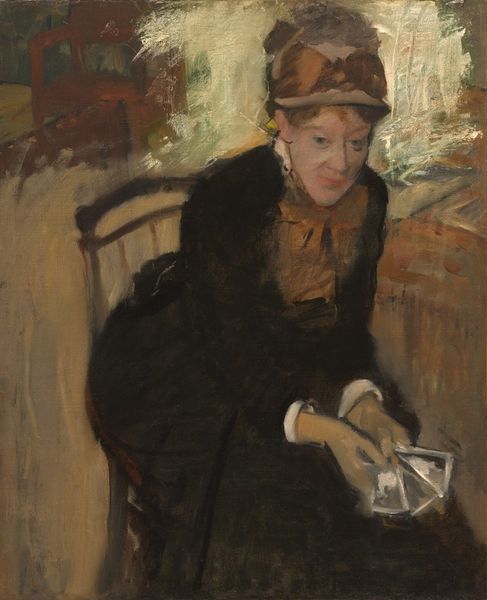
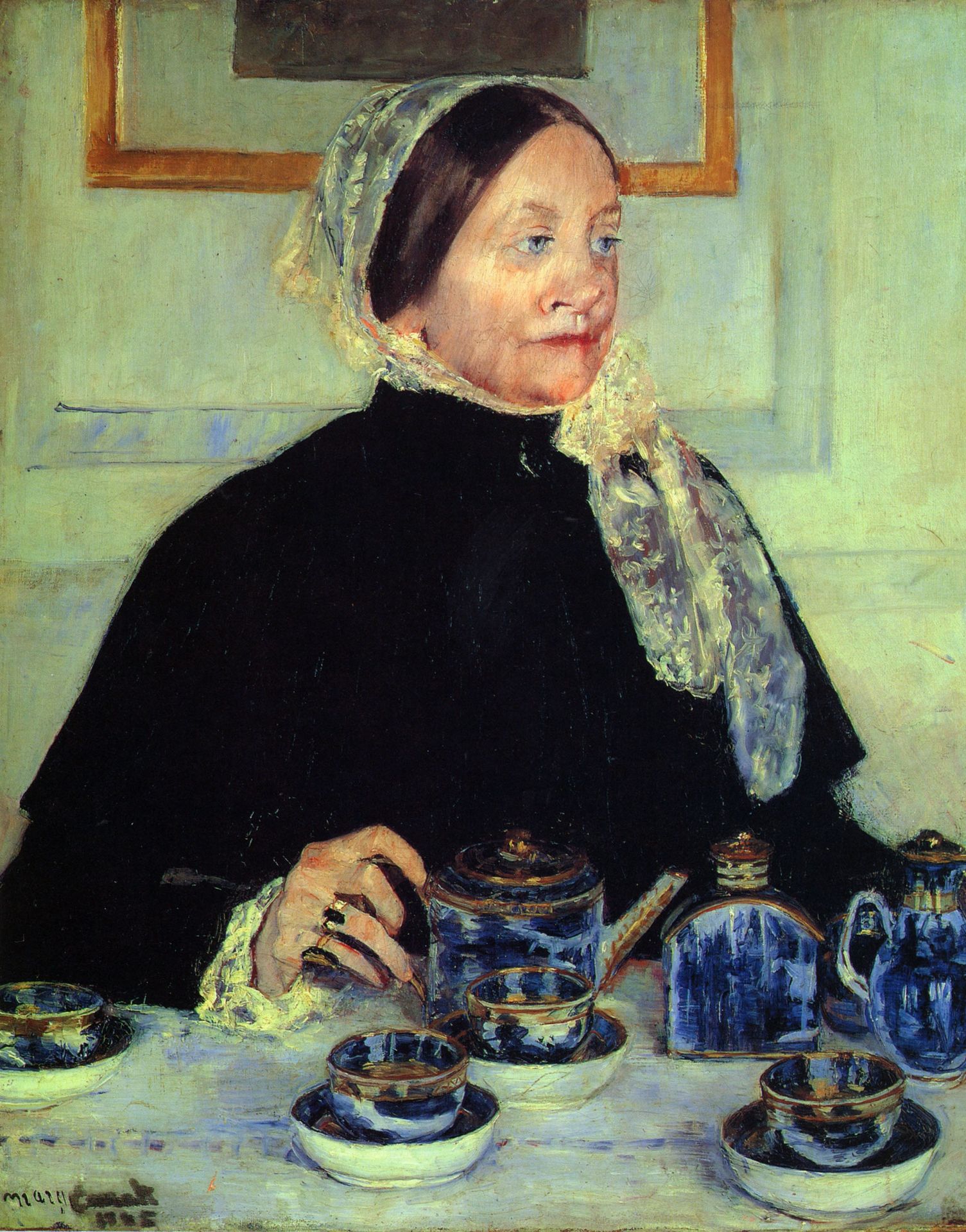
Mary Cassatt created this painting, "Lady at the Tea Table," using oil on canvas. Immediately, you’ll notice the intimate setting and the focus on domestic life, a common theme in Cassatt’s work. The composition is structured around the contrast between the dark, solid form of the lady's dress and the delicate, patterned tea set. This contrast isn't just visual; it suggests a dialogue between the formal constraints of societal expectation and the intimate, personal rituals of daily life. The brushstrokes are loose and visible, adding to the sense of immediacy and capturing the fleeting moment. The palette is restrained, dominated by blues and whites, which creates a sense of calm and order. In Cassatt's use of color and form, we see a subtle subversion of traditional portraiture. She invites us to consider the structures of representation itself. It’s not just a picture of a woman; it’s an exploration of how we construct meaning through images.
Lady at the Tea Table
1885

Mary Cassatt
1844 - 1926
The Metropolitan Museum of Art
Metropolitan Museum of Art (Met), New York City, NY, USArtwork details
- Medium
- painting, oil-paint
- Dimensions
- 73.66 x 86.36 cm
- Location
- Metropolitan Museum of Art (Met), New York City, NY, US
- Copyright
- Public domain
Tags
Comments
Share your thoughts
About this artwork
Mary Cassatt created this painting, "Lady at the Tea Table," using oil on canvas. Immediately, you’ll notice the intimate setting and the focus on domestic life, a common theme in Cassatt’s work. The composition is structured around the contrast between the dark, solid form of the lady's dress and the delicate, patterned tea set. This contrast isn't just visual; it suggests a dialogue between the formal constraints of societal expectation and the intimate, personal rituals of daily life. The brushstrokes are loose and visible, adding to the sense of immediacy and capturing the fleeting moment. The palette is restrained, dominated by blues and whites, which creates a sense of calm and order. In Cassatt's use of color and form, we see a subtle subversion of traditional portraiture. She invites us to consider the structures of representation itself. It’s not just a picture of a woman; it’s an exploration of how we construct meaning through images.
Comments
Share your thoughts