About this artwork
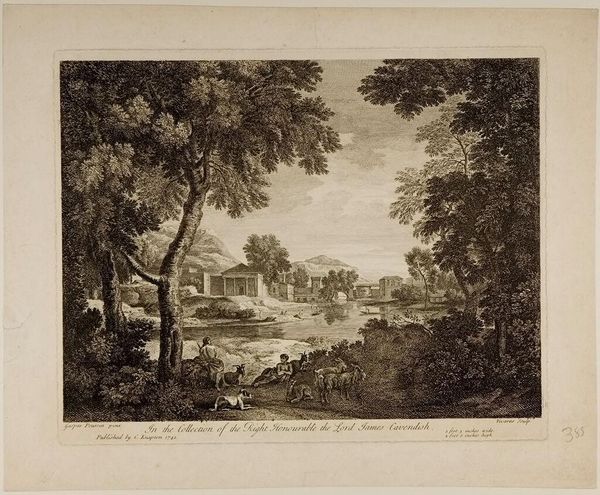
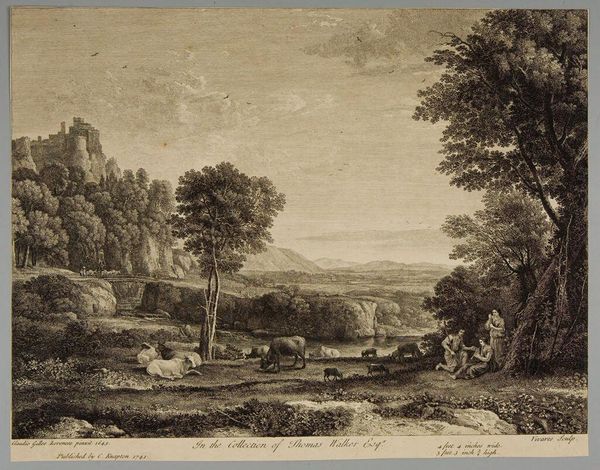
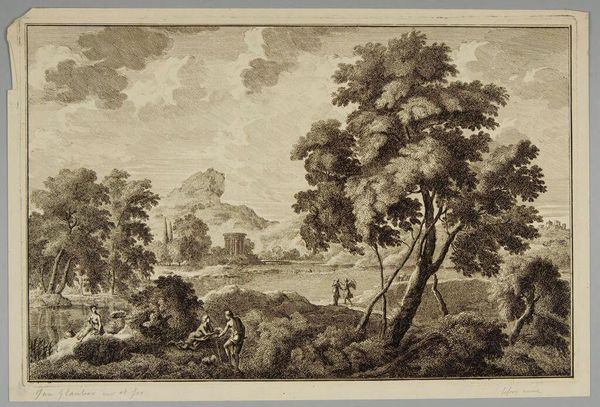
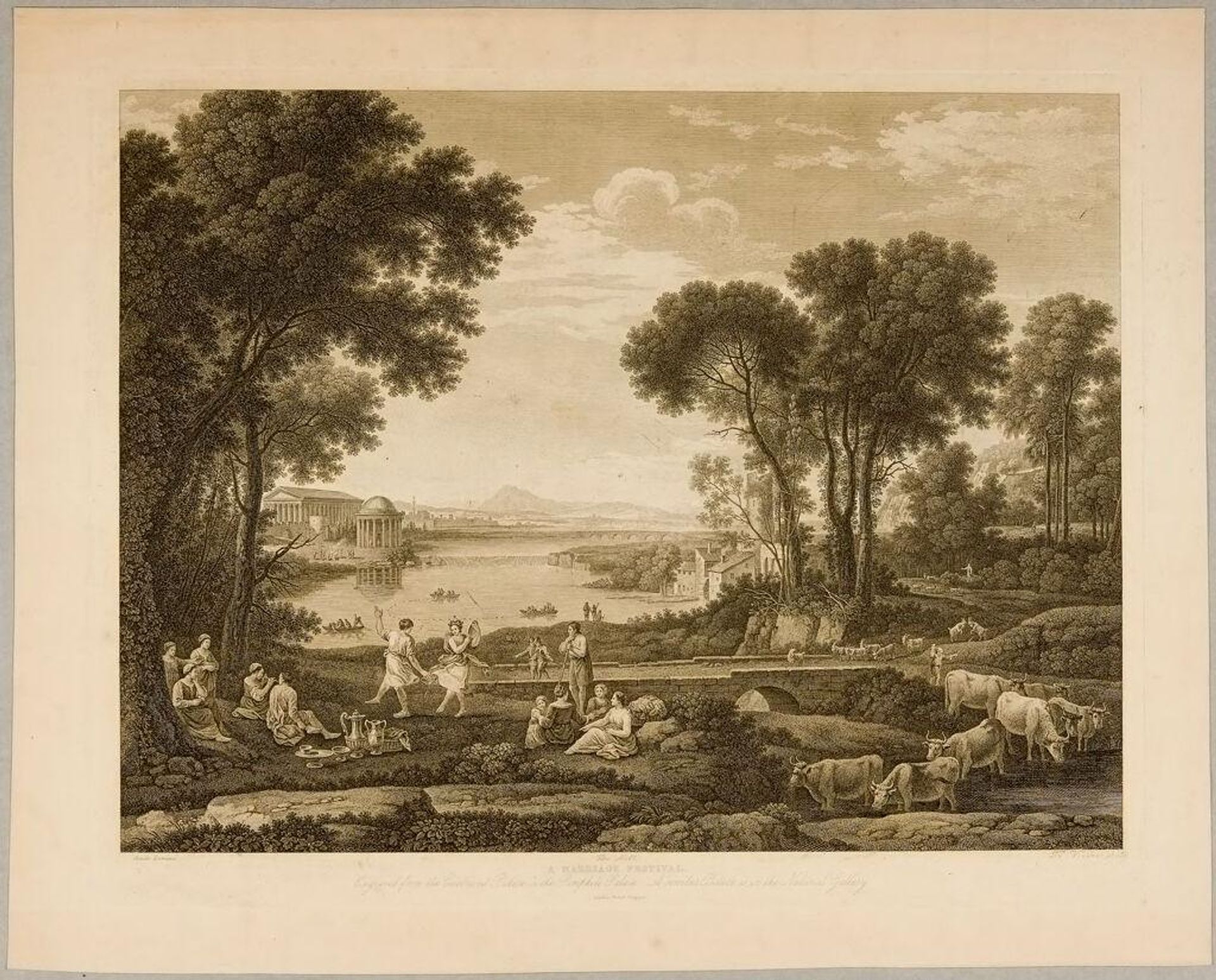
Curator: François Vivares' "A Marriage Festival" presents such a serene image, doesn't it? The monochrome palette and pastoral scene evoke a sense of timelessness. Editor: Yes, the engraving technique really emphasizes the texture of the landscape, from the trees to the clothing. One can almost feel the linen. Curator: Absolutely. It's interesting to consider how marriage is being portrayed here. It’s not just about the union of two individuals, but also about societal expectations and gendered roles within that structure. Editor: Indeed. The positioning of the figures and the inclusion of animals, such as the cattle, imply a connection to land and property, which speaks volumes about marital arrangements of the time. Curator: And what of the architectural elements in the distance? Temples on the waterfront imply a certain aspiration, a desire for permanence and order. Who is granted access to such permanence? Editor: The artist is clearly interested in the materiality of each element; how they're presented and how their form affects our reading of the wider composition. Curator: A complex scene, indeed. The image invites us to question the narratives it presents regarding unions, labor, and the landscape itself. Editor: Very true. Vivares provides plenty of material to reflect upon, making us consider what is being visually communicated beyond the initial impression.
A Marriage Festival
c. 18th century

Artwork details
- Location
- Harvard Art Museums
- Copyright
- CC0 1.0
Comments
Share your thoughts
About this artwork
Curator: François Vivares' "A Marriage Festival" presents such a serene image, doesn't it? The monochrome palette and pastoral scene evoke a sense of timelessness. Editor: Yes, the engraving technique really emphasizes the texture of the landscape, from the trees to the clothing. One can almost feel the linen. Curator: Absolutely. It's interesting to consider how marriage is being portrayed here. It’s not just about the union of two individuals, but also about societal expectations and gendered roles within that structure. Editor: Indeed. The positioning of the figures and the inclusion of animals, such as the cattle, imply a connection to land and property, which speaks volumes about marital arrangements of the time. Curator: And what of the architectural elements in the distance? Temples on the waterfront imply a certain aspiration, a desire for permanence and order. Who is granted access to such permanence? Editor: The artist is clearly interested in the materiality of each element; how they're presented and how their form affects our reading of the wider composition. Curator: A complex scene, indeed. The image invites us to question the narratives it presents regarding unions, labor, and the landscape itself. Editor: Very true. Vivares provides plenty of material to reflect upon, making us consider what is being visually communicated beyond the initial impression.
Comments
Share your thoughts