About this artwork
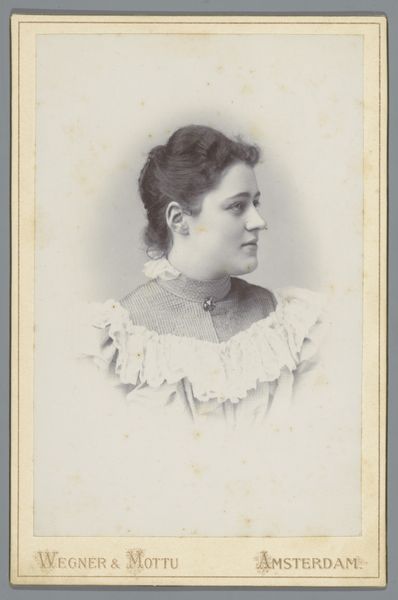
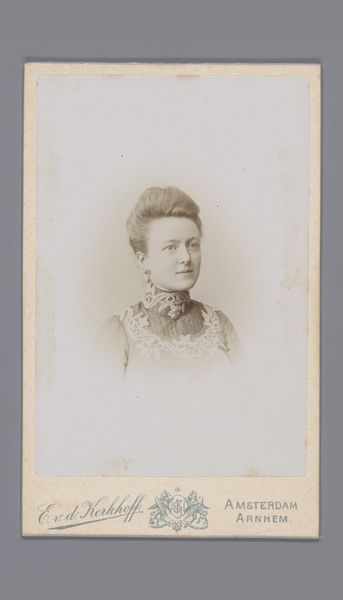
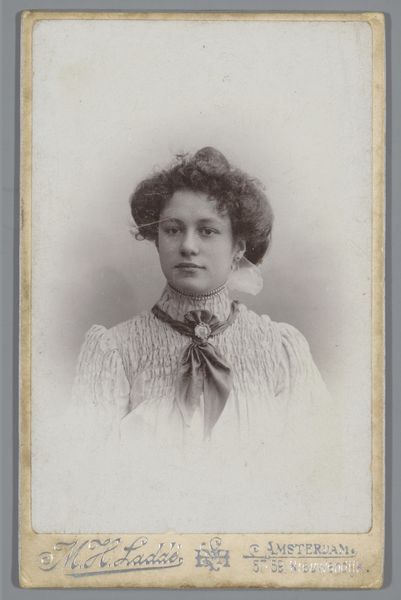
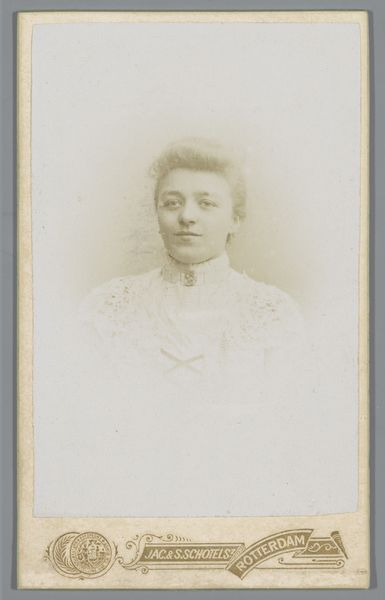
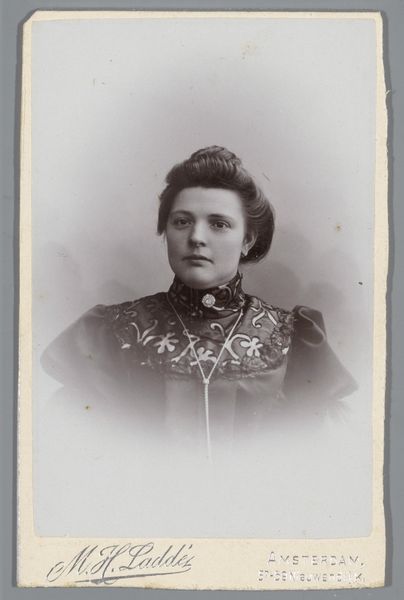
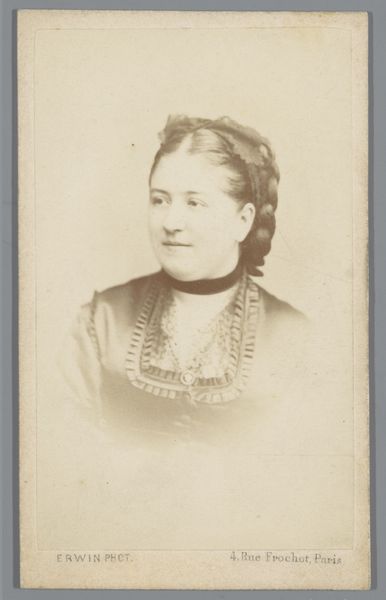
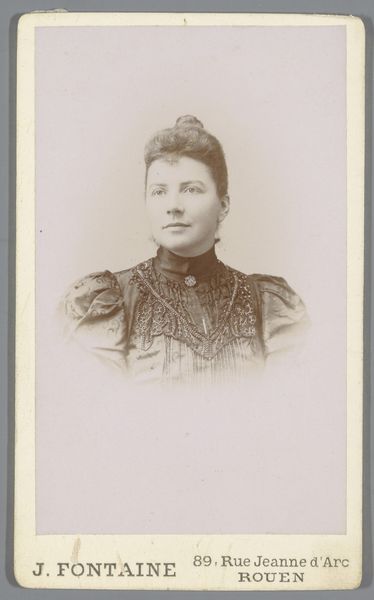
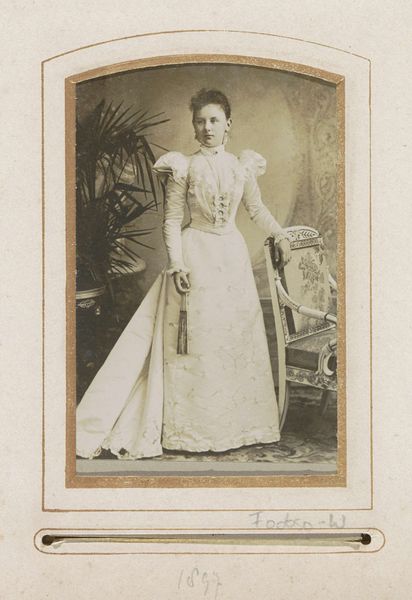
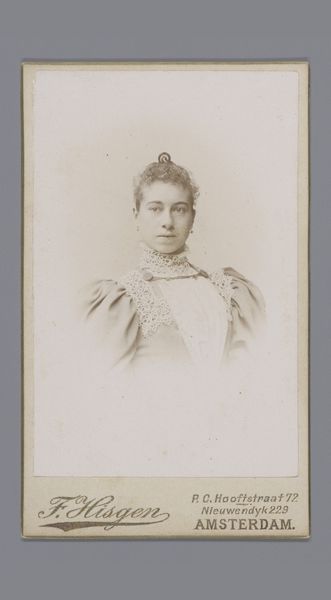
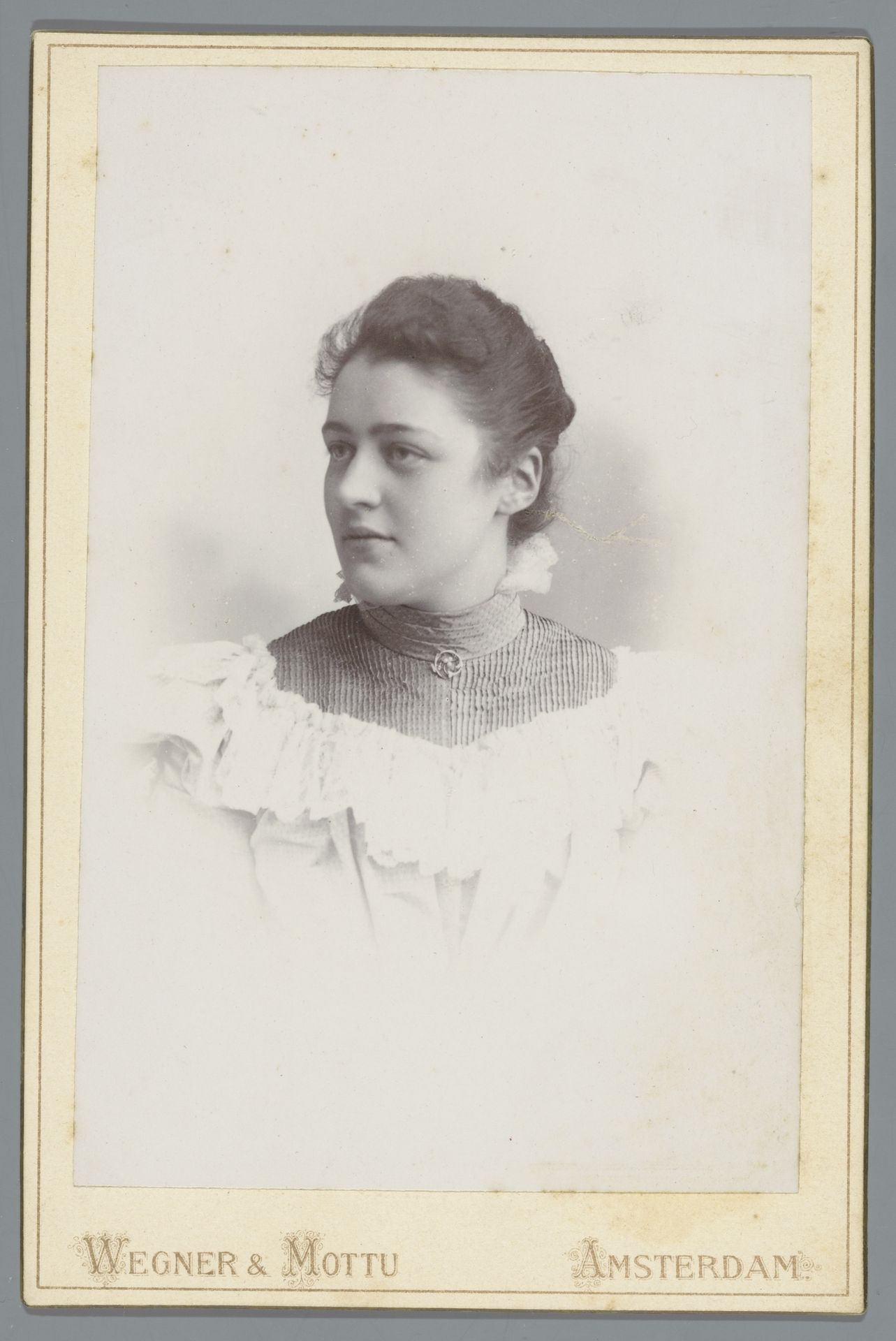
This is a portrait of an unknown woman made with photography by Wegner & Mottu in Amsterdam. Consider how photography changed portraiture. Before this process, a portrait was a great luxury, a marker of wealth and status. But as industrial chemistry advanced, a photographic likeness became available to the middle classes. Yet, this was still a specialized, skilled practice. The photographer had to carefully prepare chemicals, sensitize plates, and control light to create a crisp image. The very materiality of the photograph - a fragile emulsion on card stock - speaks to its newness as a form. Look closely, and you will see retouching that smoothed the sitter's skin. It seems Wegner and Mottu not only captured her image but subtly shaped it, too. So while photography democratized portraiture, it also introduced new kinds of control and expertise. Examining how things are made helps us understand the power structures inherent in even the most seemingly straightforward images.

Artwork details
- Medium
- photography, gelatin-silver-print
- Dimensions
- height 142 mm, width 92 mm
- Location
- Rijksmuseum
- Copyright
- Rijks Museum: Open Domain
Tags
portrait
aged paper
toned paper
photo restoration
white palette
photography
gelatin-silver-print
19th century
Comments
Be the first to share your thoughts about this work.
About this artwork
This is a portrait of an unknown woman made with photography by Wegner & Mottu in Amsterdam. Consider how photography changed portraiture. Before this process, a portrait was a great luxury, a marker of wealth and status. But as industrial chemistry advanced, a photographic likeness became available to the middle classes. Yet, this was still a specialized, skilled practice. The photographer had to carefully prepare chemicals, sensitize plates, and control light to create a crisp image. The very materiality of the photograph - a fragile emulsion on card stock - speaks to its newness as a form. Look closely, and you will see retouching that smoothed the sitter's skin. It seems Wegner and Mottu not only captured her image but subtly shaped it, too. So while photography democratized portraiture, it also introduced new kinds of control and expertise. Examining how things are made helps us understand the power structures inherent in even the most seemingly straightforward images.
Comments
Be the first to share your thoughts about this work.