About this artwork
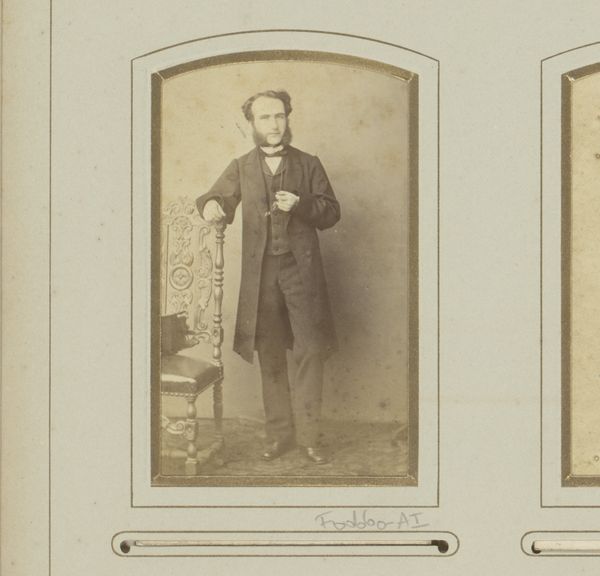
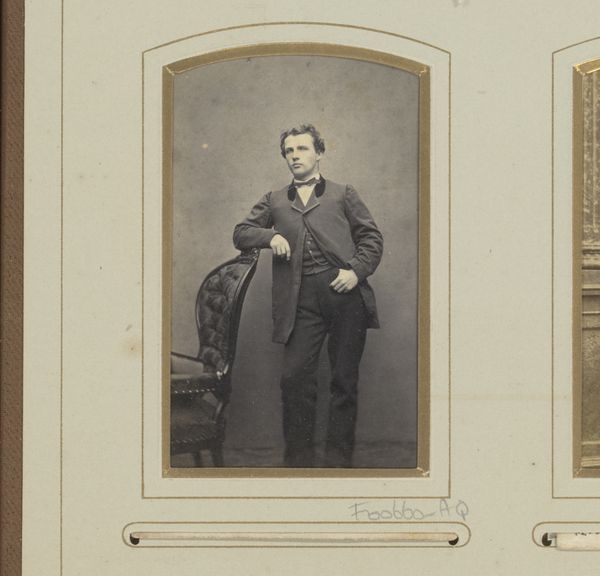
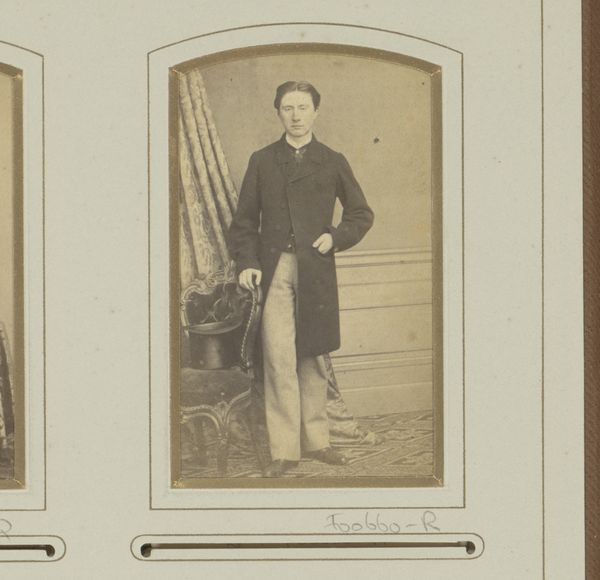
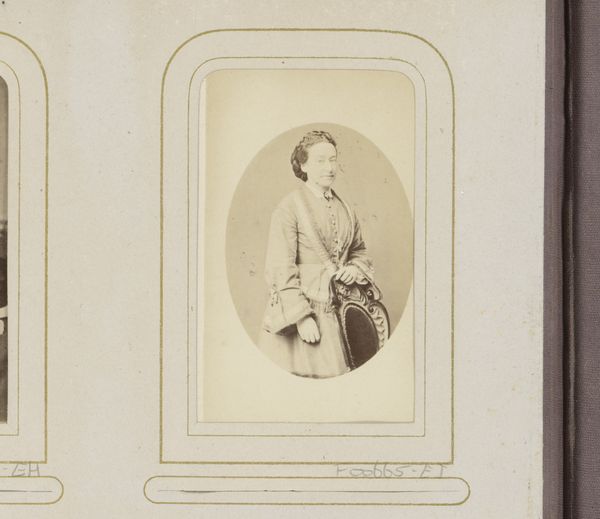
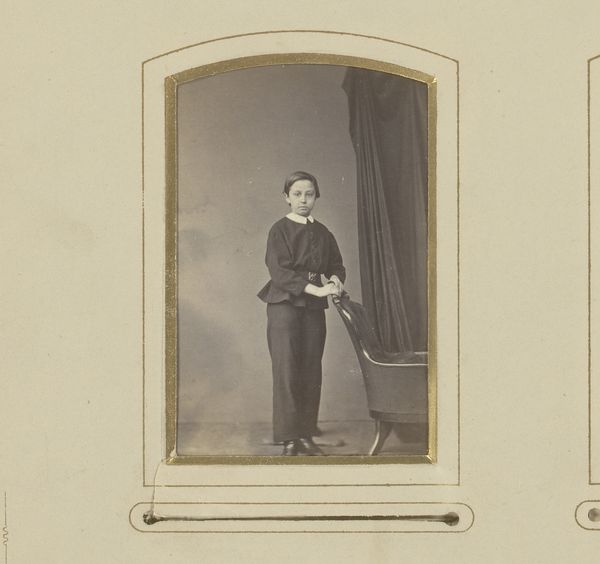
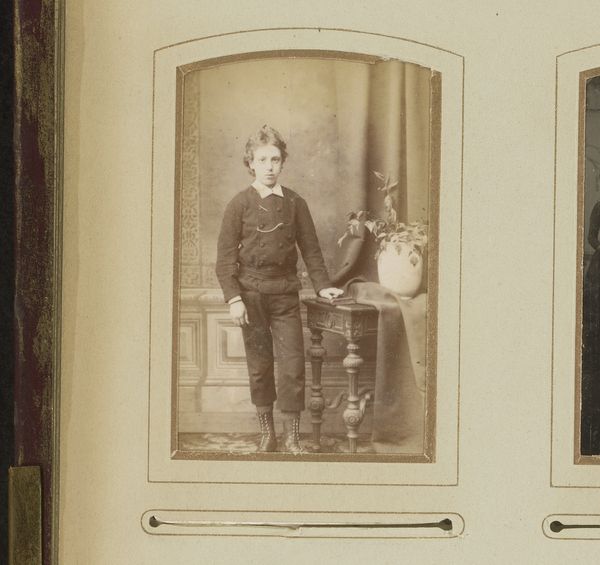
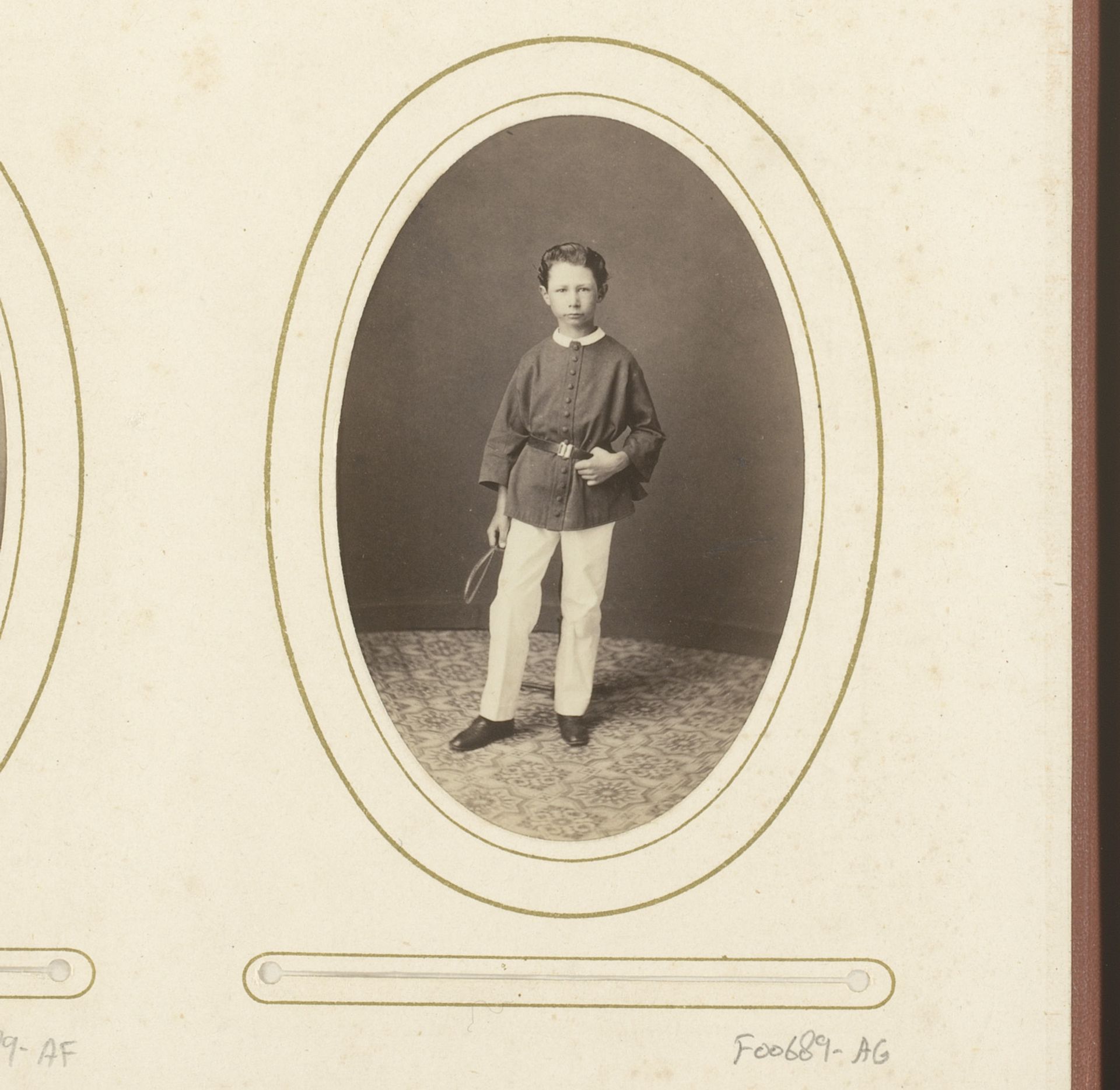
Curator: This is a gelatin-silver print titled "Portret van een staande jongen," or "Portrait of a Standing Boy." We estimate that it was created sometime between 1860 and 1900 by Johann Schäfer. It's a lovely example of period photography. Editor: It really is. I find it instantly charming, even poignant. There's something so vulnerable about him, standing so formally in this frame. He looks like he's stepped out of a bygone era, and yet, his quiet gaze is incredibly modern. Curator: Notice the details. His pose is carefully arranged—almost self-consciously so. It evokes classic portraiture, yet photography makes it accessible to new social strata. I wonder about the belt; it gives the whole composition a militairy tone. Editor: Right, the belt! It cinches in what appears to be quite a roomy tunic. This kid seems both eager and awkward. I can imagine the photographer arranging his pose, fussing with the belt. He must be aware of performing, of standing for something larger than himself. Curator: The formal realism of the photo enhances this sense. Each crease and fold in his garments contributes to a lifelike record but is framed inside that perfect oval that highlights how artificial the presentation of his standing is. Editor: It's funny; you use the term "artificial" but for me, this kid projects authenticity! Those slightly rumpled trousers, that soft light—it lends the whole image such a sensitive atmosphere. Photography is of course often connected with memories... The fragility and ephemerality that can appear out of photos, is touching. Curator: Photography can provide veracity as much as it can generate fiction. I'd like to reflect more about the symbolism here: childhood itself becoming something frozen in time. These pictures remind us now about how fragile childhood, memories and representations are... Editor: I totally agree! It reminds me how one moment of existence—being and breathing in the moment—is then interpreted, stylized, aestheticized, over time. Food for thought.

Artwork details
- Medium
- photography, gelatin-silver-print
- Dimensions
- height 81 mm, width 49 mm
- Copyright
- Rijks Museum: Open Domain
Tags
Comments
Share your thoughts
About this artwork
Curator: This is a gelatin-silver print titled "Portret van een staande jongen," or "Portrait of a Standing Boy." We estimate that it was created sometime between 1860 and 1900 by Johann Schäfer. It's a lovely example of period photography. Editor: It really is. I find it instantly charming, even poignant. There's something so vulnerable about him, standing so formally in this frame. He looks like he's stepped out of a bygone era, and yet, his quiet gaze is incredibly modern. Curator: Notice the details. His pose is carefully arranged—almost self-consciously so. It evokes classic portraiture, yet photography makes it accessible to new social strata. I wonder about the belt; it gives the whole composition a militairy tone. Editor: Right, the belt! It cinches in what appears to be quite a roomy tunic. This kid seems both eager and awkward. I can imagine the photographer arranging his pose, fussing with the belt. He must be aware of performing, of standing for something larger than himself. Curator: The formal realism of the photo enhances this sense. Each crease and fold in his garments contributes to a lifelike record but is framed inside that perfect oval that highlights how artificial the presentation of his standing is. Editor: It's funny; you use the term "artificial" but for me, this kid projects authenticity! Those slightly rumpled trousers, that soft light—it lends the whole image such a sensitive atmosphere. Photography is of course often connected with memories... The fragility and ephemerality that can appear out of photos, is touching. Curator: Photography can provide veracity as much as it can generate fiction. I'd like to reflect more about the symbolism here: childhood itself becoming something frozen in time. These pictures remind us now about how fragile childhood, memories and representations are... Editor: I totally agree! It reminds me how one moment of existence—being and breathing in the moment—is then interpreted, stylized, aestheticized, over time. Food for thought.
Comments
Share your thoughts