About this artwork
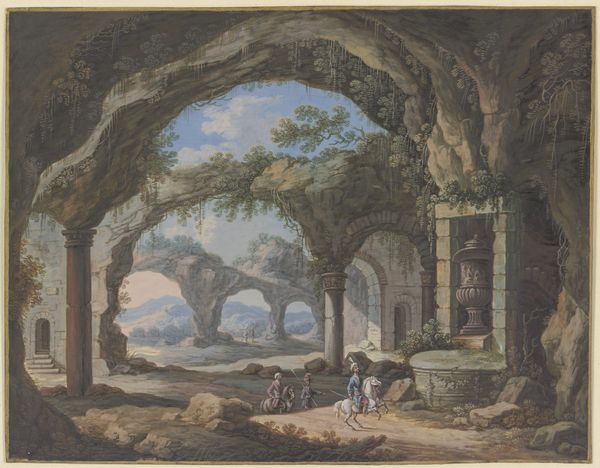
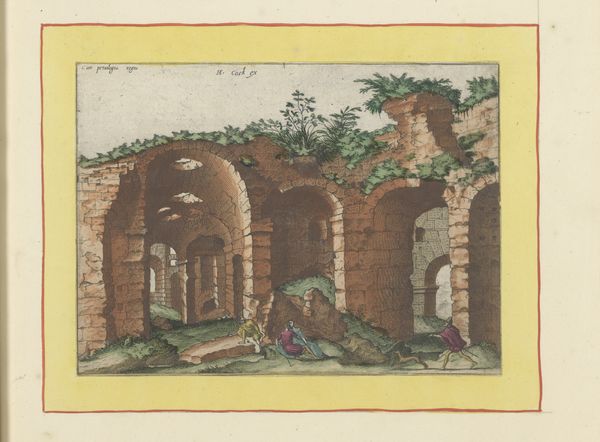
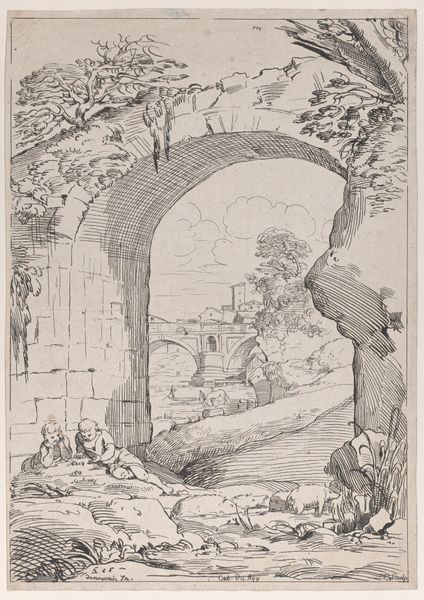
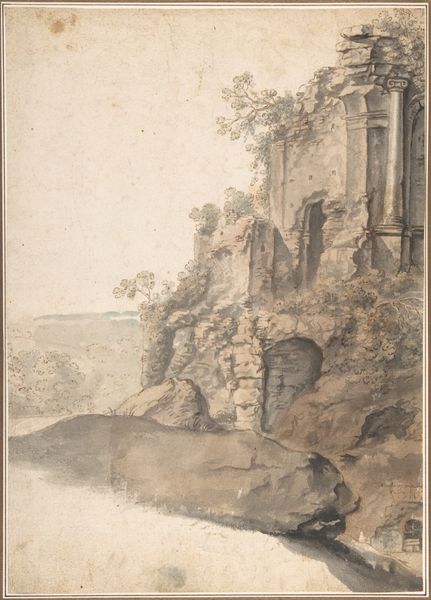
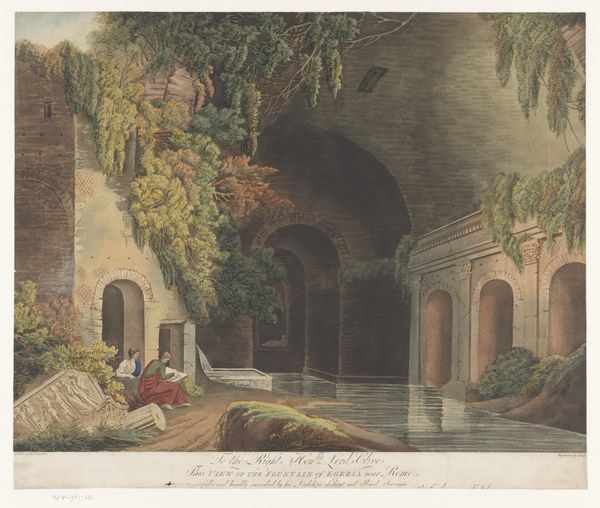
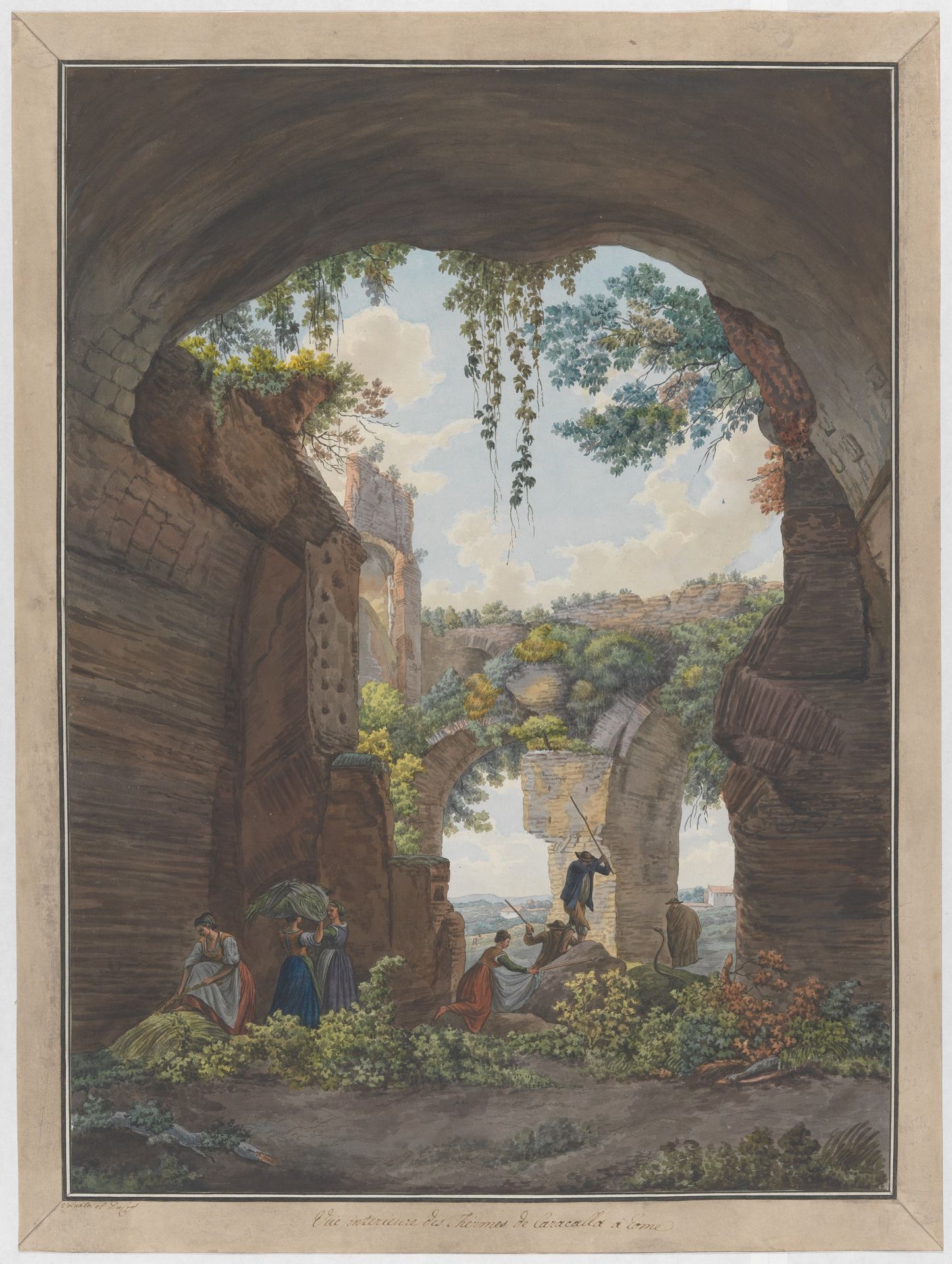
Giovanni Volpato created this watercolor, "Interior of the Baths at Caracalla," which presents a captivating view of the ancient Roman structure. The composition is organized around a massive, broken arch that frames the scene, immediately drawing your eye through a foreground of shadow into a sunlit ruin. Volpato uses the archway to not only depict the physical space but also to create a visual dialogue between past and present. The contrast of light and shadow emphasizes the decay of the architecture, set against the persistence of nature and human activity within the ruins. This interplay of light and dark invites a reflection on time, decay, and the layers of history. Notice how the watercolor medium allows for a delicate rendering of textures—from the rough stone to the soft foliage. Volpato uses these elements to engage with themes of ruin and the sublime, where the grandeur of the past is mediated through its fragmented remains. It reminds us that meaning is not fixed but is continually reshaped by time and perspective.
Interior of the Baths at Caracalla 1775 - 1785


Artwork details
- Medium
- drawing, print, watercolor
- Dimensions
- Mat: 31 1/8 × 23 1/4 in. (79 × 59 cm) Image: 28 1/8 × 20 9/16 in. (71.5 × 52.2 cm)
- Location
- Metropolitan Museum of Art, New York, NY
- Copyright
- Public Domain
Tags
drawing
neoclacissism
landscape
classical-realism
watercolor
cityscape
Comments
No comments
About this artwork
Giovanni Volpato created this watercolor, "Interior of the Baths at Caracalla," which presents a captivating view of the ancient Roman structure. The composition is organized around a massive, broken arch that frames the scene, immediately drawing your eye through a foreground of shadow into a sunlit ruin. Volpato uses the archway to not only depict the physical space but also to create a visual dialogue between past and present. The contrast of light and shadow emphasizes the decay of the architecture, set against the persistence of nature and human activity within the ruins. This interplay of light and dark invites a reflection on time, decay, and the layers of history. Notice how the watercolor medium allows for a delicate rendering of textures—from the rough stone to the soft foliage. Volpato uses these elements to engage with themes of ruin and the sublime, where the grandeur of the past is mediated through its fragmented remains. It reminds us that meaning is not fixed but is continually reshaped by time and perspective.
Comments
No comments