About this artwork
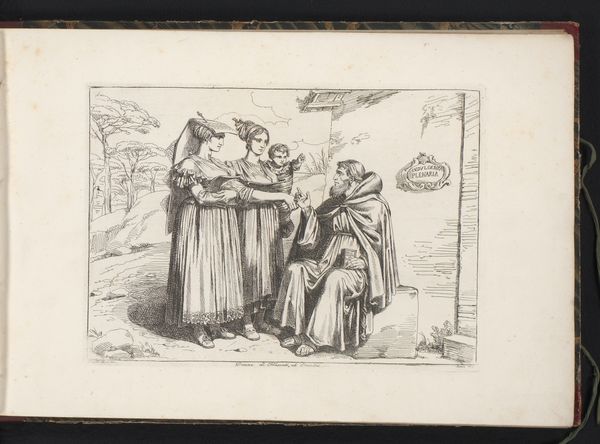
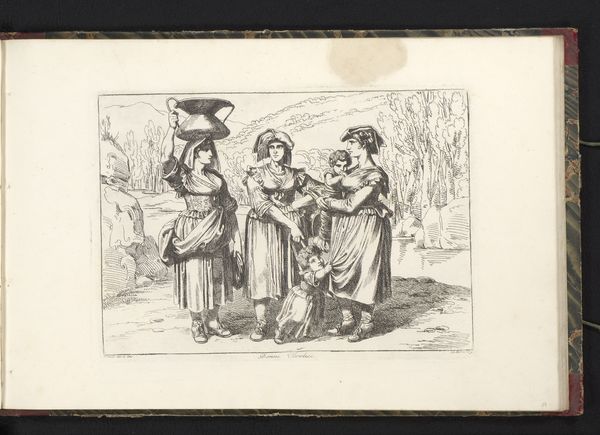
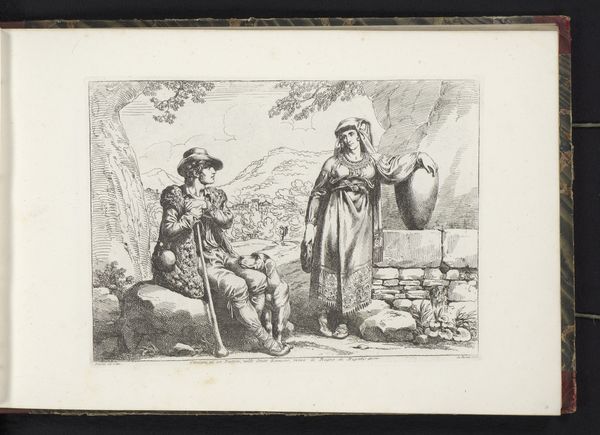
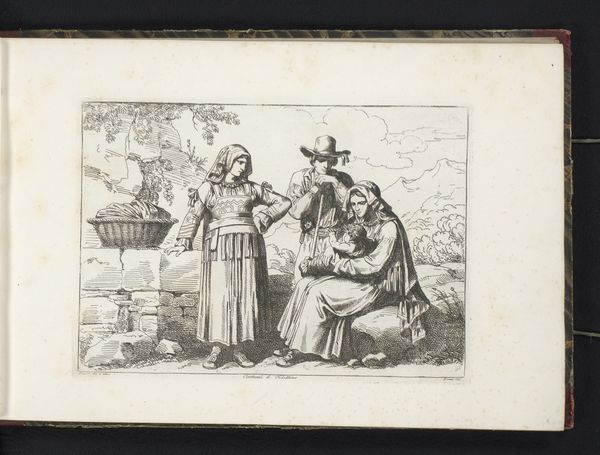
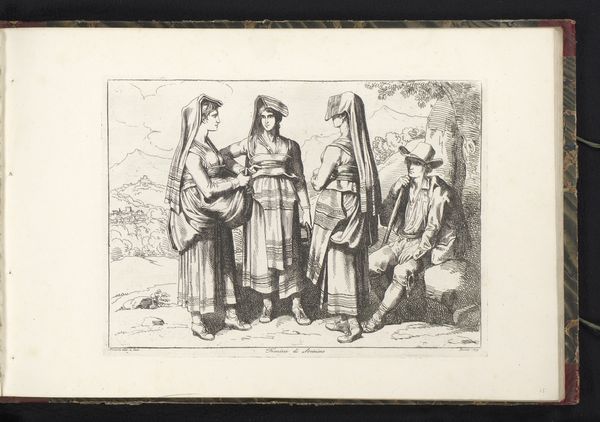
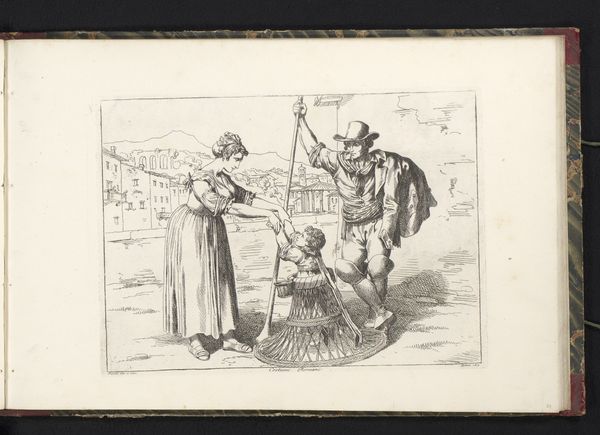
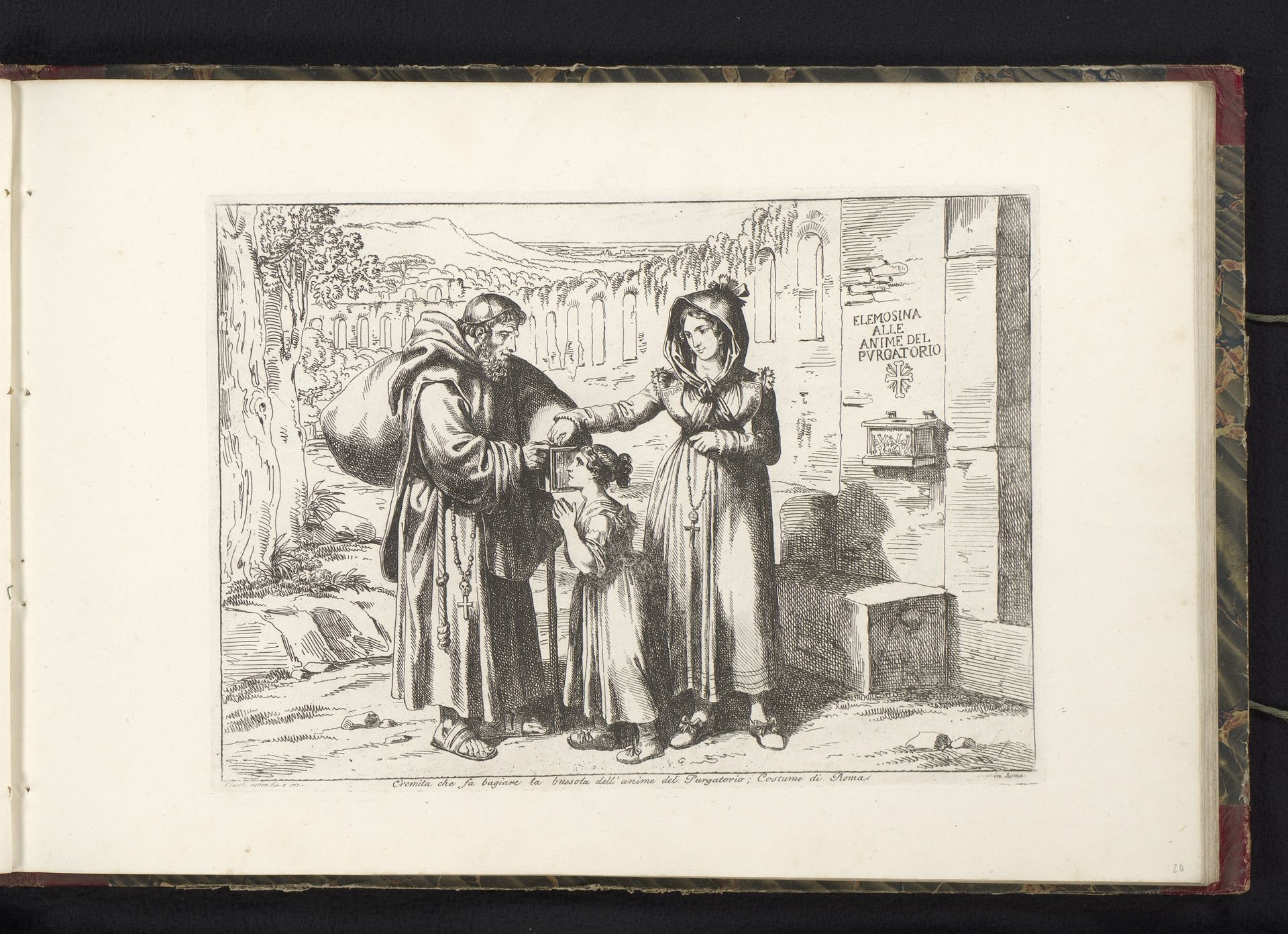
Bartolomeo Pinelli created this print, "Woman giving alms for the souls in purgatory", using etching, a printmaking technique where lines are incised into a metal plate with acid, then inked and printed. The linear quality is plain to see. The incised lines create a world of shadow and light, defining the figures of the woman, child, and monk as they engage in an act of charity. Notice how the cross-hatching gives depth to the monk’s robe and the woman’s dress, emphasizing their textures. The print's graphic nature speaks to a broader social context. Printmaking was crucial for disseminating ideas and images widely during this period. Prints like these provided a visual means for circulating religious and moral narratives. The act of giving alms, visually depicted here, was both a religious duty and a social practice, reflecting the complex intersection of faith, charity, and social responsibility in 19th-century life. By focusing on the printmaking process and its social context, we see how it goes beyond just image making.

Artwork details
- Medium
- drawing, paper, ink, pen
- Dimensions
- height 202 mm, width 283 mm
- Copyright
- Rijks Museum: Open Domain
Tags
Comments
Share your thoughts
About this artwork
Bartolomeo Pinelli created this print, "Woman giving alms for the souls in purgatory", using etching, a printmaking technique where lines are incised into a metal plate with acid, then inked and printed. The linear quality is plain to see. The incised lines create a world of shadow and light, defining the figures of the woman, child, and monk as they engage in an act of charity. Notice how the cross-hatching gives depth to the monk’s robe and the woman’s dress, emphasizing their textures. The print's graphic nature speaks to a broader social context. Printmaking was crucial for disseminating ideas and images widely during this period. Prints like these provided a visual means for circulating religious and moral narratives. The act of giving alms, visually depicted here, was both a religious duty and a social practice, reflecting the complex intersection of faith, charity, and social responsibility in 19th-century life. By focusing on the printmaking process and its social context, we see how it goes beyond just image making.
Comments
Share your thoughts