About this artwork
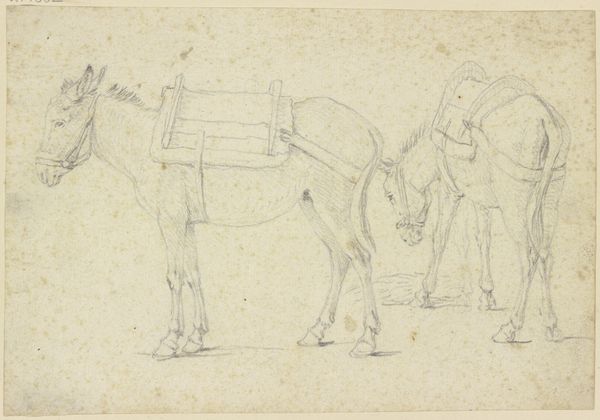
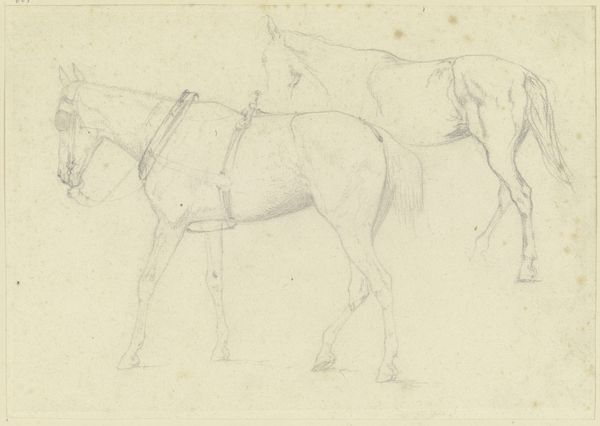
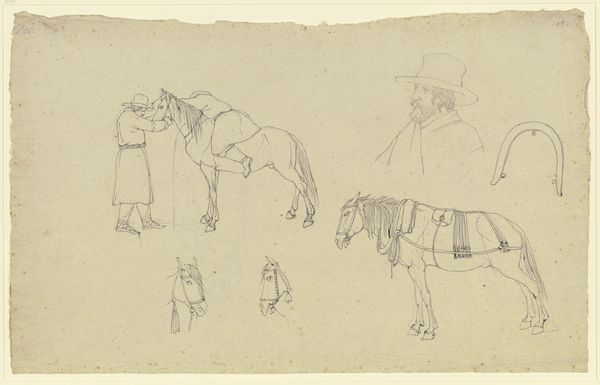
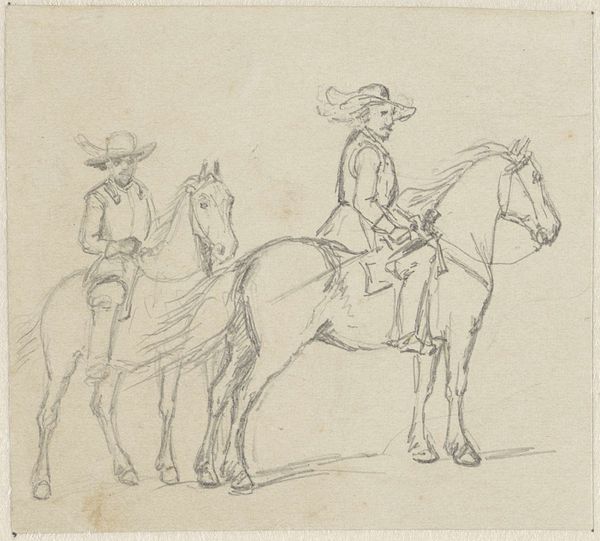
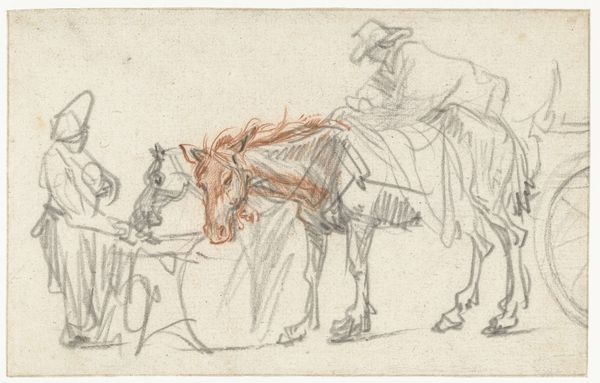
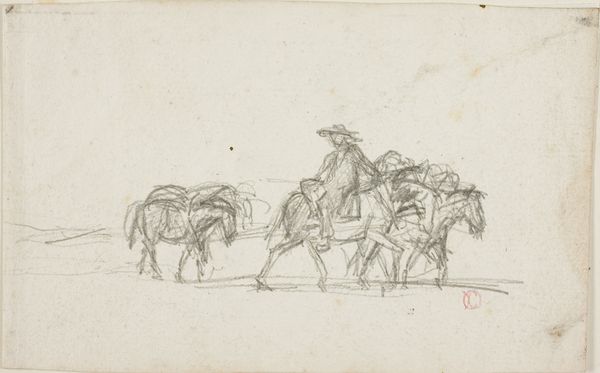
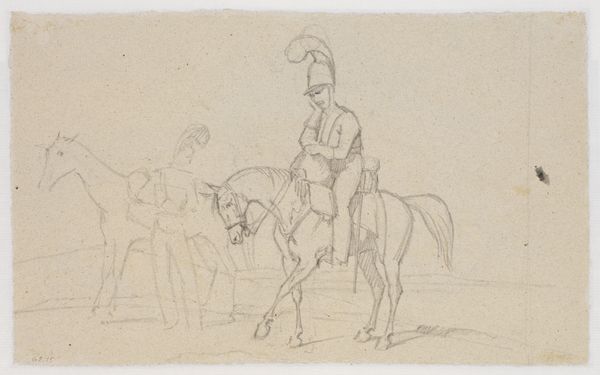
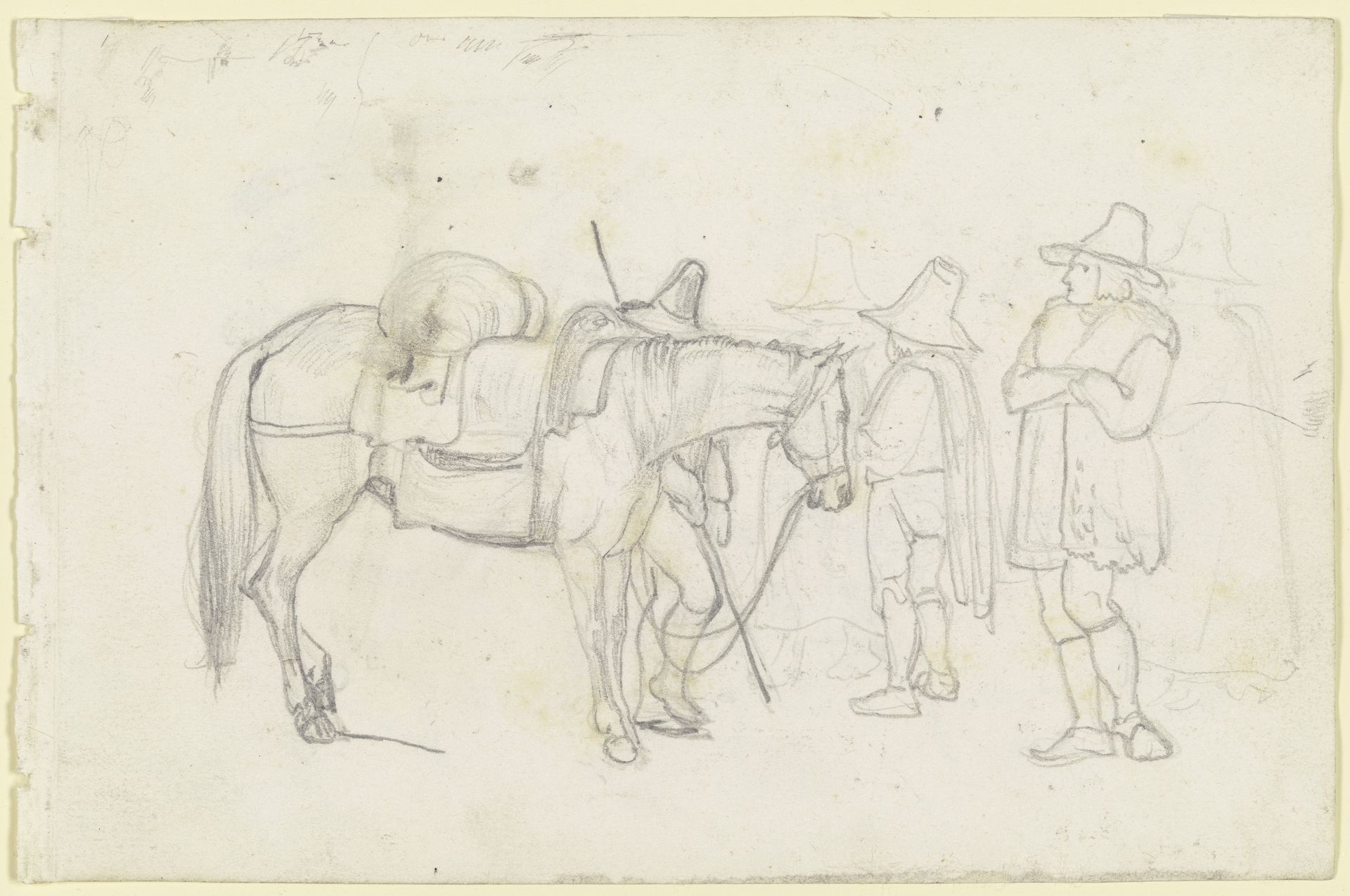
August Lucas rendered this delicate pencil drawing, titled "Horse with Horse Drovers," sometime in the 19th century. Lucas, born in 1803, came of age during the rise of Romanticism, a movement that emphasized emotion and individualism in reaction to the Enlightenment. This drawing offers a glimpse into rural life and the labor of working-class individuals. The drovers, with their simple attire and hats, stand beside their horses, which are weighed down with goods. Note the artist's focus on the relationship between humans and animals, suggesting the interdependence that defined agrarian societies. While the drawing captures a specific moment, it also hints at the broader socio-economic structures of the time. The drovers facilitate trade, connecting rural producers with urban markets. Lucas invites us to consider the role of labor in shaping society. The seemingly simple scene subtly acknowledges the lives of those often overlooked in grand historical narratives.


Artwork details
- Medium
- drawing, paper, pencil
- Location
- Städel Museum
- Copyright
- Public Domain
Tags
portrait
drawing
landscape
figuration
paper
pencil
Comments
Be the first to share your thoughts about this work.
About this artwork
August Lucas rendered this delicate pencil drawing, titled "Horse with Horse Drovers," sometime in the 19th century. Lucas, born in 1803, came of age during the rise of Romanticism, a movement that emphasized emotion and individualism in reaction to the Enlightenment. This drawing offers a glimpse into rural life and the labor of working-class individuals. The drovers, with their simple attire and hats, stand beside their horses, which are weighed down with goods. Note the artist's focus on the relationship between humans and animals, suggesting the interdependence that defined agrarian societies. While the drawing captures a specific moment, it also hints at the broader socio-economic structures of the time. The drovers facilitate trade, connecting rural producers with urban markets. Lucas invites us to consider the role of labor in shaping society. The seemingly simple scene subtly acknowledges the lives of those often overlooked in grand historical narratives.
Comments
Be the first to share your thoughts about this work.