About this artwork
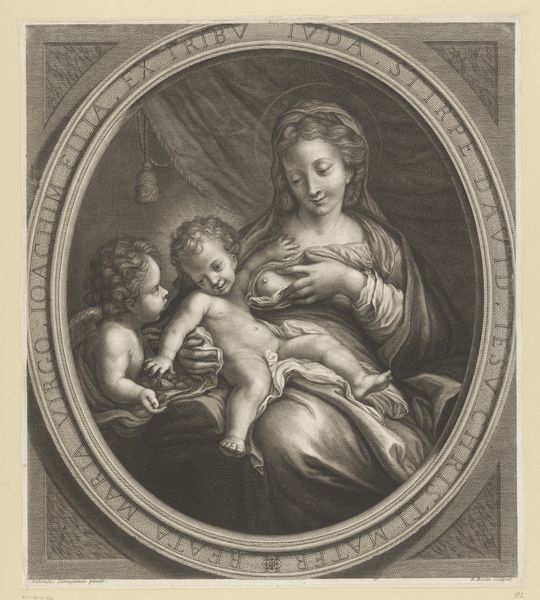
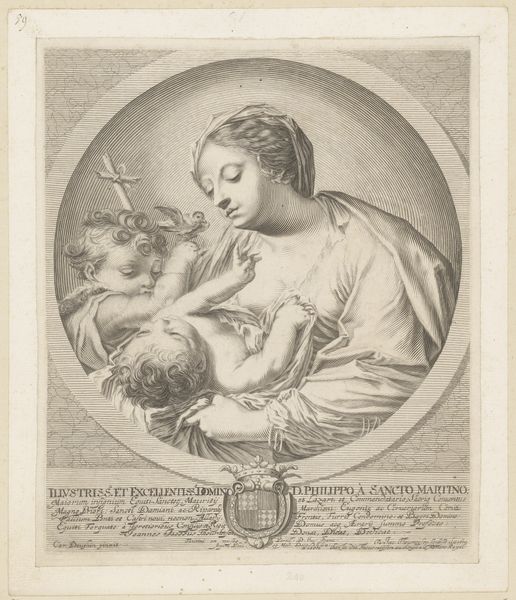
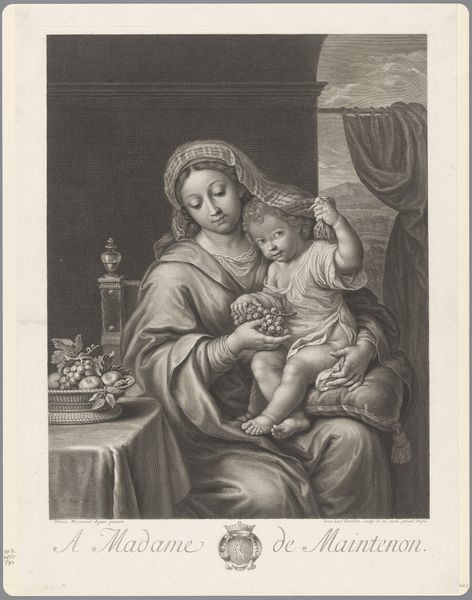
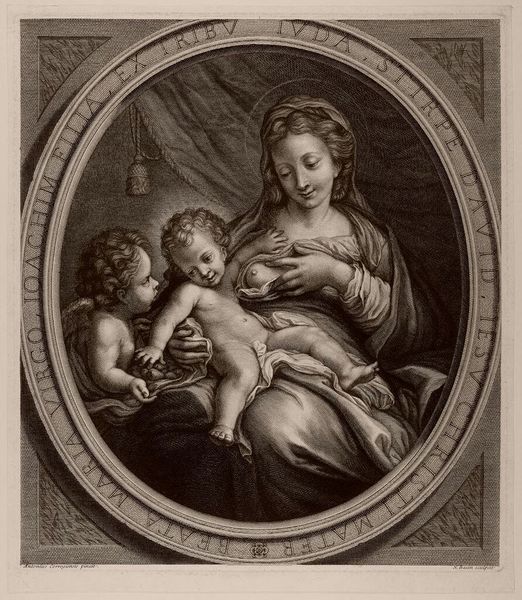
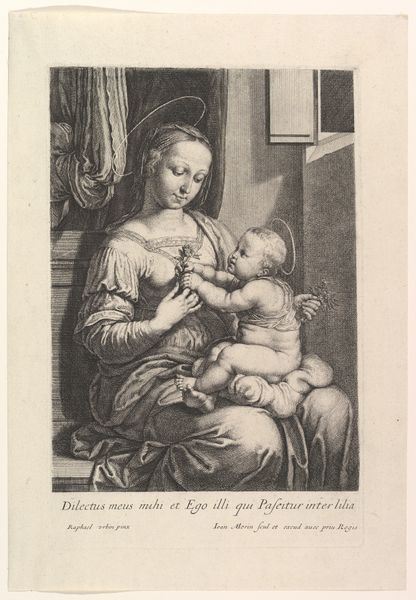
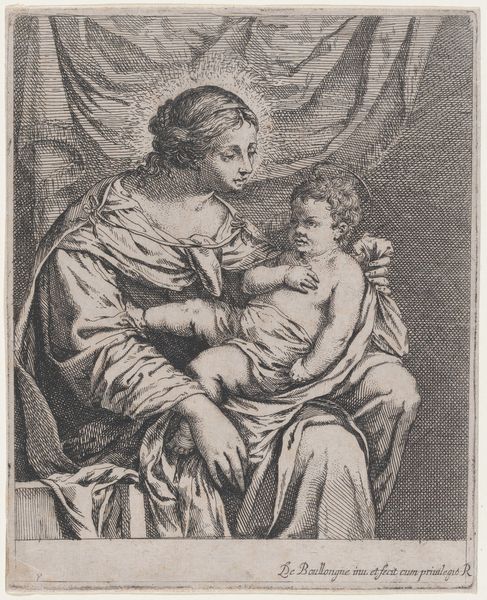
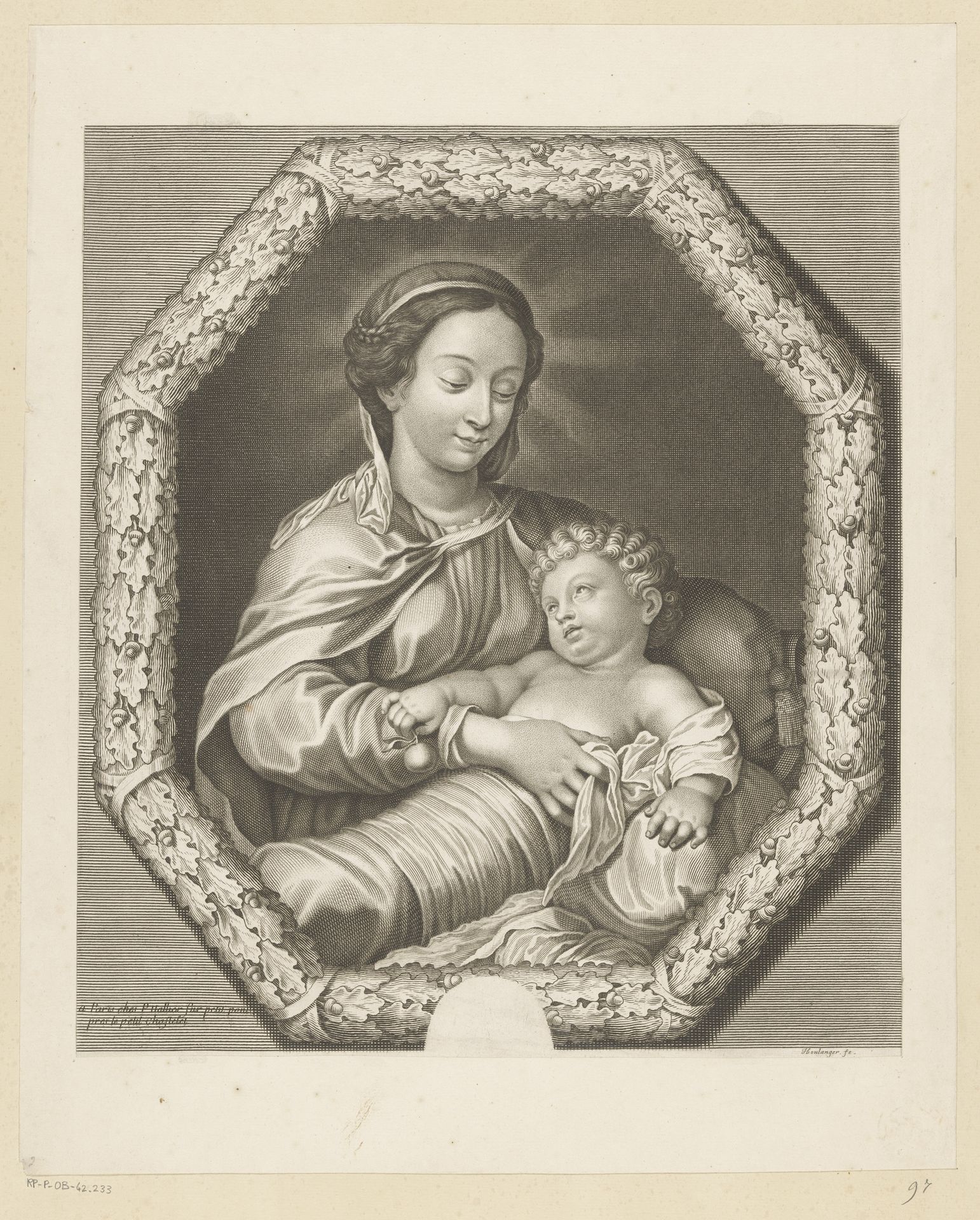
Jean Boulanger made this print, Maria met Kind in een octogonale lijst van eikenbladeren, which translates to Mary and Child in an octagonal frame of oak leaves, in France, sometime in the 17th century. This image of the Virgin and Christ Child is framed by oak leaves, traditionally a symbol of strength, endurance, and longevity. This visual language speaks to the cultural importance of the monarchy and the Catholic Church in France at that time. Boulanger made his name producing devotional images, and was admitted to the Royal Academy of Painting and Sculpture in 1651. The Academy played a key role in promoting the values of the monarchy, who used the visual arts as a form of propaganda. Religious imagery, and the status of the mother of Christ, was also politically charged in the 17th century. Studying Boulanger’s history, and that of the institutions and cultural contexts in which he worked, allows us to better understand the social and political conditions that shaped his art.
Maria met Kind in een octogonale lijst van eikenbladeren
1616 - 1680

Jean Boulanger
1608 - 1685Location
RijksmuseumArtwork details
- Medium
- print, engraving
- Dimensions
- height 364 mm, width 365 mm
- Location
- Rijksmuseum
- Copyright
- Rijks Museum: Open Domain
Tags
Comments
Share your thoughts
About this artwork
Jean Boulanger made this print, Maria met Kind in een octogonale lijst van eikenbladeren, which translates to Mary and Child in an octagonal frame of oak leaves, in France, sometime in the 17th century. This image of the Virgin and Christ Child is framed by oak leaves, traditionally a symbol of strength, endurance, and longevity. This visual language speaks to the cultural importance of the monarchy and the Catholic Church in France at that time. Boulanger made his name producing devotional images, and was admitted to the Royal Academy of Painting and Sculpture in 1651. The Academy played a key role in promoting the values of the monarchy, who used the visual arts as a form of propaganda. Religious imagery, and the status of the mother of Christ, was also politically charged in the 17th century. Studying Boulanger’s history, and that of the institutions and cultural contexts in which he worked, allows us to better understand the social and political conditions that shaped his art.
Comments
Share your thoughts