

1732
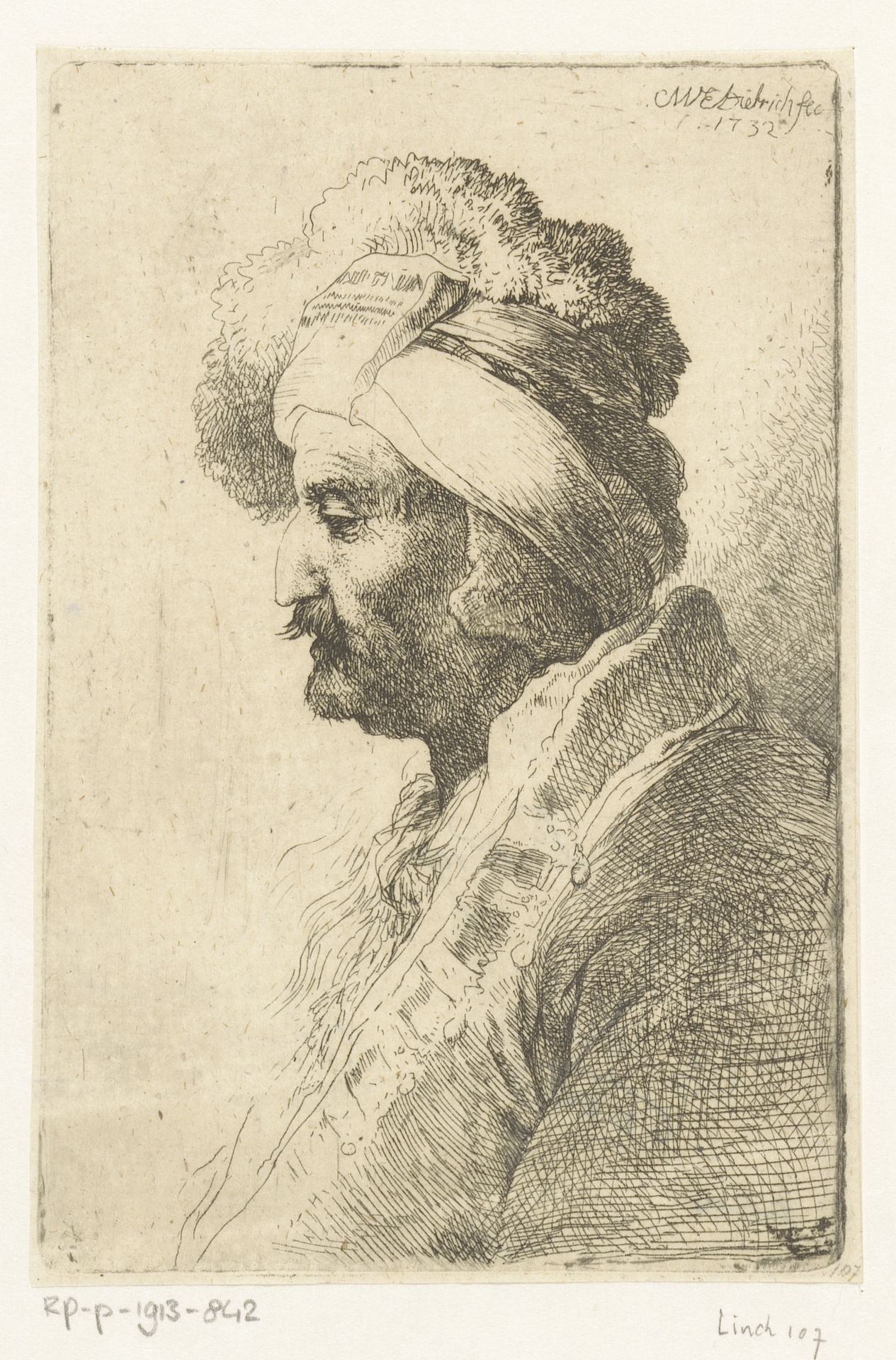
Neerkijkende man met bontmuts

Christian Wilhelm Ernst Dietrich
1712 - 1774Location
RijksmuseumListen to curator's interpretation
Curatorial notes
Christian Wilhelm Ernst Dietrich created this etching, "Neerkijkende man met bontmuts," sometime in the 18th century. The overall impression is one of detailed texture and controlled light, achieved through a dense network of fine lines. This use of line to create tone and form gives the piece a tactile quality, almost as if one could feel the rough texture of the fur hat. The composition focuses tightly on the figure's head and upper body in profile. Dietrich masterfully uses hatching and cross-hatching to build volume and shadow, drawing our eye to the contemplative expression of the man. The lines are not merely descriptive; they actively construct the form and evoke a sense of depth and weight. Consider how Dietrich's technique reflects the broader artistic concerns of his time. Etching allowed for a democratization of art through reproducible images. The careful attention to detail and texture invites us to consider the material conditions of representation itself. The gaze of the figure—downcast and introspective—hints at a larger cultural interest in interiority and the human condition.