About this artwork
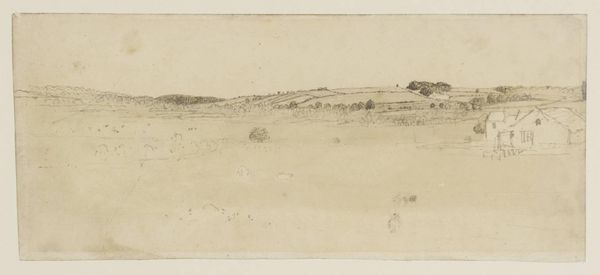
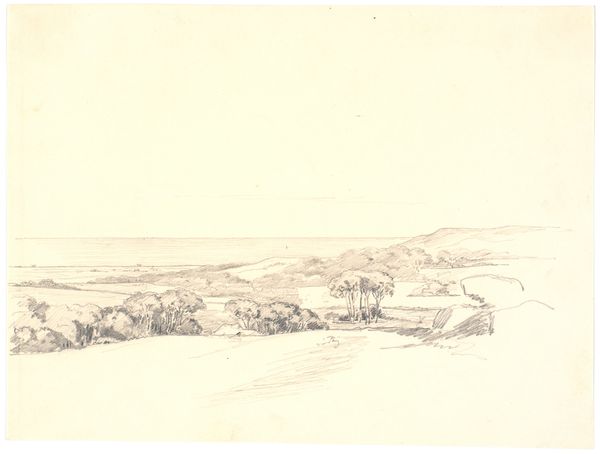
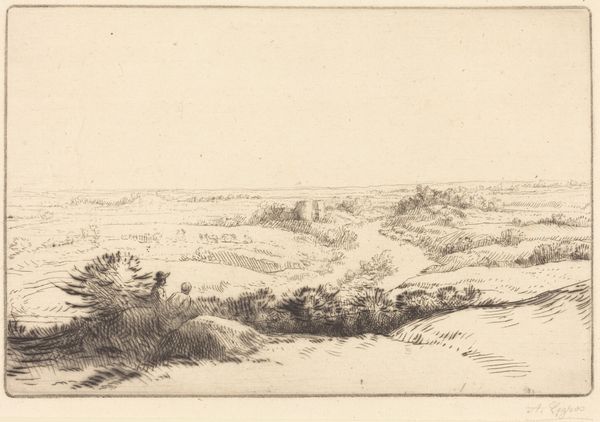
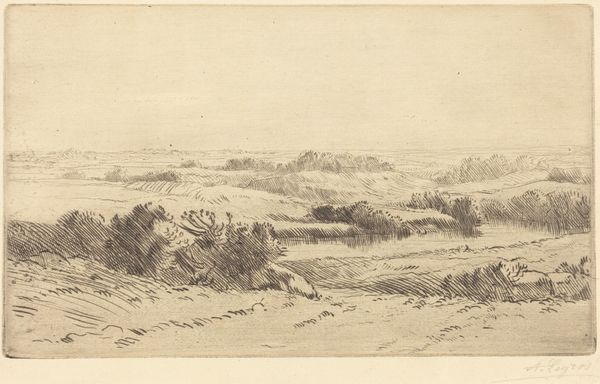
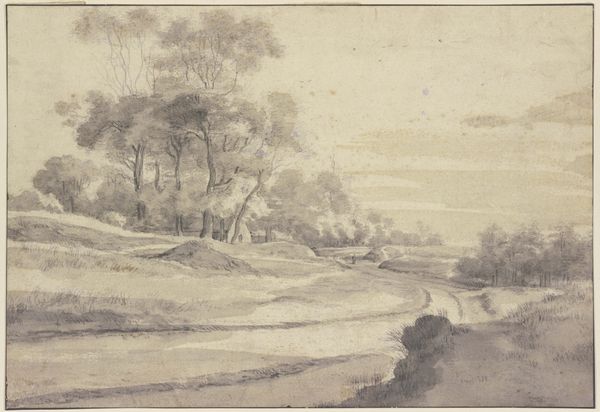
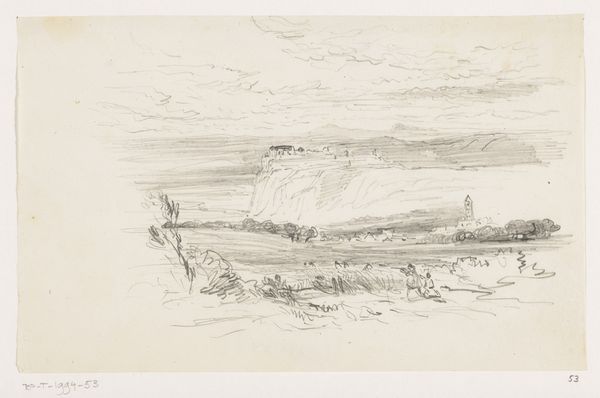
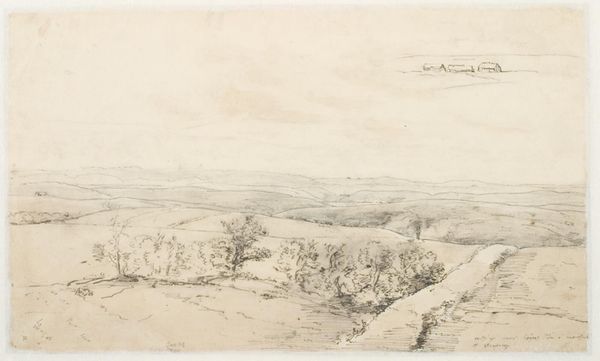
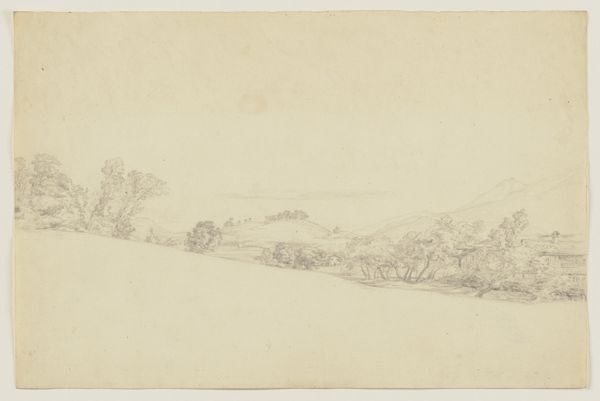
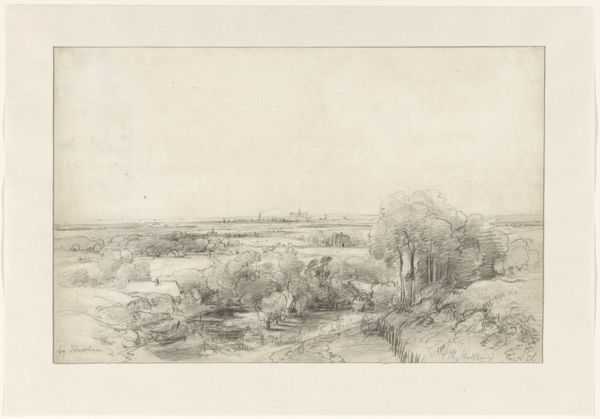
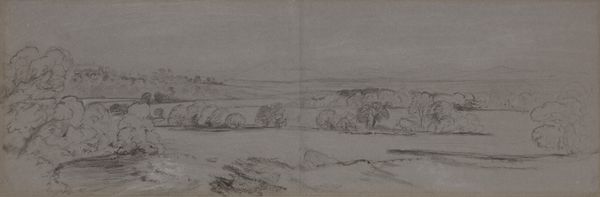
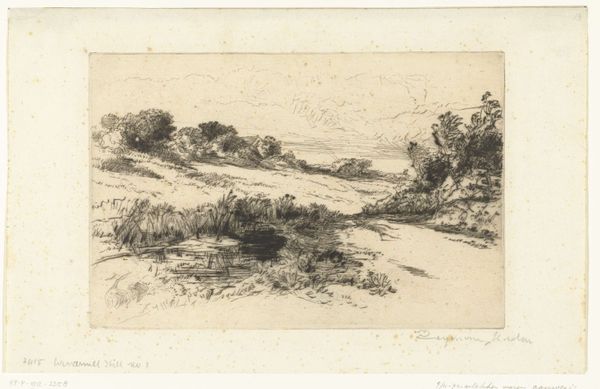
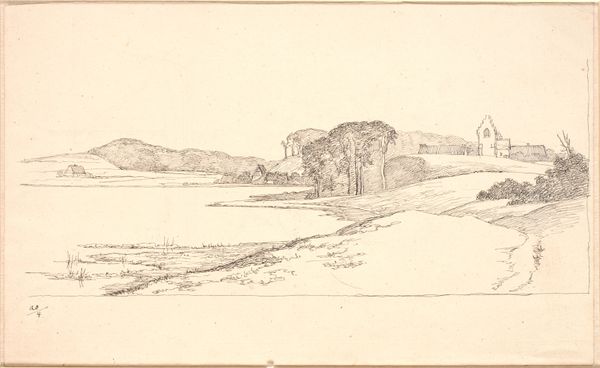
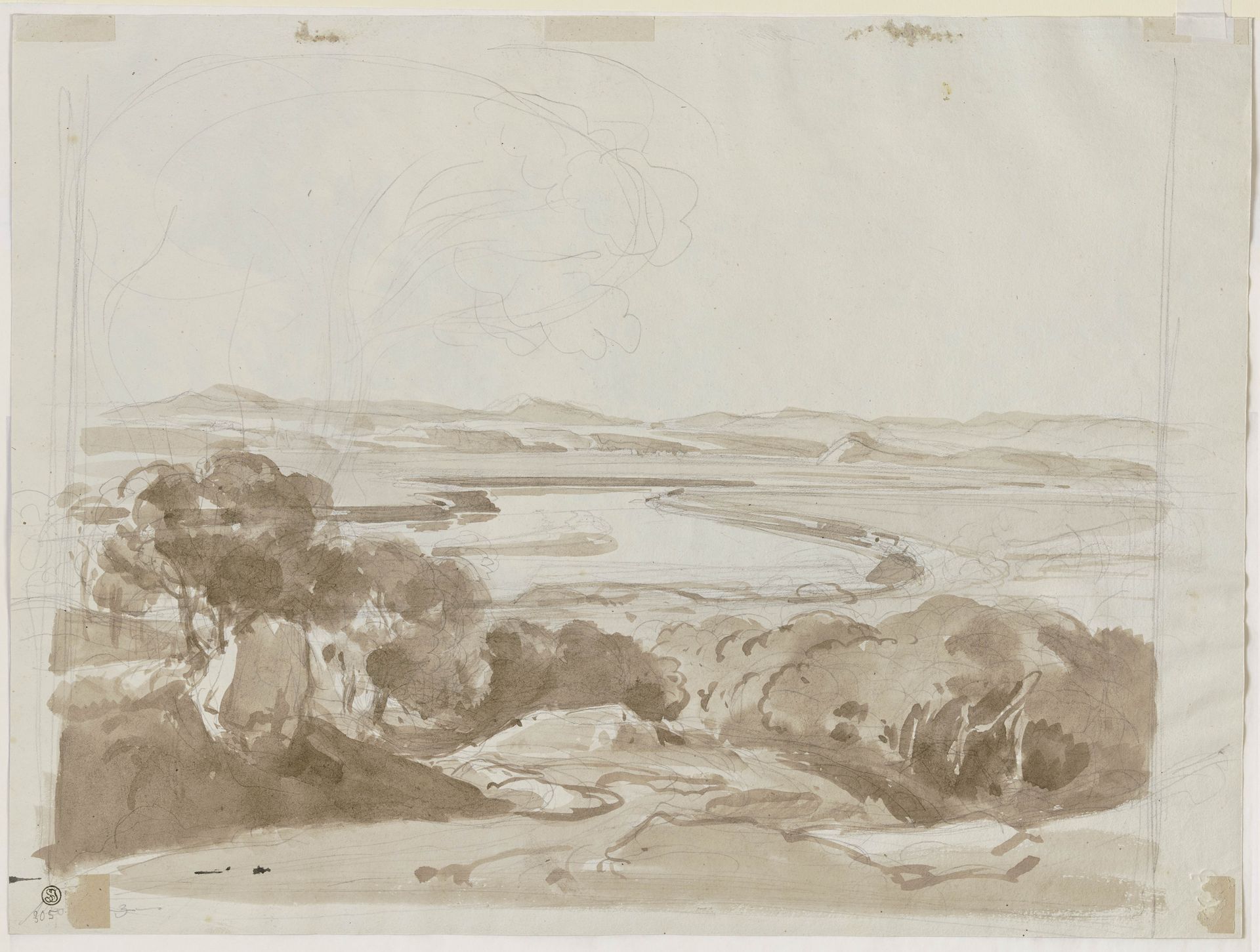
Ernst Fries made this landscape drawing with pencil and wash, probably in Germany, in the early 19th century. We see here an idealised landscape, one that’s been flattened and simplified, so that it’s legible and easily understandable. The landscape genre was becoming popular in the early 1800s, and Fries is using some of its conventions: a high horizon line, trees in the foreground, and a river that recedes into the distance. It’s tempting to see this as simply a pretty scene, but landscape art often reflects social and political ideas. For example, the flattening of the land might connect to new ideas of land ownership and agriculture. This was a time when many European countries were consolidating their power through such activities as surveying. To understand this artwork better, we would need to research the social and economic history of Germany at this time, looking at archives and other historical sources. This would allow us to understand how the artwork connects to the social structures of its time.


Artwork details
- Medium
- drawing, paper, ink, pencil
- Location
- Städel Museum
- Copyright
- Public Domain
Tags
Comments
Share your thoughts
About this artwork
Ernst Fries made this landscape drawing with pencil and wash, probably in Germany, in the early 19th century. We see here an idealised landscape, one that’s been flattened and simplified, so that it’s legible and easily understandable. The landscape genre was becoming popular in the early 1800s, and Fries is using some of its conventions: a high horizon line, trees in the foreground, and a river that recedes into the distance. It’s tempting to see this as simply a pretty scene, but landscape art often reflects social and political ideas. For example, the flattening of the land might connect to new ideas of land ownership and agriculture. This was a time when many European countries were consolidating their power through such activities as surveying. To understand this artwork better, we would need to research the social and economic history of Germany at this time, looking at archives and other historical sources. This would allow us to understand how the artwork connects to the social structures of its time.
Comments
Share your thoughts