c. 1893
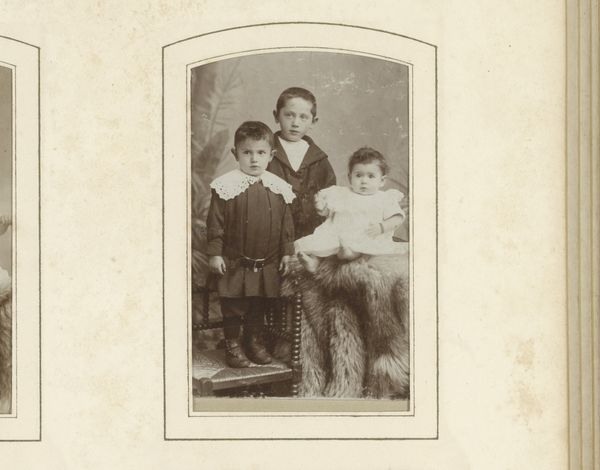
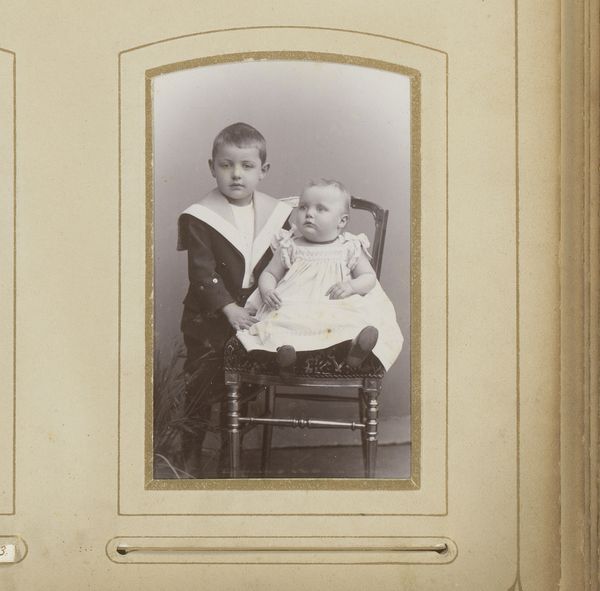
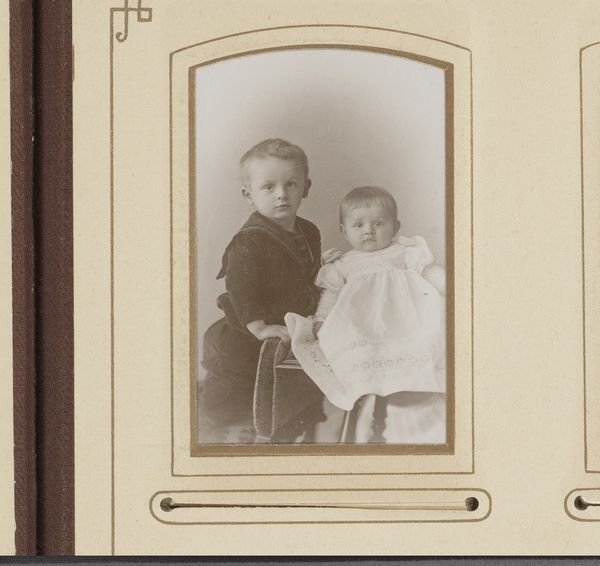
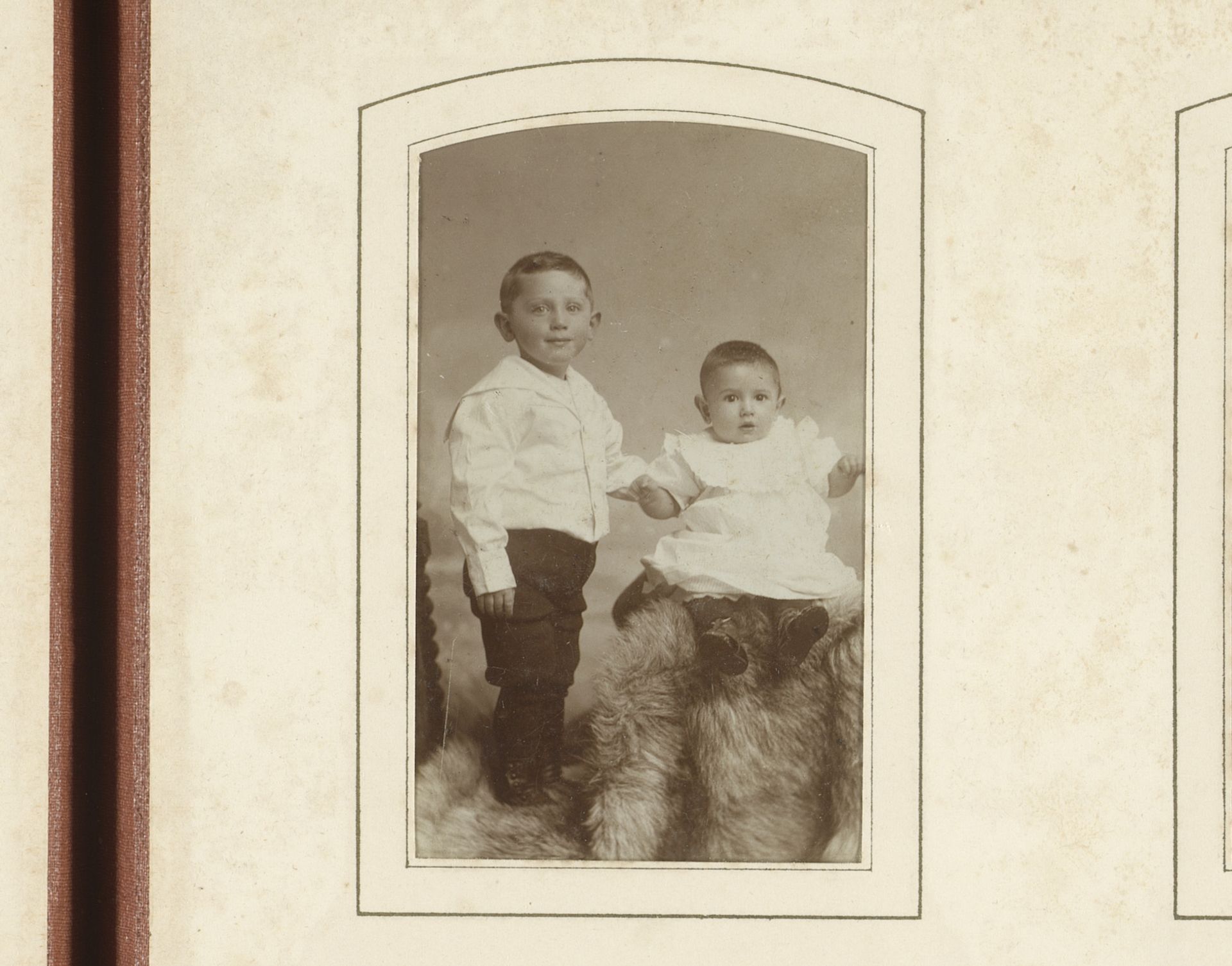
Portret van een staande jongen en een zittende baby

Listen to curator's interpretation
Curatorial notes
Curator: "Portret van een staande jongen en een zittende baby," or "Portrait of a standing boy and a sitting baby," captured around 1893 by Atelier de Jong. This gelatin silver print presents a fascinating glimpse into late 19th-century family life. Editor: It's...intimate, almost startlingly so for something over a century old. There's this odd formality clashing with the unvarnished reality of childhood—that fuzzy rug under the baby practically shouts "makeshift prop." What's your take? Curator: The backdrop and prop, exactly as you said, feel both deliberate and ad hoc. It tells a story of middle-class aspirations filtered through the lens of what was achievable. These constructed environments were hugely symbolic—performances of identity meant to communicate specific values about family. Editor: So the very ordinariness is part of the statement? I love how the older boy, dressed in his little sailor suit, tries to be all grown-up and stoic while the baby looks like they're plotting world domination from atop their furry throne. Is the sailor suit just fashion, or something more? Curator: Sailor suits held a dual significance. Beyond fashion, naval attire became increasingly linked to ideas of national identity, but especially boyhood, a cultural encoding that persists into adulthood. Think of political rallies, organizations, marketing, and fraternal societies—and the power they wield to make connections and promote social behaviors. Editor: Gosh, suddenly that outfit is saying way more than “adorable tyke ready for adventure.” The staging—that kind of precarious, constructed elevation— it's a metaphor for how we frame childhood itself, isn't it? Building these fluffy little kingdoms... Curator: Precisely! The photograph invites us to unpack the layers of meaning intentionally embedded, revealing societal expectations, aesthetic trends, and the sentimental value attached to images of children as cultural symbols. Editor: It’s wild how much can be loaded into one little shot of a couple of kids. Makes you wonder what stories future generations will find hidden in our digital snapshots, huh? Curator: Indeed. Images are potent capsules of cultural memory, and photographs especially serve as lasting embodiments of social ideals, ever available for rediscovery.