About this artwork
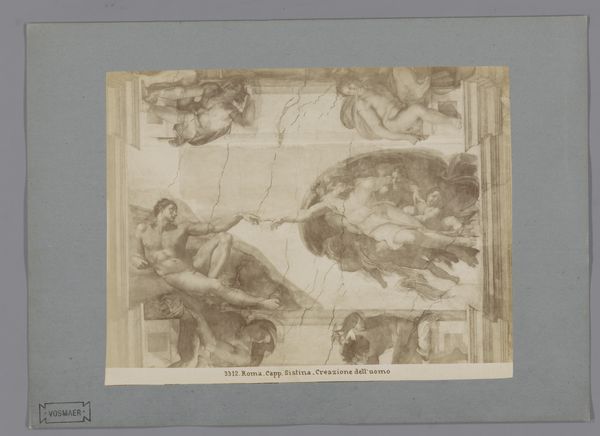
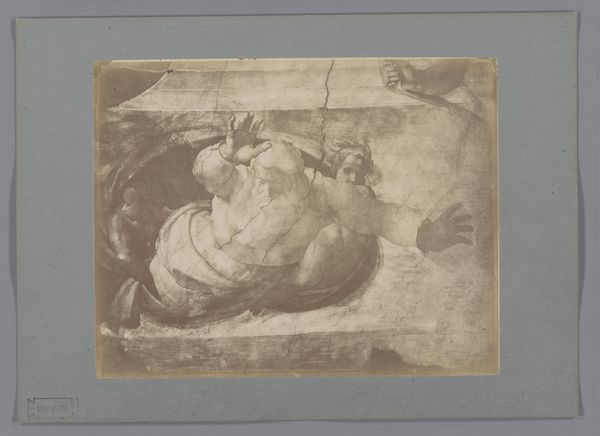
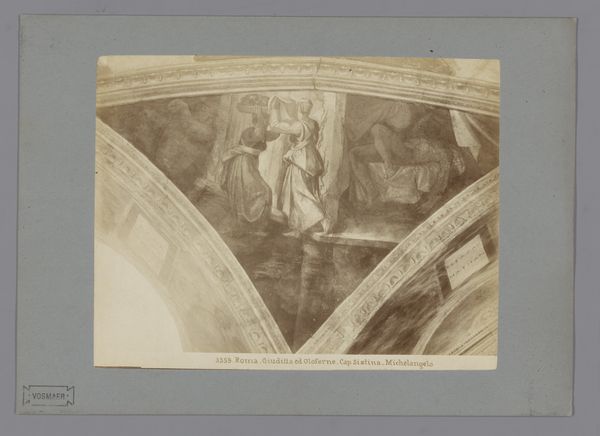
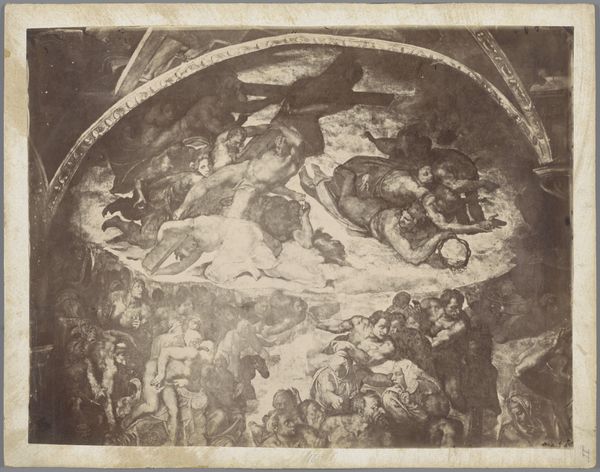
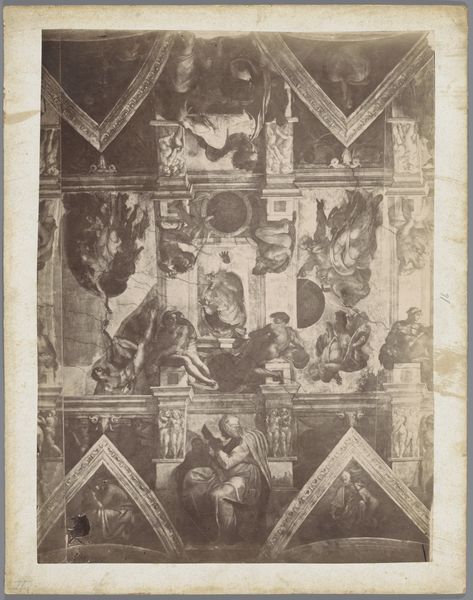
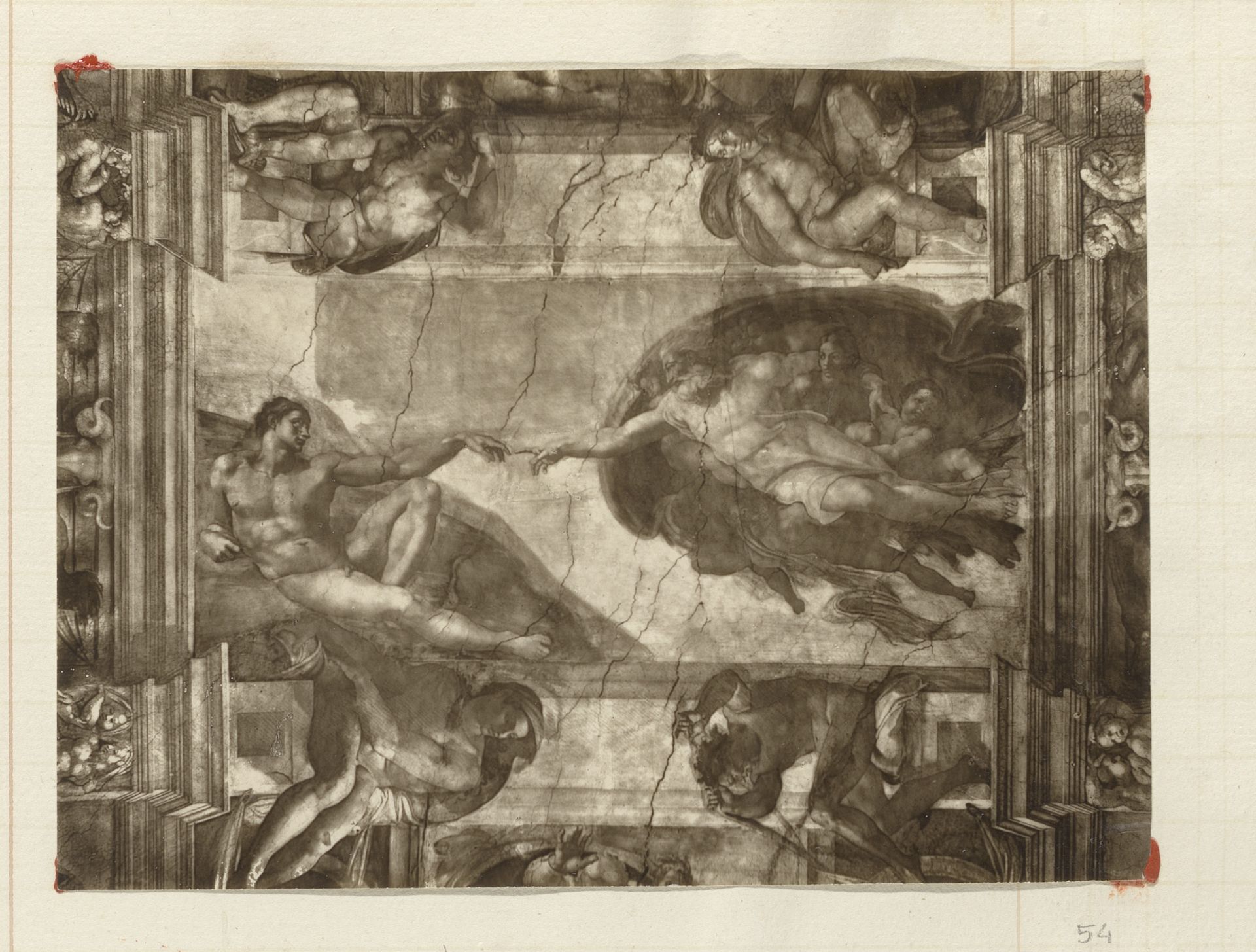
This is an undated photographic reproduction of a print, made after Michelangelo’s fresco depicting the Creation of Adam in the Sistine Chapel. The original fresco, completed in the early 16th century, was part of a vast program of renovations within the Vatican, solidifying the Church’s cultural power in Rome. Michelangelo's scene is a potent statement of Humanist belief, showing God giving the spark of life to Adam, the first man. However, this image is not the original but a reproduction, and it is important to remember that the proliferation of these images speaks to the cultural impact of the Sistine Chapel, and the Papacy, throughout Europe. To understand the social and political power of the Church at this time, scholars might consult records of Papal patronage, architectural plans of the Vatican, and contemporary religious treatises. Approaching art history through institutional analysis allows us to view artworks as players within broader fields of power.
Fotoreproductie van (vermoedelijk) een prent naar een fresco van Michelangelo in de Sixtijnse Kapel, voorstellend de schepping van Adam c. 1880 - 1900

Anonymous
@anonymousLocation
RijksmuseumArtwork details
- Medium
- print, fresco, photography
- Dimensions
- height 120 mm, width 161 mm
- Location
- Rijksmuseum
- Copyright
- Rijks Museum: Open Domain
Tags
figuration
fresco
photography
history-painting
italian-renaissance
Comments
No comments
About this artwork
This is an undated photographic reproduction of a print, made after Michelangelo’s fresco depicting the Creation of Adam in the Sistine Chapel. The original fresco, completed in the early 16th century, was part of a vast program of renovations within the Vatican, solidifying the Church’s cultural power in Rome. Michelangelo's scene is a potent statement of Humanist belief, showing God giving the spark of life to Adam, the first man. However, this image is not the original but a reproduction, and it is important to remember that the proliferation of these images speaks to the cultural impact of the Sistine Chapel, and the Papacy, throughout Europe. To understand the social and political power of the Church at this time, scholars might consult records of Papal patronage, architectural plans of the Vatican, and contemporary religious treatises. Approaching art history through institutional analysis allows us to view artworks as players within broader fields of power.
Comments
No comments