About this artwork
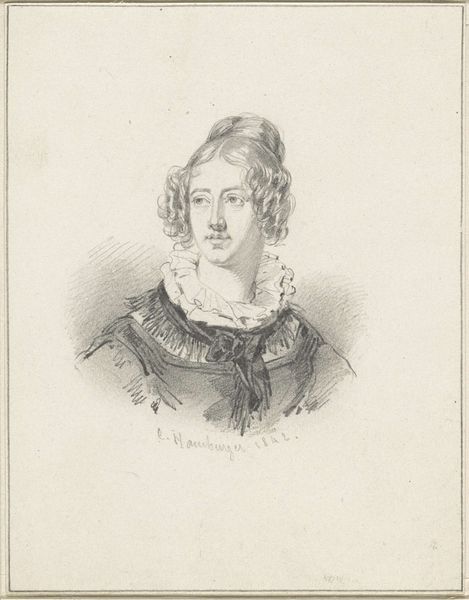
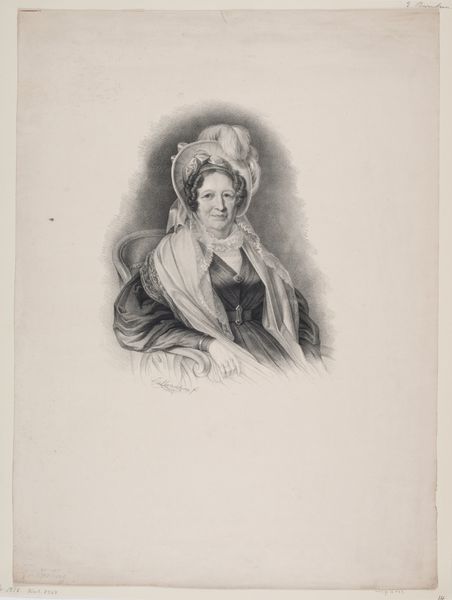
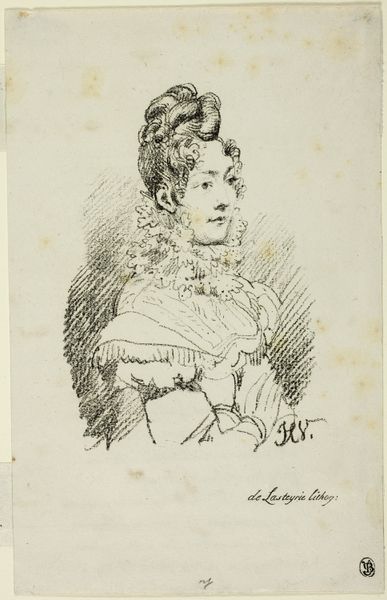
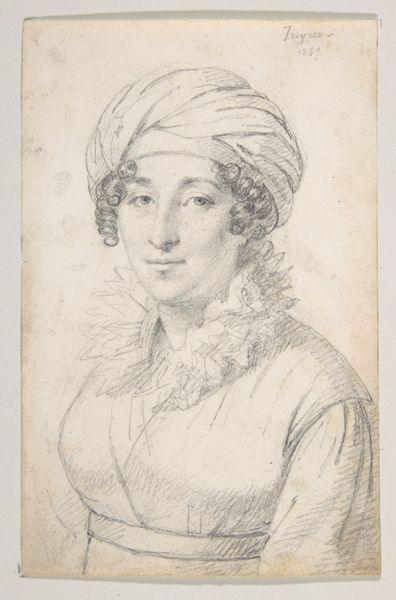
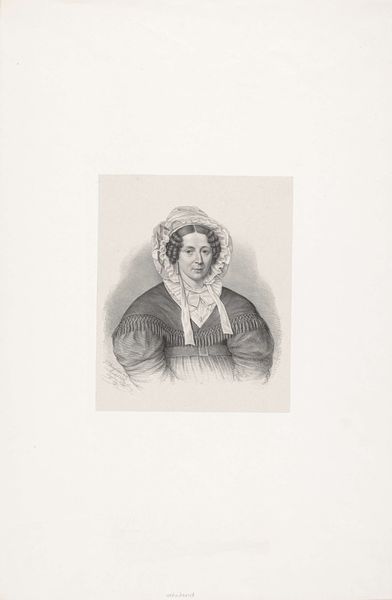
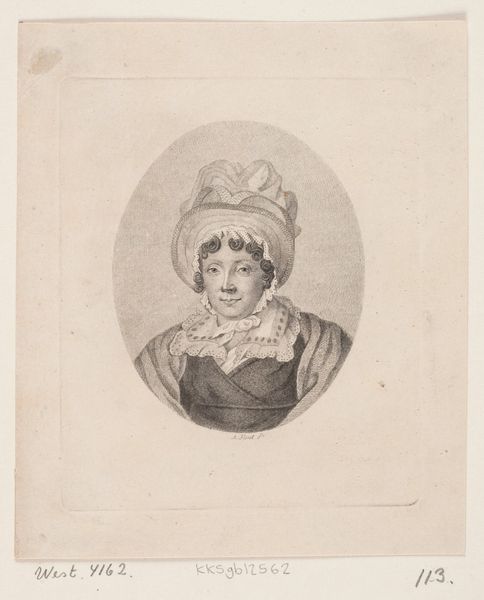
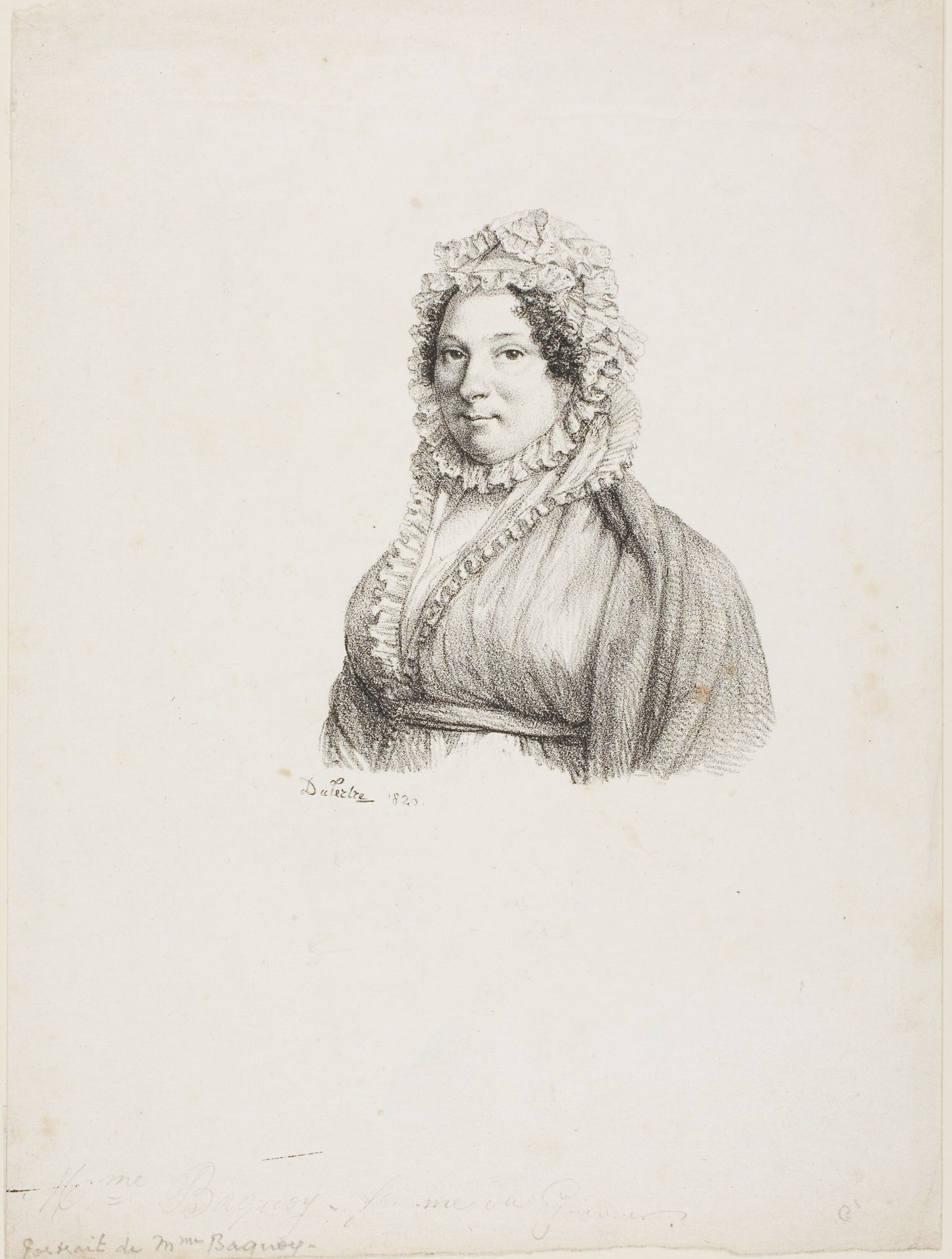
André Dutertre created this graphite drawing of Madame Baquoy, although the exact date of its creation remains unknown. Dutertre was a Neoclassical painter, and his portrait provides a glimpse into the life of a woman during an era of shifting social structures. Madame Baquoy is depicted with a certain softness, which defies the rigidity often associated with Neoclassical portraiture. While the French Revolution challenged the aristocracy, class distinctions still influenced representation; the elaborate lace bonnet and ruffled collar suggest Madame Baquoy's bourgeois status and attention to fashion. Yet, there’s an interesting tension. The direct gaze and the subtle hint of a smile challenge the demure passivity often expected of women in portraiture at the time. This portrait invites us to reflect on the complexities of identity and representation during a period of social upheaval, and to question the stories that history often silences.
Portrait of Madame Baquoy 1820


Artwork details
- Medium
- drawing, lithograph, print, paper, pencil, graphite
- Dimensions
- 123 × 98 mm (image); 268 × 200 mm (sheet)
- Location
- The Art Institute of Chicago
- Copyright
- Public Domain
Tags
portrait
drawing
lithograph
paper
pencil drawing
romanticism
pencil
graphite
graphite
Comments
No comments
About this artwork
André Dutertre created this graphite drawing of Madame Baquoy, although the exact date of its creation remains unknown. Dutertre was a Neoclassical painter, and his portrait provides a glimpse into the life of a woman during an era of shifting social structures. Madame Baquoy is depicted with a certain softness, which defies the rigidity often associated with Neoclassical portraiture. While the French Revolution challenged the aristocracy, class distinctions still influenced representation; the elaborate lace bonnet and ruffled collar suggest Madame Baquoy's bourgeois status and attention to fashion. Yet, there’s an interesting tension. The direct gaze and the subtle hint of a smile challenge the demure passivity often expected of women in portraiture at the time. This portrait invites us to reflect on the complexities of identity and representation during a period of social upheaval, and to question the stories that history often silences.
Comments
No comments