About this artwork
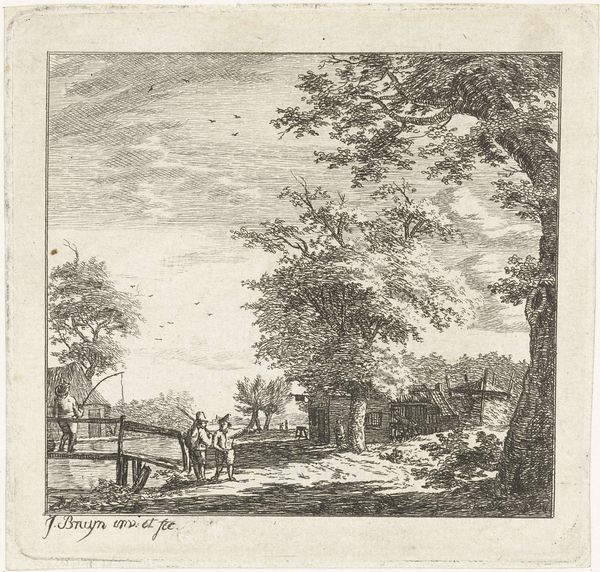
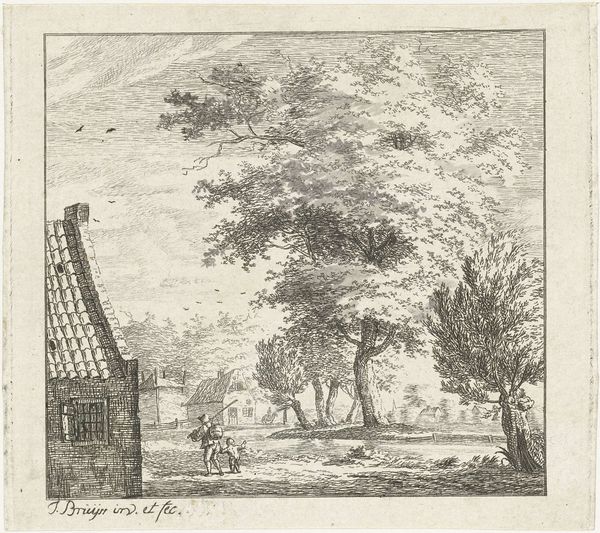
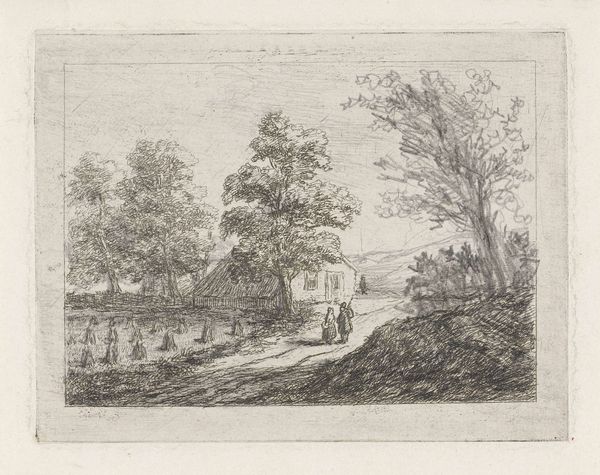
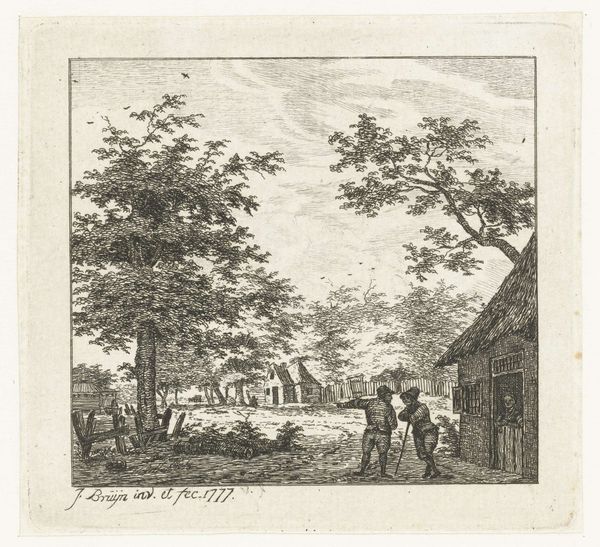
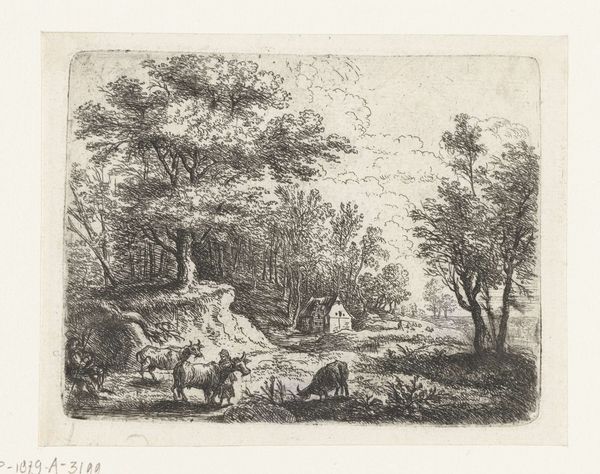
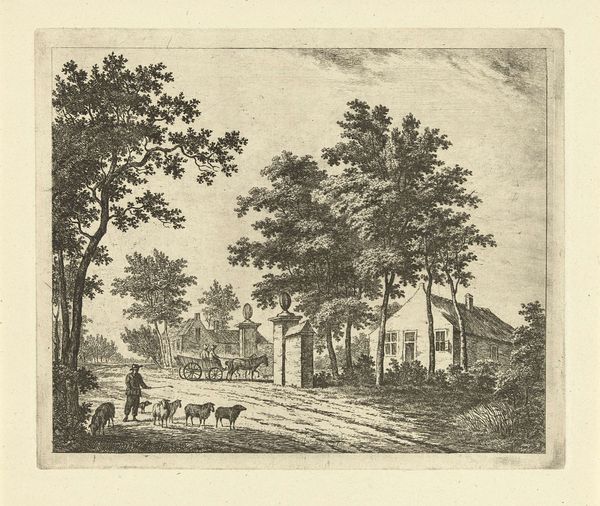
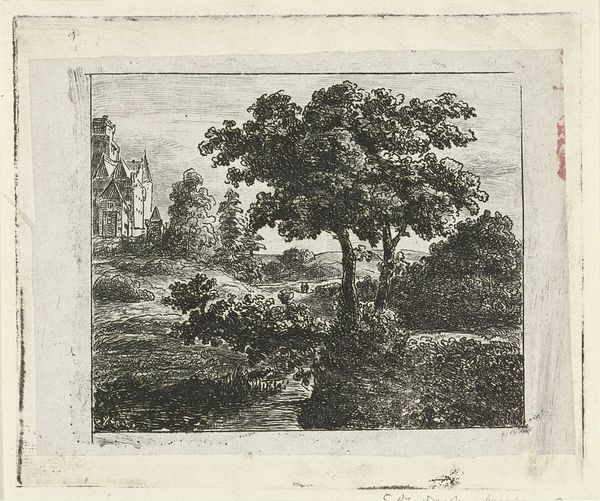
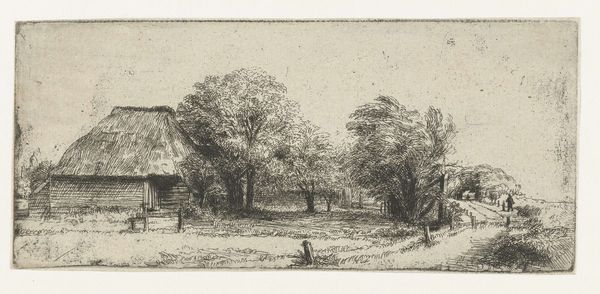
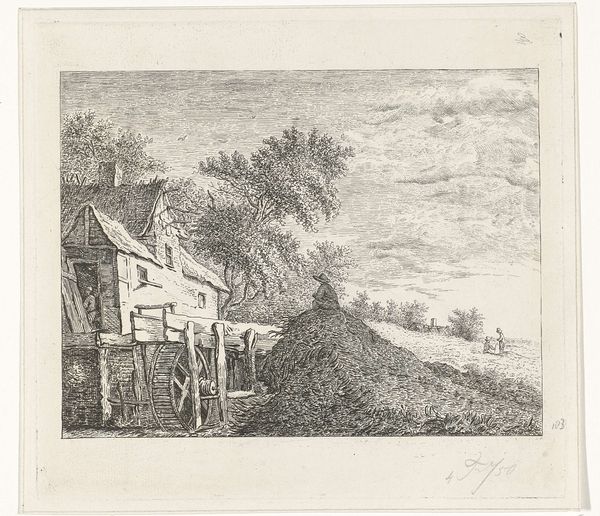
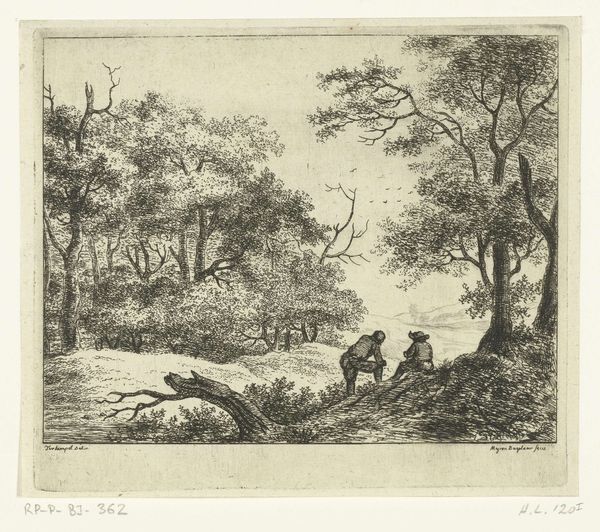
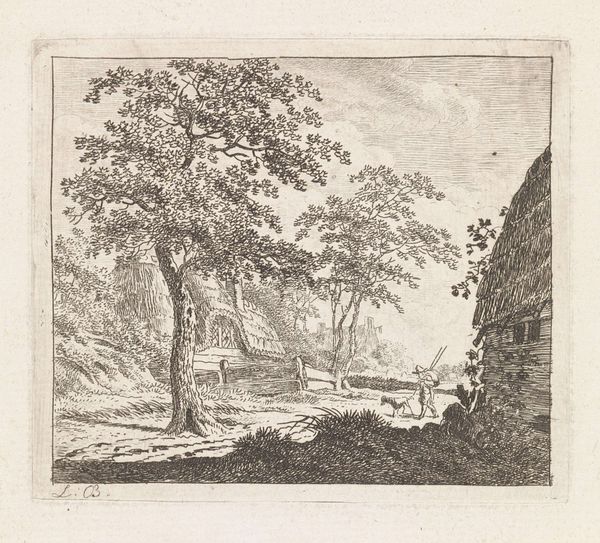
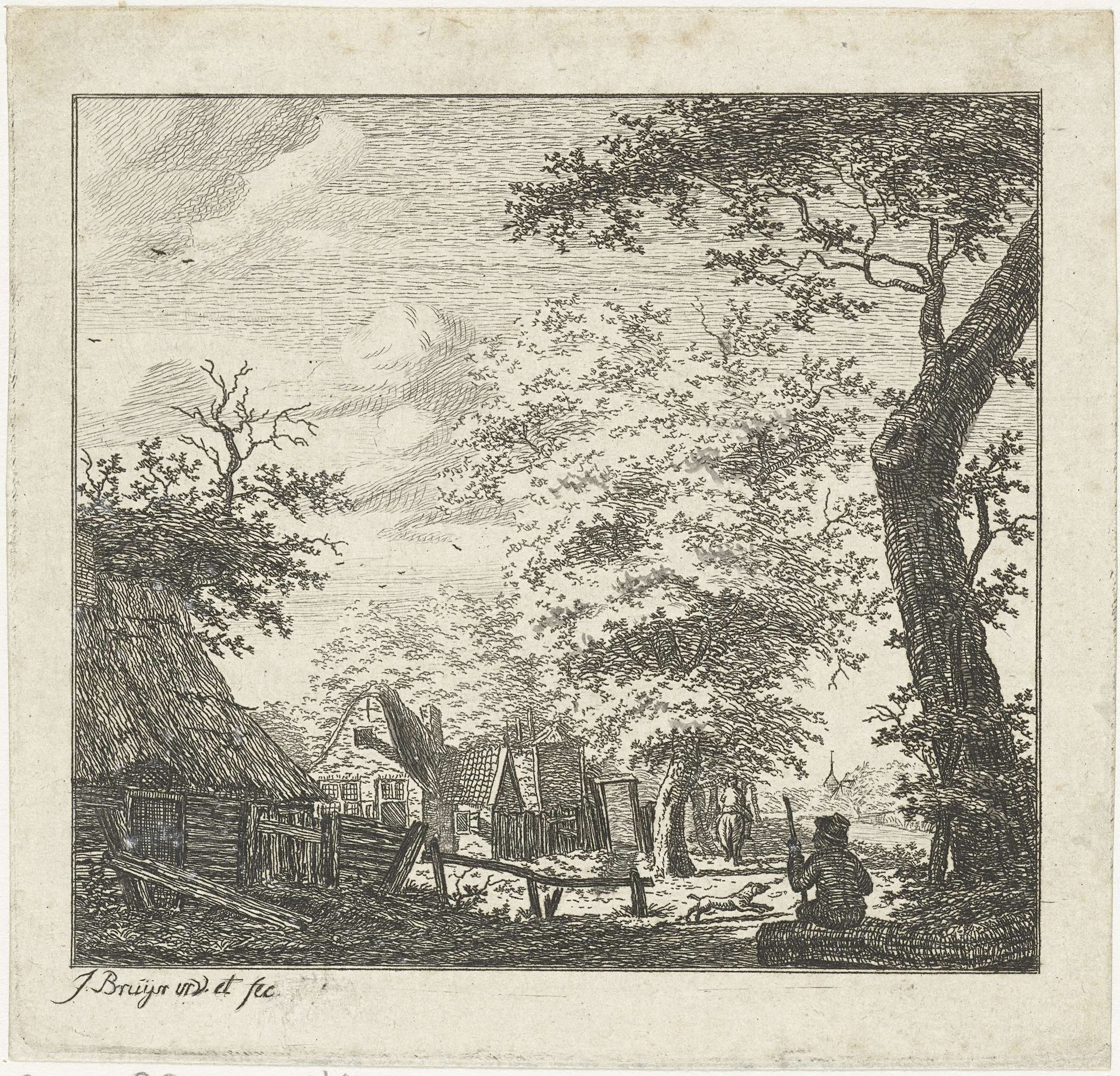
Johanna de Bruyn created this print, *Dorpsgezicht*, using etching, a process that demands careful labor. The image begins with a metal plate, likely copper, coated with a waxy ground. De Bruyn would have used a sharp needle to scratch away the ground, exposing the metal beneath. The plate is then submerged in acid, which bites into the exposed lines, creating grooves. Ink is applied to the plate, filling these grooves, and the surface is wiped clean. Finally, paper is pressed onto the plate, transferring the ink and creating the image. The fine lines capture a peaceful village scene. Note the thatched roofs and wooden fences. This attention to detail suggests an intimate understanding of rural life. The act of etching, a precise and controlled process, transforms everyday life into art, inviting us to appreciate the skill and effort involved in both the making of the print and the world it depicts. It’s a reminder that art isn't just about grand subjects; it's also about seeing the beauty in the ordinary and the labor involved in producing art.

Artwork details
- Medium
- drawing, print, ink, pen, engraving
- Dimensions
- height 86 mm, width 90 mm
- Copyright
- Rijks Museum: Open Domain
Tags
drawing
pen drawing
dutch-golden-age
pen sketch
landscape
ink
pen
genre-painting
engraving
Comments
No comments
About this artwork
Johanna de Bruyn created this print, *Dorpsgezicht*, using etching, a process that demands careful labor. The image begins with a metal plate, likely copper, coated with a waxy ground. De Bruyn would have used a sharp needle to scratch away the ground, exposing the metal beneath. The plate is then submerged in acid, which bites into the exposed lines, creating grooves. Ink is applied to the plate, filling these grooves, and the surface is wiped clean. Finally, paper is pressed onto the plate, transferring the ink and creating the image. The fine lines capture a peaceful village scene. Note the thatched roofs and wooden fences. This attention to detail suggests an intimate understanding of rural life. The act of etching, a precise and controlled process, transforms everyday life into art, inviting us to appreciate the skill and effort involved in both the making of the print and the world it depicts. It’s a reminder that art isn't just about grand subjects; it's also about seeing the beauty in the ordinary and the labor involved in producing art.
Comments
No comments