About this artwork
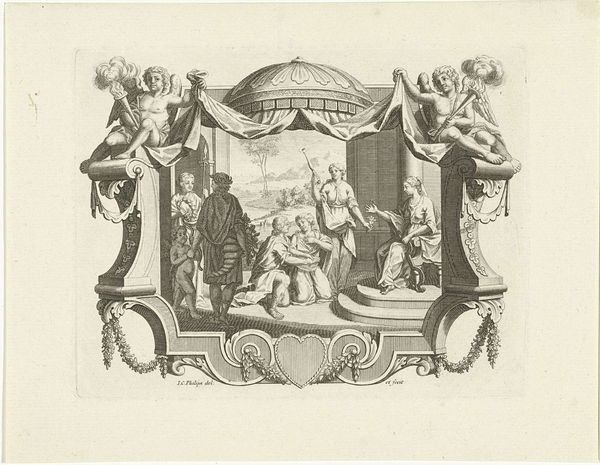
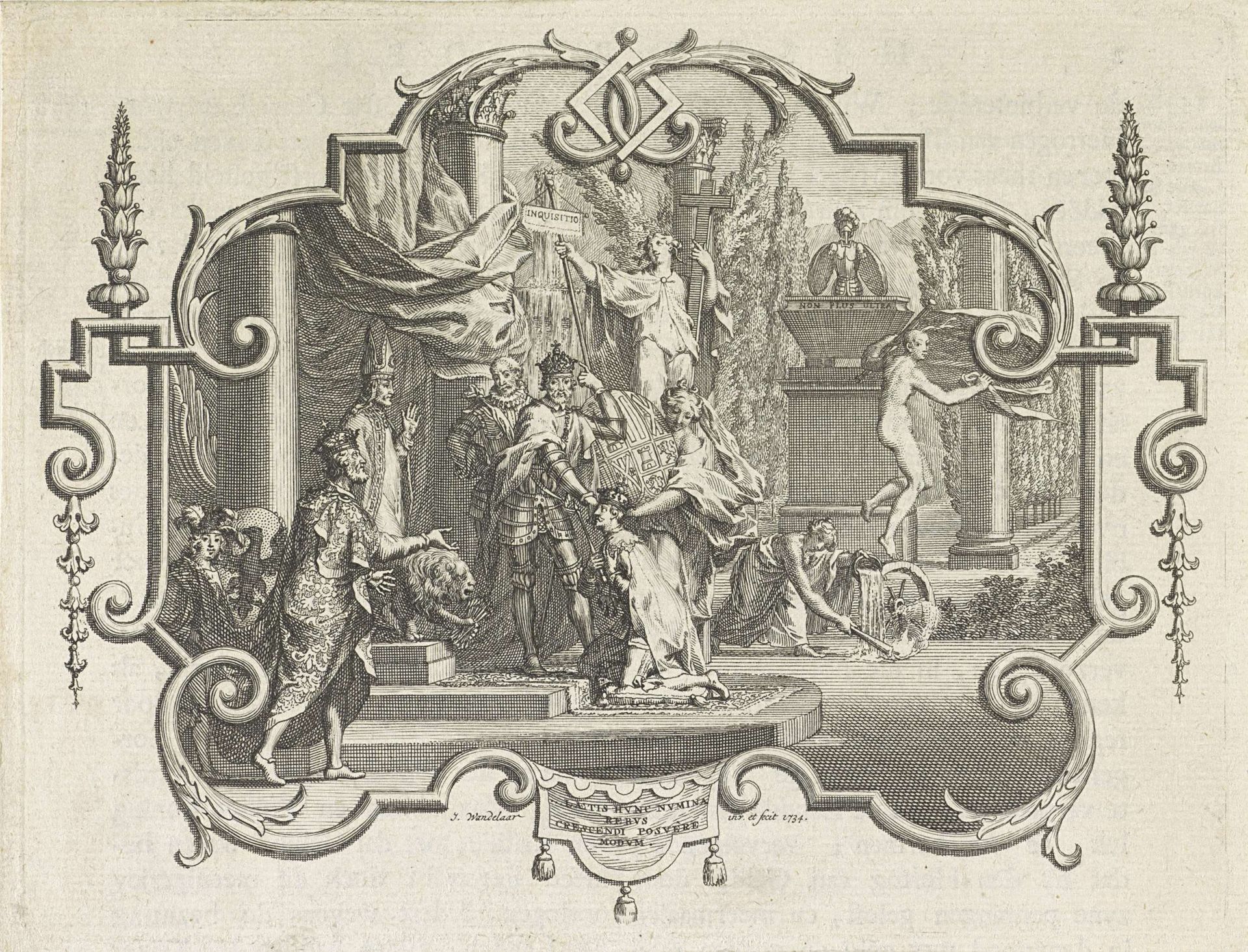
This is Jan Wandelaar’s print of the abdication of Charles V, made sometime before the artist's death in 1759. It commemorates an event that took place over two centuries earlier in Brussels, when Charles V, Holy Roman Emperor and ruler of the Spanish Empire, renounced his claim to the throne in favor of his son Philip. Wandelaar's image is allegorical, not a realistic depiction. The enthroned Charles is surrounded by symbolic figures such as Hercules, Fame, and a lion, representing strength and courage. The setting includes classical architecture. The print would have been commissioned or acquired by someone with an interest in history, perhaps to advertise an intellectual society, legal chamber, or governmental body. Prints such as this would have been widely circulated, allowing people to visualise major historical events. As an art historian, I would look at other prints by Wandelaar and his contemporaries, comparing their visual strategies. This helps us understand the public role of art and the politics of imagery in the 18th century.
Vignet met allegorie op de troonsafstand van Karel V
1734

Jan Wandelaar
1690 - 1759Location
RijksmuseumArtwork details
- Medium
- print, engraving
- Dimensions
- height 143 mm, width 188 mm
- Location
- Rijksmuseum
- Copyright
- Rijks Museum: Open Domain
Tags
Comments
Share your thoughts
About this artwork
This is Jan Wandelaar’s print of the abdication of Charles V, made sometime before the artist's death in 1759. It commemorates an event that took place over two centuries earlier in Brussels, when Charles V, Holy Roman Emperor and ruler of the Spanish Empire, renounced his claim to the throne in favor of his son Philip. Wandelaar's image is allegorical, not a realistic depiction. The enthroned Charles is surrounded by symbolic figures such as Hercules, Fame, and a lion, representing strength and courage. The setting includes classical architecture. The print would have been commissioned or acquired by someone with an interest in history, perhaps to advertise an intellectual society, legal chamber, or governmental body. Prints such as this would have been widely circulated, allowing people to visualise major historical events. As an art historian, I would look at other prints by Wandelaar and his contemporaries, comparing their visual strategies. This helps us understand the public role of art and the politics of imagery in the 18th century.
Comments
Share your thoughts