About this artwork
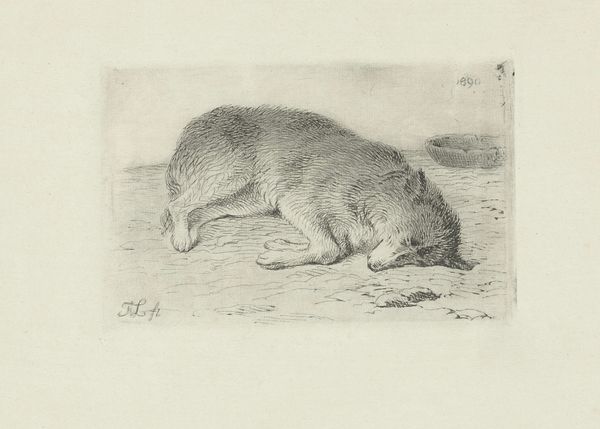
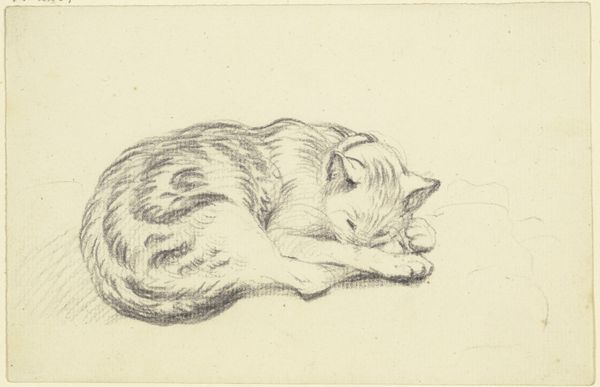
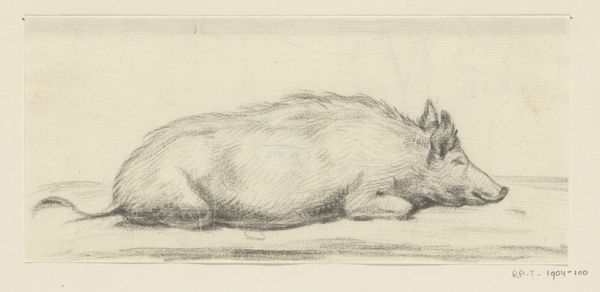
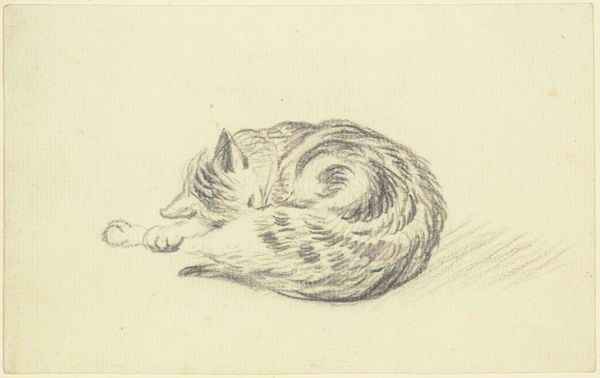
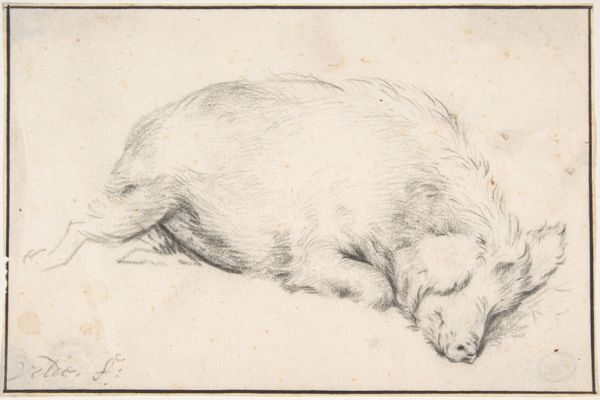
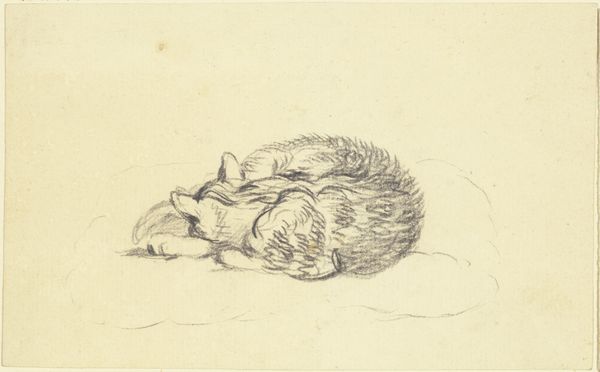
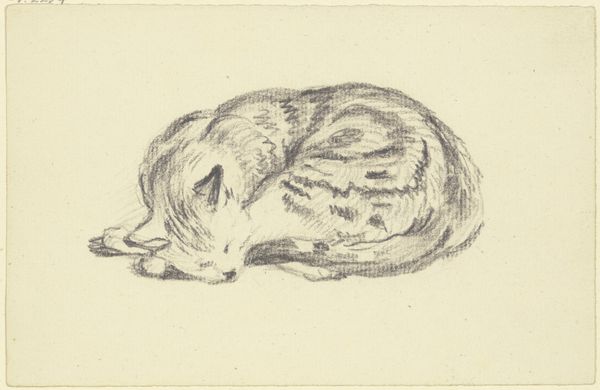
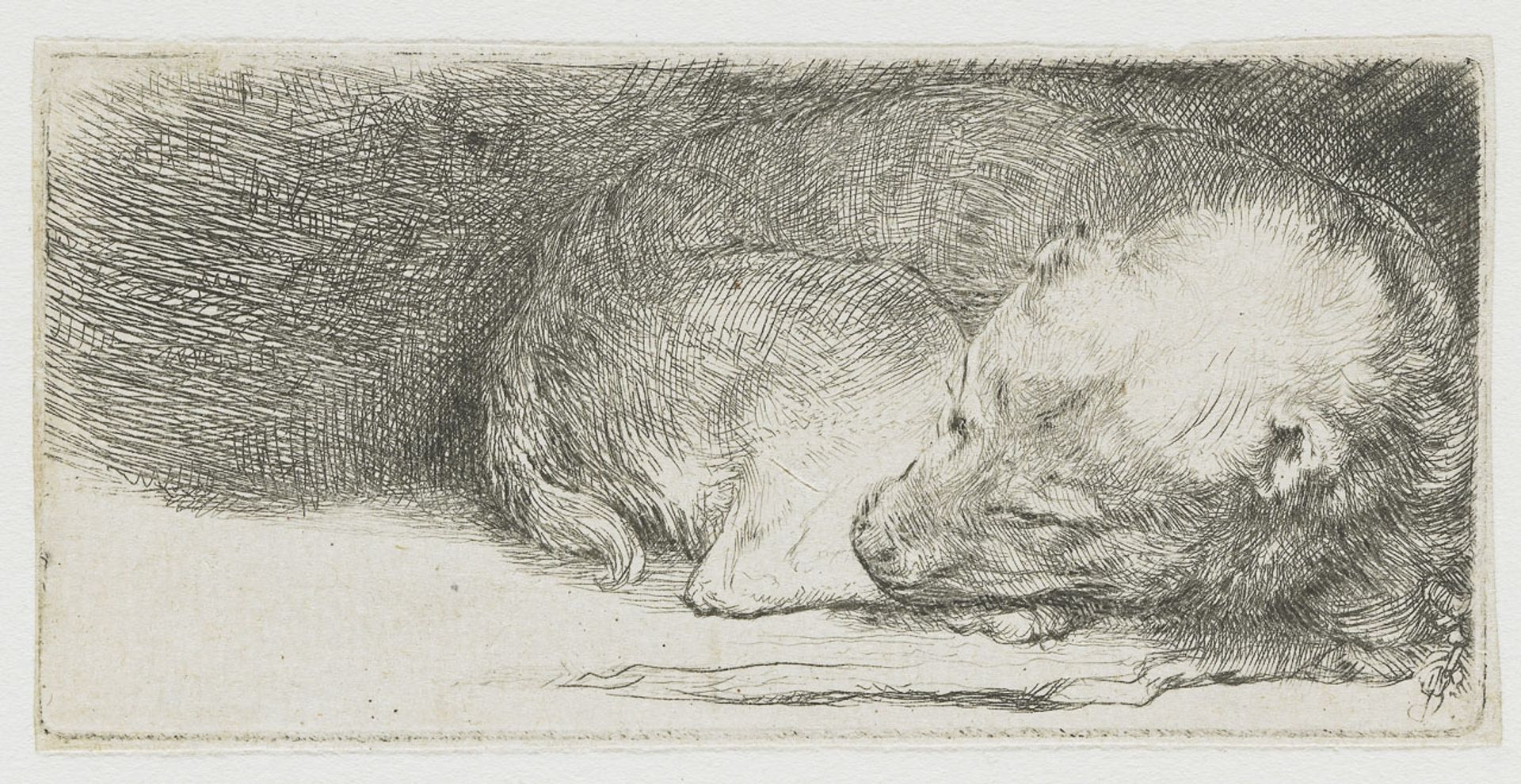
Editor: This is Rembrandt van Rijn’s "Sleeping Puppy" from 1640, rendered in etching. The delicate lines create such a soft, peaceful scene. I find myself wondering, what makes such a simple image so captivating? How do you interpret this work? Curator: It’s more than just a charming depiction of a sleeping animal. Consider the context: Rembrandt was a master of observing everyday life, elevating it to art. But I see it also as a social commentary, perhaps subconsciously. Editor: Social commentary in a sleeping dog? How so? Curator: Think about 17th century Dutch society. Prosperity was growing, but so was inequality. Animals, like this puppy, were often symbols of loyalty and domesticity, qualities often idealized within a bourgeois framework, yet also frequently exploited, right? Is the puppy a pet, or a working animal taking a needed rest? Look at the lines -- do you find the shading comforting, or oppressive? Editor: I see your point, that question of loyalty is definitely in conflict, here! I still see primarily that gentleness of sleep, but, I hadn't considered it within that framework of power and class dynamics, either! Curator: Exactly. Even seemingly simple images carry layered meanings reflecting societal values and inequalities. Editor: This has definitely broadened my perspective on this piece! It's amazing how historical context can reveal hidden depths. Curator: Precisely. And it encourages us to critically examine the social structures represented, even in the most unassuming subjects.
Artwork details
- Medium
- drawing, etching, paper, ink
- Dimensions
- 4 x 8 cm
- Copyright
- Public domain
Tags
Comments
Share your thoughts
About this artwork
Editor: This is Rembrandt van Rijn’s "Sleeping Puppy" from 1640, rendered in etching. The delicate lines create such a soft, peaceful scene. I find myself wondering, what makes such a simple image so captivating? How do you interpret this work? Curator: It’s more than just a charming depiction of a sleeping animal. Consider the context: Rembrandt was a master of observing everyday life, elevating it to art. But I see it also as a social commentary, perhaps subconsciously. Editor: Social commentary in a sleeping dog? How so? Curator: Think about 17th century Dutch society. Prosperity was growing, but so was inequality. Animals, like this puppy, were often symbols of loyalty and domesticity, qualities often idealized within a bourgeois framework, yet also frequently exploited, right? Is the puppy a pet, or a working animal taking a needed rest? Look at the lines -- do you find the shading comforting, or oppressive? Editor: I see your point, that question of loyalty is definitely in conflict, here! I still see primarily that gentleness of sleep, but, I hadn't considered it within that framework of power and class dynamics, either! Curator: Exactly. Even seemingly simple images carry layered meanings reflecting societal values and inequalities. Editor: This has definitely broadened my perspective on this piece! It's amazing how historical context can reveal hidden depths. Curator: Precisely. And it encourages us to critically examine the social structures represented, even in the most unassuming subjects.
Comments
Share your thoughts