About this artwork
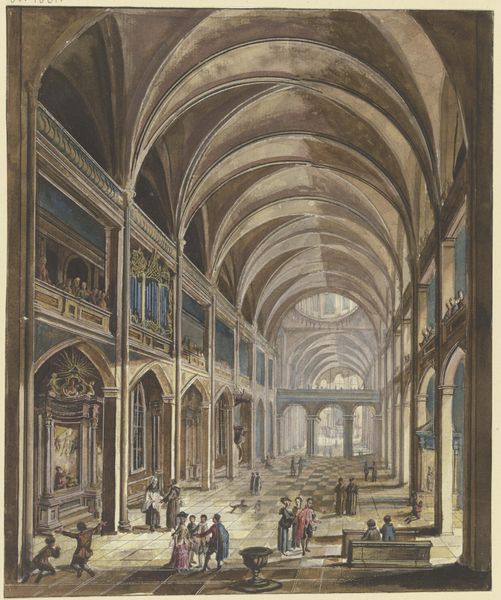
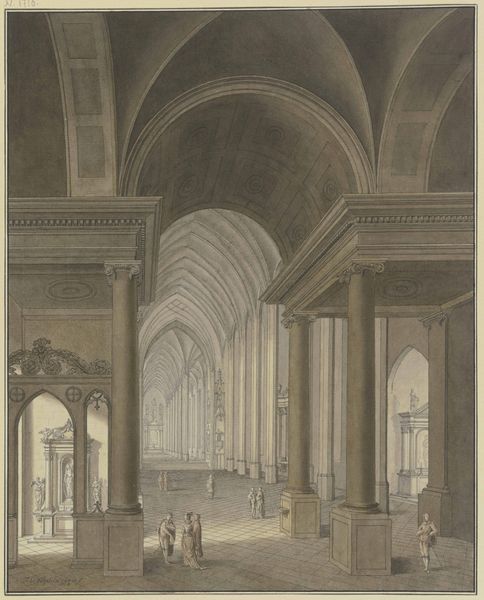
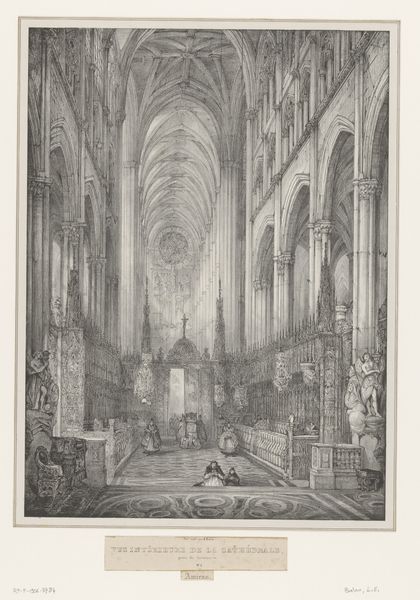
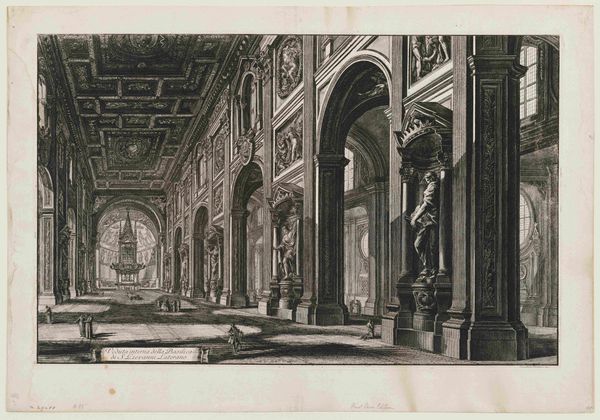
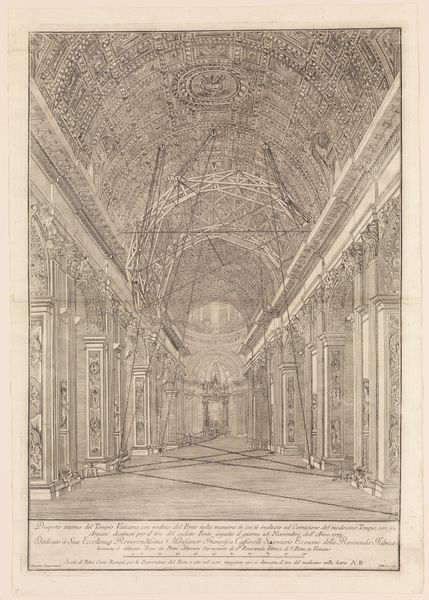
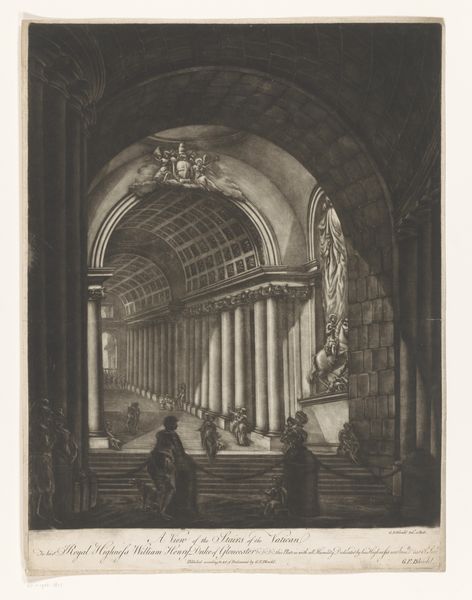
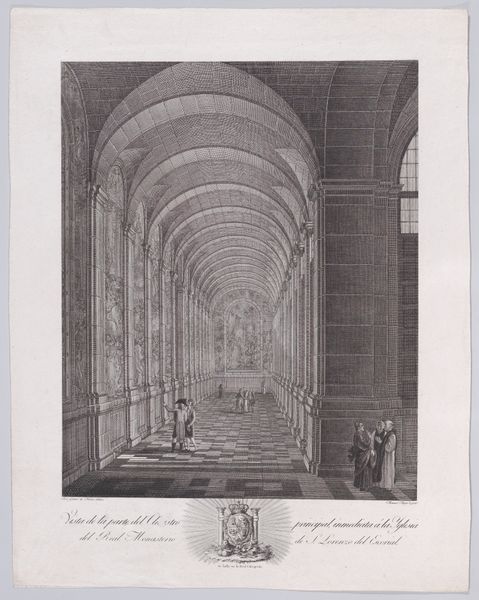
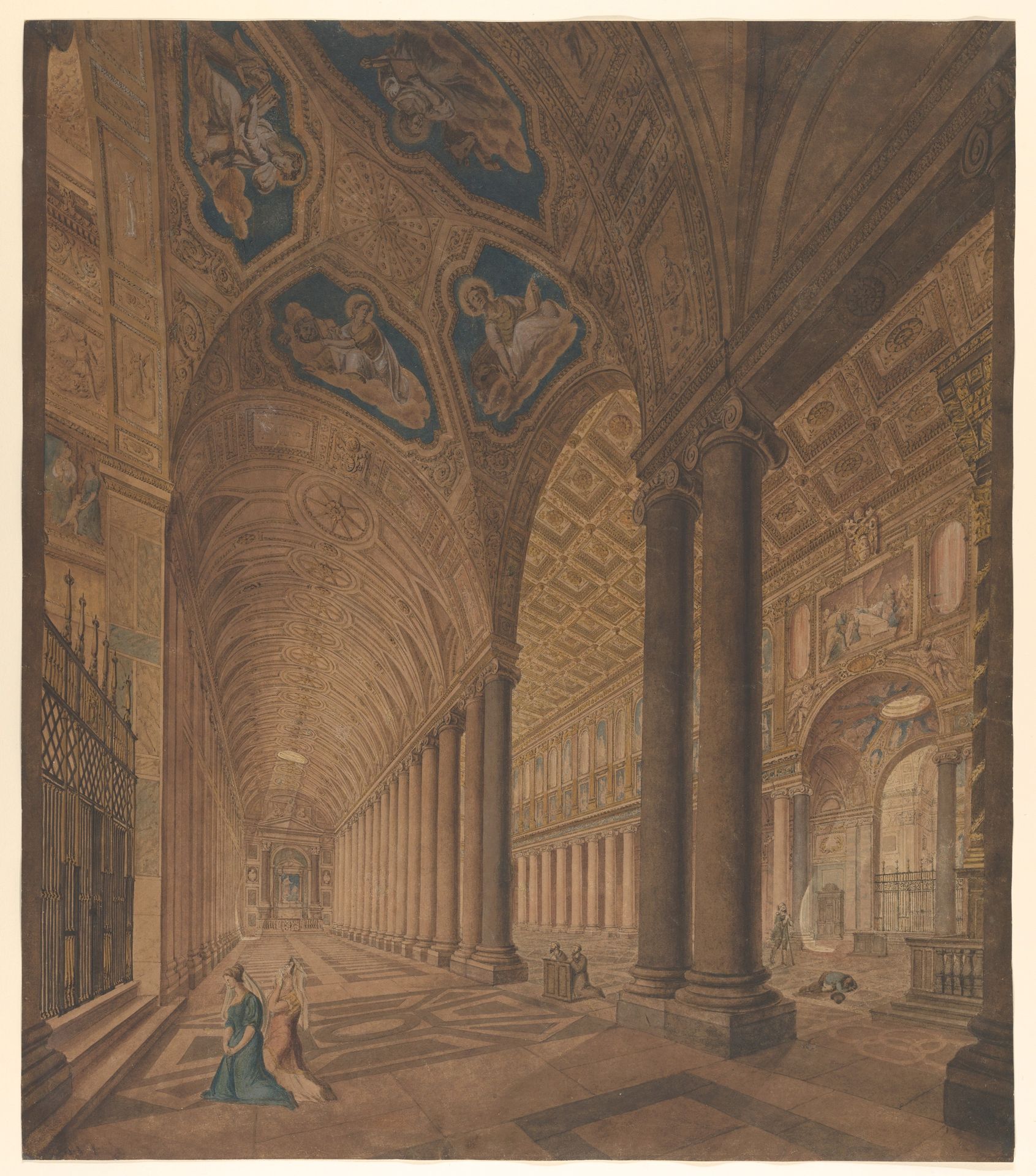
Editor: This watercolor print, “Interior View of the Basilica of Santa Maria Maggiore, Rome,” created in 1833, gives off a palpable sense of solemnity. The lines of columns draw my eye down the seemingly endless nave. What do you see in this piece, especially considering its historical context? Curator: What I find fascinating is how Hallmann uses the architectural rendering not just as a record, but as a statement about the Catholic Church's power and longevity. Think about it – he's depicting a specific church, but also invoking the visual language of classical Rome itself. Editor: How so? Curator: Well, the basilica form itself is borrowed from Roman public architecture. The columns, the arches, even the coffered ceilings all consciously echo the grandeur of the Roman Empire. Hallmann is illustrating how the Church positioned itself as a direct successor, inheriting that authority. Consider also that 1833 was a period of restoration after Napoleonic upheaval and a resurgence of Papal power in the Papal States. This wasn't simply an architectural study. Editor: It feels like he’s almost making an argument for the Church’s enduring influence. Does the inclusion of the people within the space play into that narrative as well? Curator: Absolutely. They're dwarfed by the architecture, highlighting the individual’s relationship to this grand institution. Do you think the kneeling figures reinforce that power dynamic or something else? Editor: I think they definitely highlight it, like everyone's almost reverent of the Basilica and what it stands for. It really changes my perspective on what might initially appear as a straightforward architectural study. Curator: Exactly. Artworks like this give us a glimpse into how cultural institutions are not just places but also active participants in shaping ideas of power, continuity, and cultural memory. I learned to look beyond what is being pictured and seek what the artwork aims to express in its contemporary socio-political milieu.
Interior View of the Basilica of Santa Maria Maggiore, Rome
1833


Artwork details
- Medium
- drawing, print, watercolor, architecture
- Dimensions
- Sheet: 30 3/8 × 13 9/16 in. (77.2 × 34.5 cm)
- Location
- Metropolitan Museum of Art, New York, NY
- Copyright
- Public Domain
Tags
Comments
Share your thoughts
About this artwork
Editor: This watercolor print, “Interior View of the Basilica of Santa Maria Maggiore, Rome,” created in 1833, gives off a palpable sense of solemnity. The lines of columns draw my eye down the seemingly endless nave. What do you see in this piece, especially considering its historical context? Curator: What I find fascinating is how Hallmann uses the architectural rendering not just as a record, but as a statement about the Catholic Church's power and longevity. Think about it – he's depicting a specific church, but also invoking the visual language of classical Rome itself. Editor: How so? Curator: Well, the basilica form itself is borrowed from Roman public architecture. The columns, the arches, even the coffered ceilings all consciously echo the grandeur of the Roman Empire. Hallmann is illustrating how the Church positioned itself as a direct successor, inheriting that authority. Consider also that 1833 was a period of restoration after Napoleonic upheaval and a resurgence of Papal power in the Papal States. This wasn't simply an architectural study. Editor: It feels like he’s almost making an argument for the Church’s enduring influence. Does the inclusion of the people within the space play into that narrative as well? Curator: Absolutely. They're dwarfed by the architecture, highlighting the individual’s relationship to this grand institution. Do you think the kneeling figures reinforce that power dynamic or something else? Editor: I think they definitely highlight it, like everyone's almost reverent of the Basilica and what it stands for. It really changes my perspective on what might initially appear as a straightforward architectural study. Curator: Exactly. Artworks like this give us a glimpse into how cultural institutions are not just places but also active participants in shaping ideas of power, continuity, and cultural memory. I learned to look beyond what is being pictured and seek what the artwork aims to express in its contemporary socio-political milieu.
Comments
Share your thoughts