About this artwork
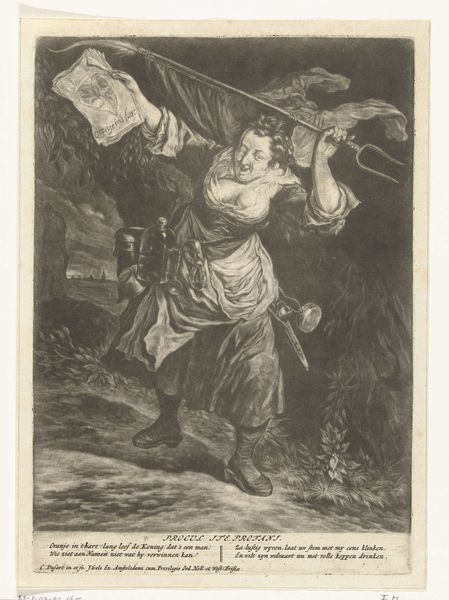
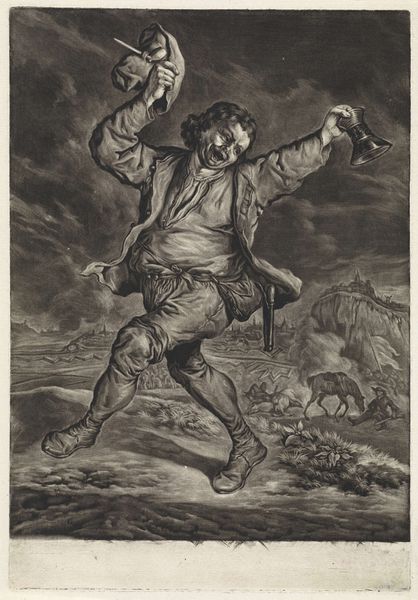
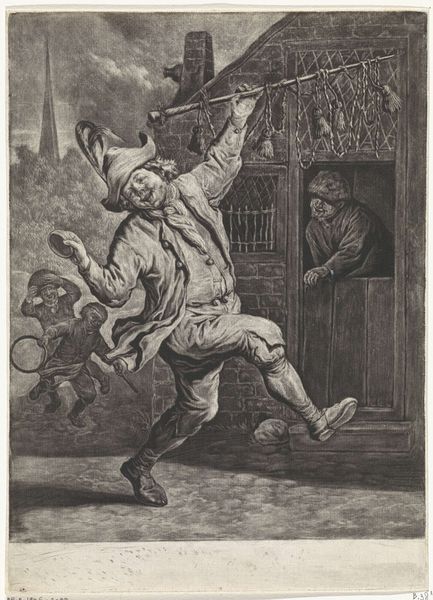
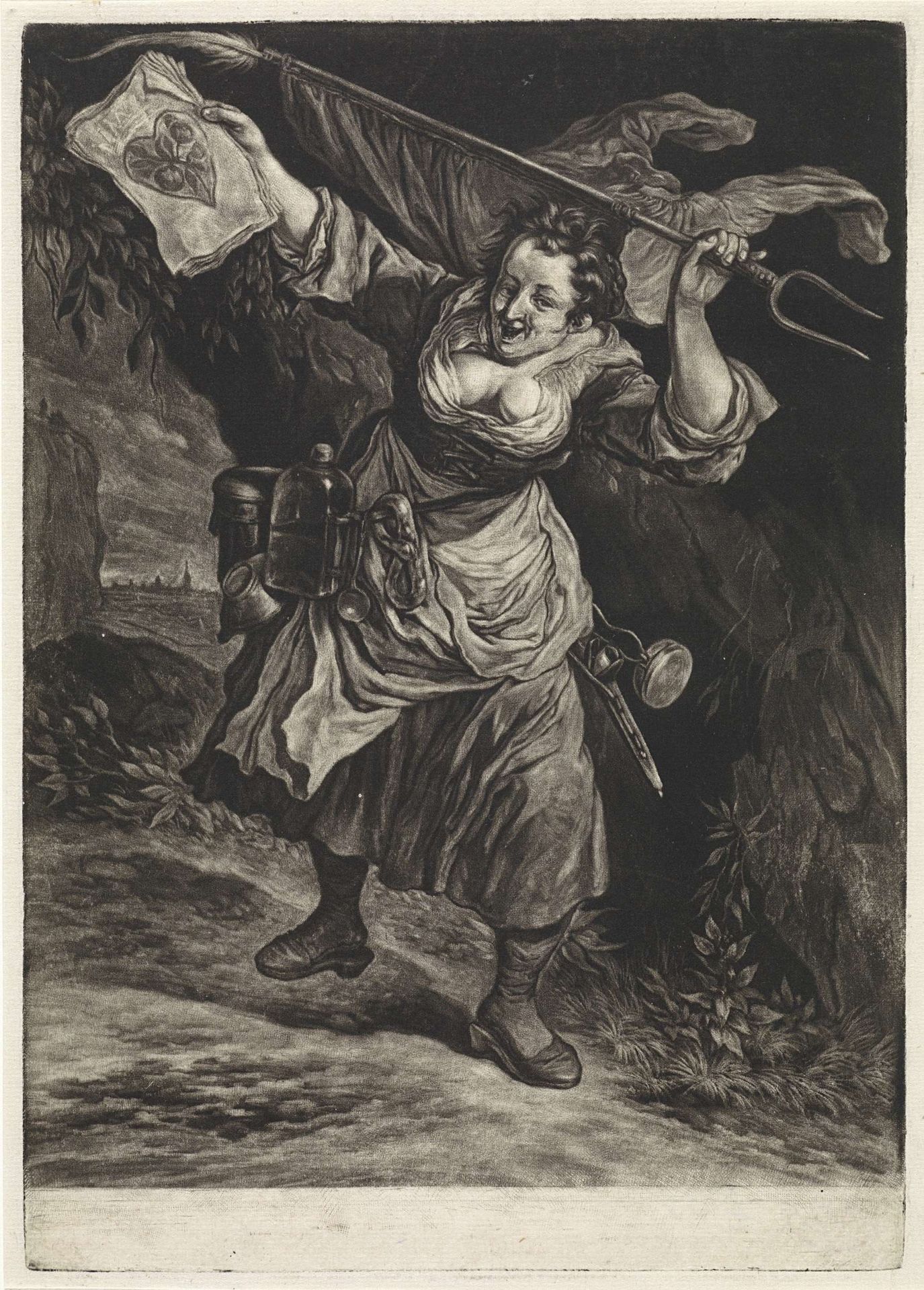
This etching, "De Orangiste," was made by Cornelis Dusart around 1695. Note the figure brandishing a standard displaying a heart pierced with a fleur-de-lis. Within the context of the late 17th-century Dutch Republic, the heart may have been understood as a symbol of loyalty or love for the ruling House of Orange. This motif calls to mind the many iterations of the Sacred Heart, venerated across different eras, bearing a striking similarity with the image held in this etching. Yet, this symbolism undergoes a curious metamorphosis when we observe the fleur-de-lis, traditionally a symbol of French royalty, piercing the heart. The symbolism of the heart, resonating with emotive power, is a recurring image in the collective consciousness. Its continued reappearance underscores the non-linear progression of symbols, constantly evolving in meaning across diverse historical contexts.

Artwork details
- Medium
- print, etching
- Dimensions
- height 250 mm, width 177 mm
- Location
- Rijksmuseum
- Copyright
- Rijks Museum: Open Domain
Tags
Comments
Share your thoughts
About this artwork
This etching, "De Orangiste," was made by Cornelis Dusart around 1695. Note the figure brandishing a standard displaying a heart pierced with a fleur-de-lis. Within the context of the late 17th-century Dutch Republic, the heart may have been understood as a symbol of loyalty or love for the ruling House of Orange. This motif calls to mind the many iterations of the Sacred Heart, venerated across different eras, bearing a striking similarity with the image held in this etching. Yet, this symbolism undergoes a curious metamorphosis when we observe the fleur-de-lis, traditionally a symbol of French royalty, piercing the heart. The symbolism of the heart, resonating with emotive power, is a recurring image in the collective consciousness. Its continued reappearance underscores the non-linear progression of symbols, constantly evolving in meaning across diverse historical contexts.
Comments
Share your thoughts