About this artwork
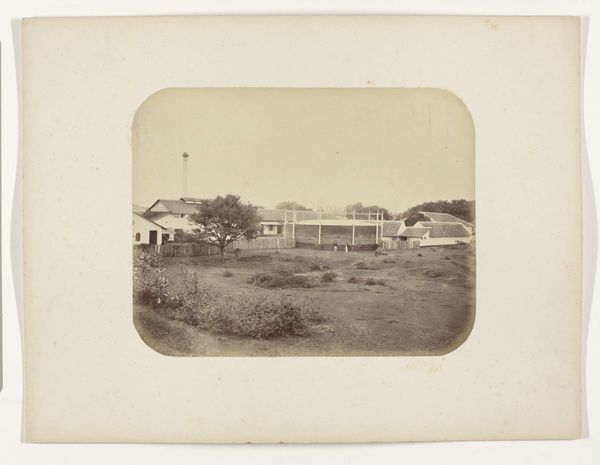
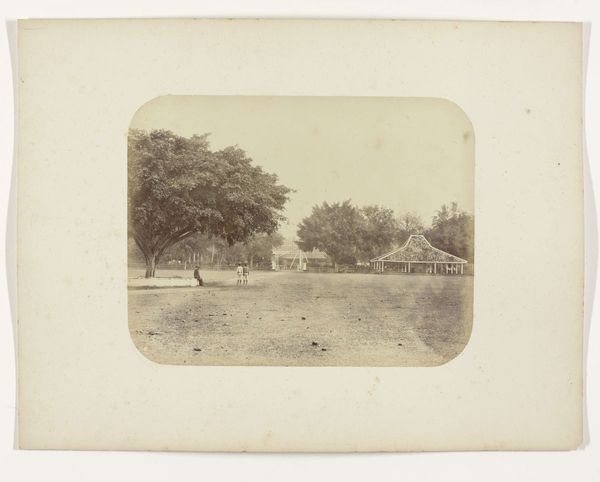
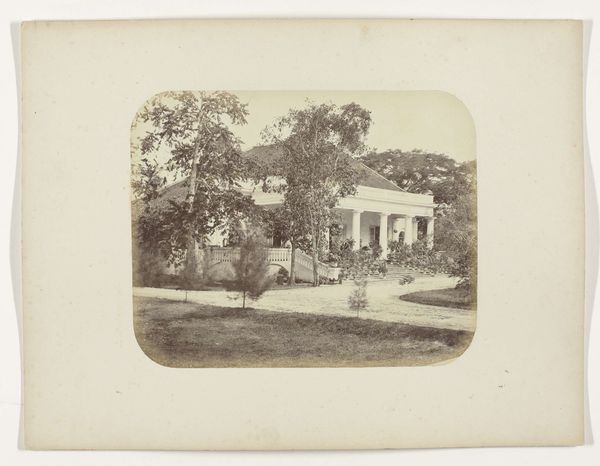
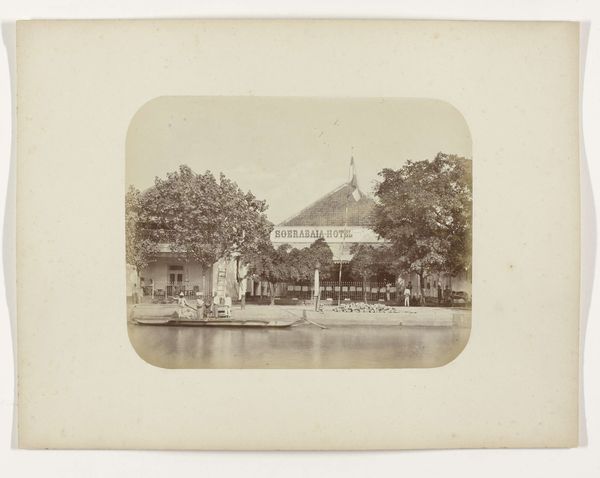
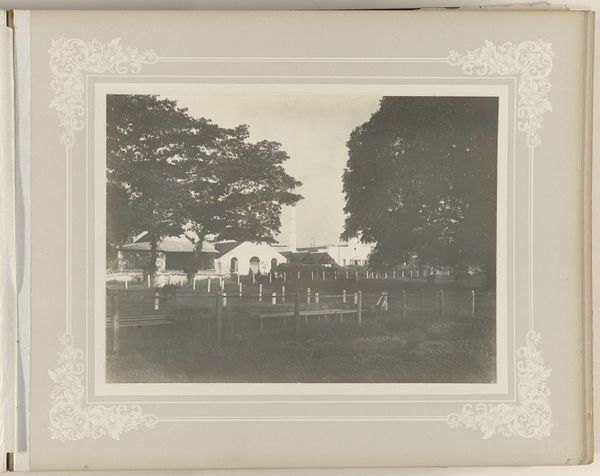
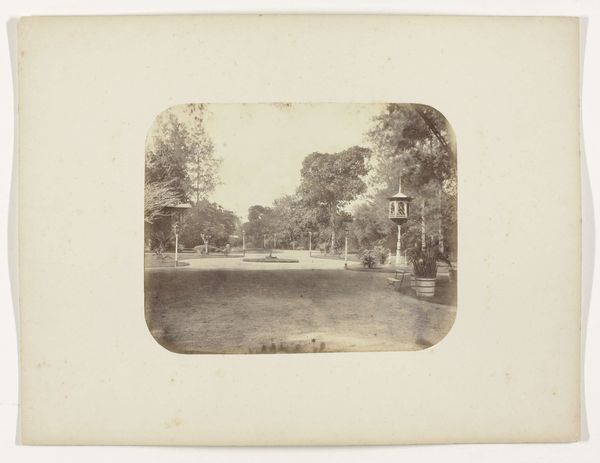
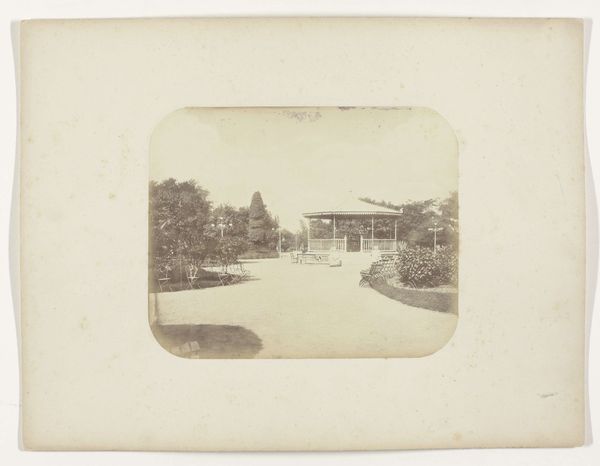
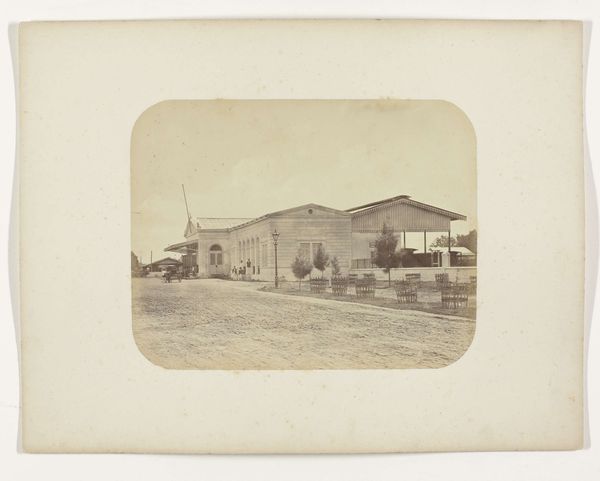
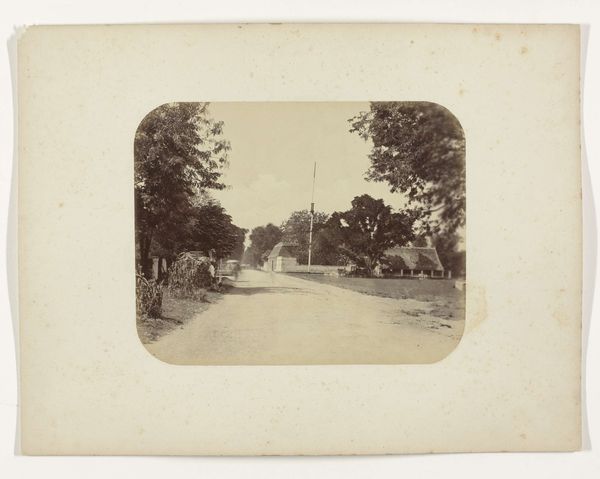
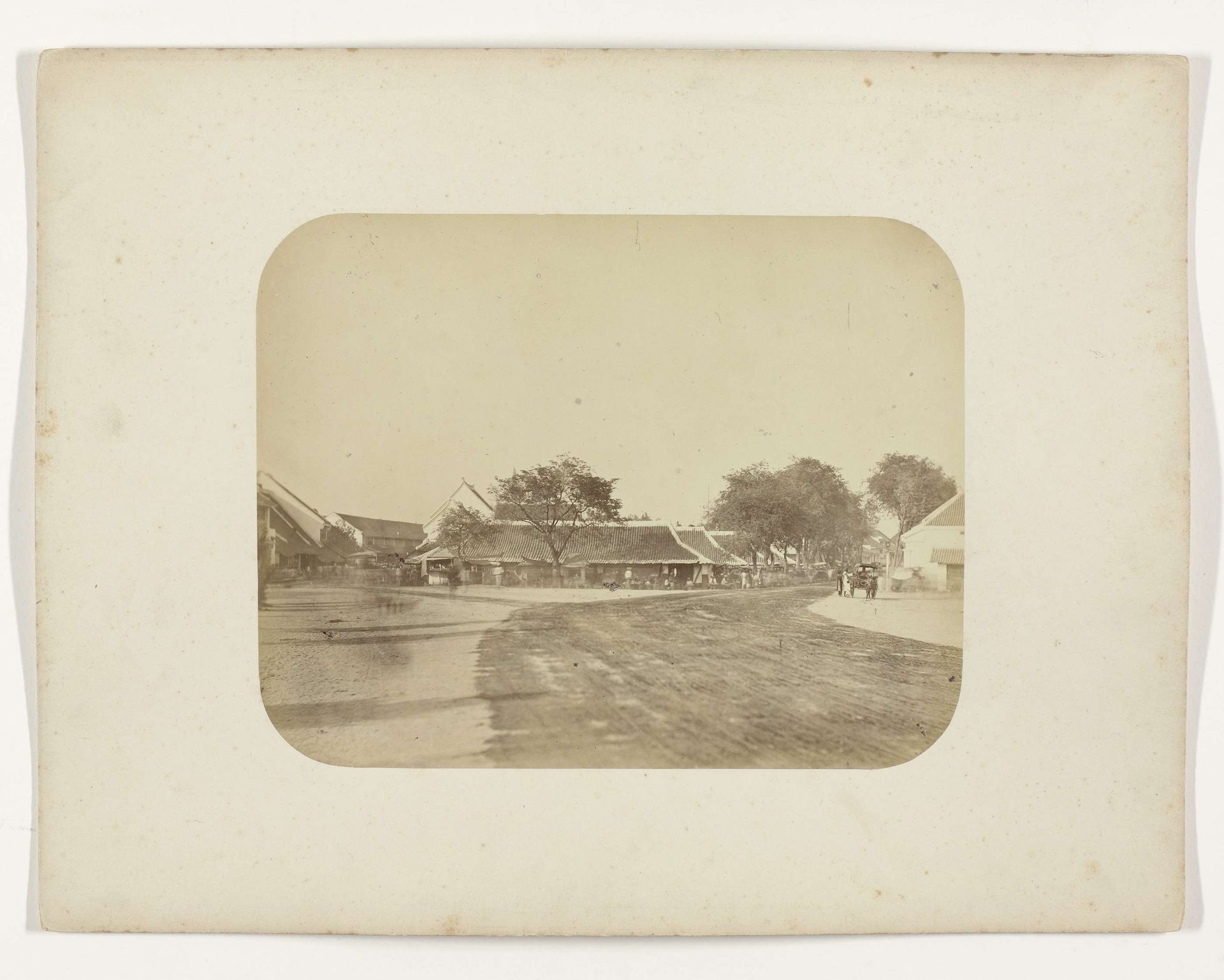
Curator: Here we have Herman Salzwedel's gelatin-silver print, "Een kruispunt in Surabaya," dating from between 1876 and 1884. Editor: It’s incredibly evocative! All that muted sepia... immediately makes me think of heat shimmering off a road, of colonial narratives and the slightly alien beauty of another world. Curator: Indeed. This image captures a bustling intersection in Surabaya during the Dutch colonial period, a crucial juncture for understanding the complexities of Orientalism and the photographic gaze. Salzwedel’s work offers a glimpse into the constructed vision of the East propagated during that era. How does it strike you beyond that initial sensory impression? Editor: Well, there’s a melancholy feel, too. Like peering into a memory that’s both beautiful and shadowed by unspoken truths. The long road receding into the distance—it pulls you in but keeps you at a remove. I wonder about the stories of those people, framed so neatly, unknowingly, within this imported perspective. Curator: Exactly! And thinking about the tonal qualities you observed earlier: Salzwedel’s composition and use of light are deliberate. He’s creating an exoticised space, performing empire for a European audience, whilst subtly othering its inhabitants within a constructed image of place. This work becomes an active player in maintaining certain socio-political orders, right? Editor: Absolutely. And as a contemporary viewer, you are inevitably implicated as well. The photo makes you consider: who is doing the seeing? What are you being asked to believe? Curator: This photo invites contemplation about the ethics of representation itself, even across such vast gulfs of time. It serves as a powerful reminder to critique the power dynamics embedded in visual culture and our role in perpetuating or dismantling such narratives. Editor: Leaving me to ponder how those historical visual echoes resonate, maybe uncomfortably, in the present.

Artwork details
- Medium
- photography, gelatin-silver-print
- Dimensions
- height 21.7 cm, width 27.8 cm
- Location
- Rijksmuseum
- Copyright
- Rijks Museum: Open Domain
Tags
Comments
Share your thoughts
About this artwork
Curator: Here we have Herman Salzwedel's gelatin-silver print, "Een kruispunt in Surabaya," dating from between 1876 and 1884. Editor: It’s incredibly evocative! All that muted sepia... immediately makes me think of heat shimmering off a road, of colonial narratives and the slightly alien beauty of another world. Curator: Indeed. This image captures a bustling intersection in Surabaya during the Dutch colonial period, a crucial juncture for understanding the complexities of Orientalism and the photographic gaze. Salzwedel’s work offers a glimpse into the constructed vision of the East propagated during that era. How does it strike you beyond that initial sensory impression? Editor: Well, there’s a melancholy feel, too. Like peering into a memory that’s both beautiful and shadowed by unspoken truths. The long road receding into the distance—it pulls you in but keeps you at a remove. I wonder about the stories of those people, framed so neatly, unknowingly, within this imported perspective. Curator: Exactly! And thinking about the tonal qualities you observed earlier: Salzwedel’s composition and use of light are deliberate. He’s creating an exoticised space, performing empire for a European audience, whilst subtly othering its inhabitants within a constructed image of place. This work becomes an active player in maintaining certain socio-political orders, right? Editor: Absolutely. And as a contemporary viewer, you are inevitably implicated as well. The photo makes you consider: who is doing the seeing? What are you being asked to believe? Curator: This photo invites contemplation about the ethics of representation itself, even across such vast gulfs of time. It serves as a powerful reminder to critique the power dynamics embedded in visual culture and our role in perpetuating or dismantling such narratives. Editor: Leaving me to ponder how those historical visual echoes resonate, maybe uncomfortably, in the present.
Comments
Share your thoughts