About this artwork
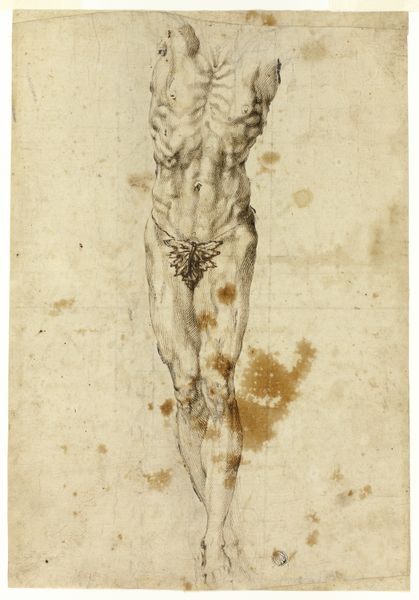
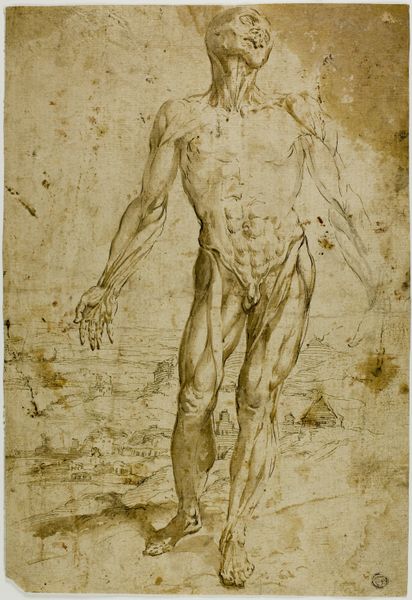
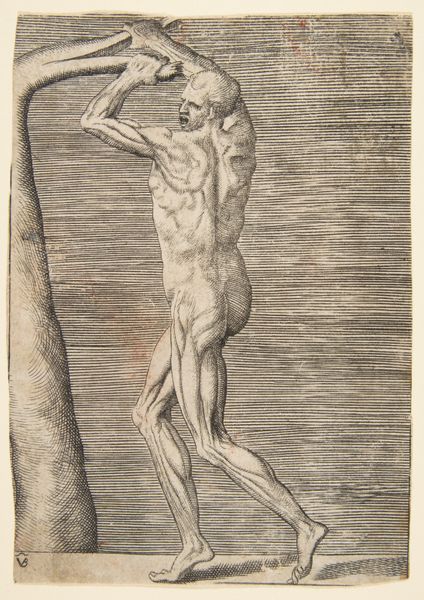
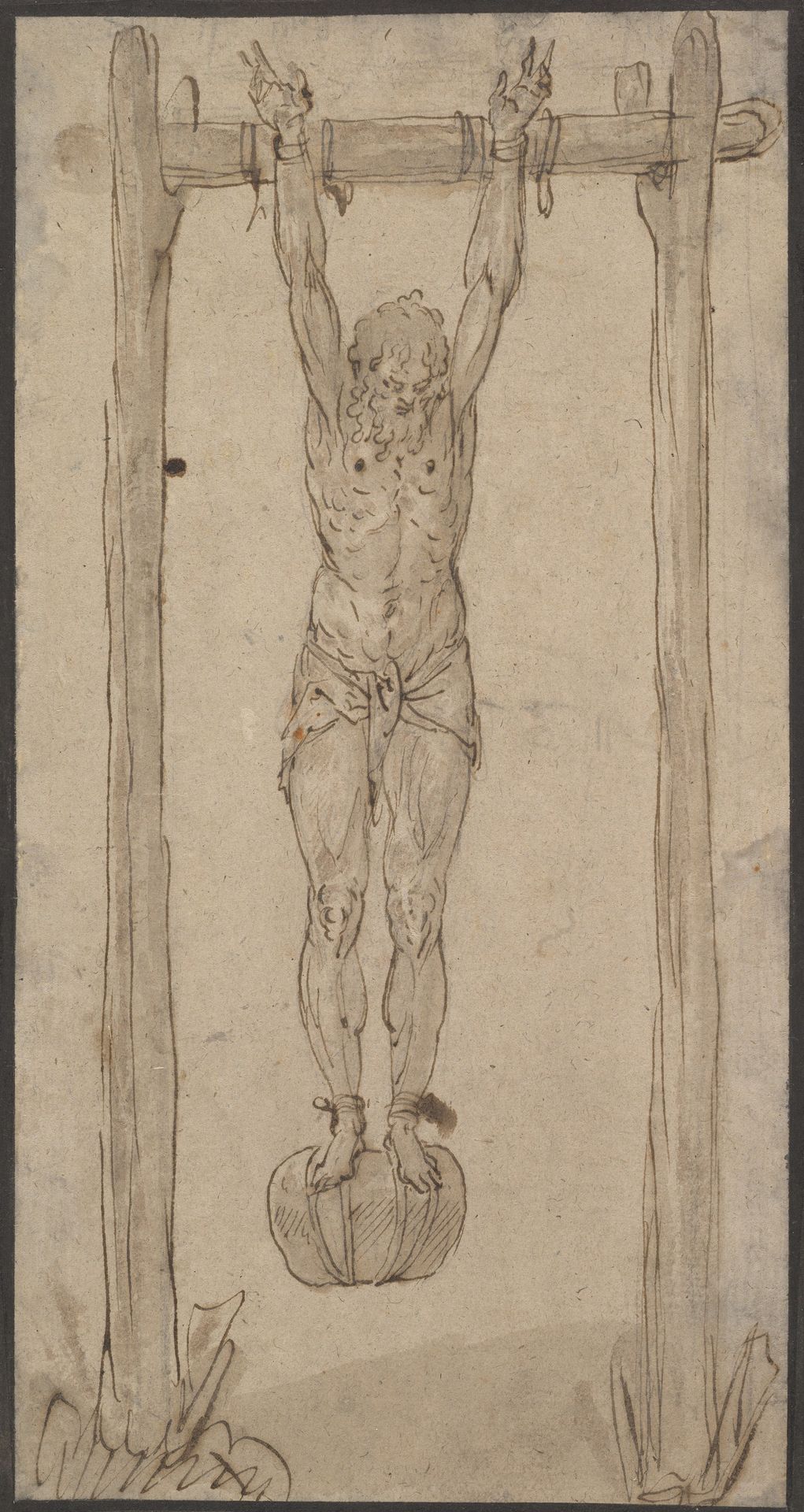
This drawing, “A Man Hanging by His Arms (the Corpse of the King?),” was made by Frans Floris I during the tumultuous 16th century. Floris was deeply influenced by the Italian Renaissance, and he adapted its styles to the Northern European sensibilities of his home. Consider the impact of religious and political strife during the Reformation era on art. The image depicts a body, possibly royal, subjected to public humiliation. This reflects the era’s brutal power struggles between monarchs and their rivals. Executions, real and symbolic, were a grim reality and a means of asserting dominance. It makes you wonder about Floris's intentions: was he making a statement about power? The rawness of the sketch, with its focus on the exposed and vulnerable body, conveys a visceral emotionality. Is this artwork documenting a historical moment, or perhaps critiquing it? Does it invite you to question the human cost of ambition and conflict?
A Man Hanging by His Arms (the Corpse of the King?)
1530 - 1570


Artwork details
- Medium
- drawing, print, ink
- Dimensions
- sheet: 9 13/16 x 5 1/16 in. (25 x 12.9 cm) mount: 10 3/16 x 6 7/8 in. (25.8 x 17.5 cm)
- Location
- Metropolitan Museum of Art, New York, NY
- Copyright
- Public Domain
Tags
drawing
medieval
figuration
11_renaissance
ink
history-painting
nude
Comments
Be the first to share your thoughts about this work.
About this artwork
This drawing, “A Man Hanging by His Arms (the Corpse of the King?),” was made by Frans Floris I during the tumultuous 16th century. Floris was deeply influenced by the Italian Renaissance, and he adapted its styles to the Northern European sensibilities of his home. Consider the impact of religious and political strife during the Reformation era on art. The image depicts a body, possibly royal, subjected to public humiliation. This reflects the era’s brutal power struggles between monarchs and their rivals. Executions, real and symbolic, were a grim reality and a means of asserting dominance. It makes you wonder about Floris's intentions: was he making a statement about power? The rawness of the sketch, with its focus on the exposed and vulnerable body, conveys a visceral emotionality. Is this artwork documenting a historical moment, or perhaps critiquing it? Does it invite you to question the human cost of ambition and conflict?
Comments
Be the first to share your thoughts about this work.