About this artwork
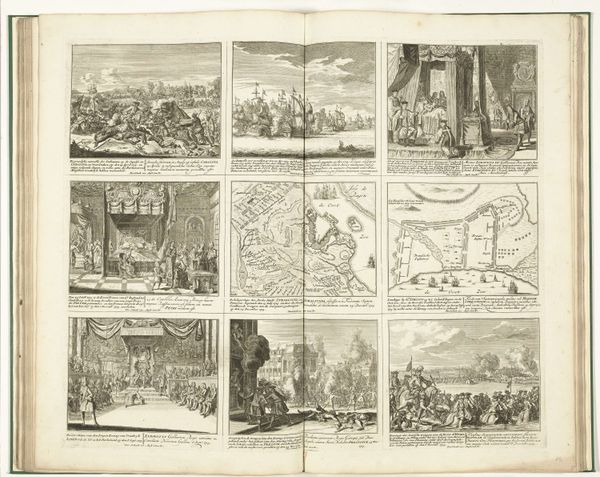
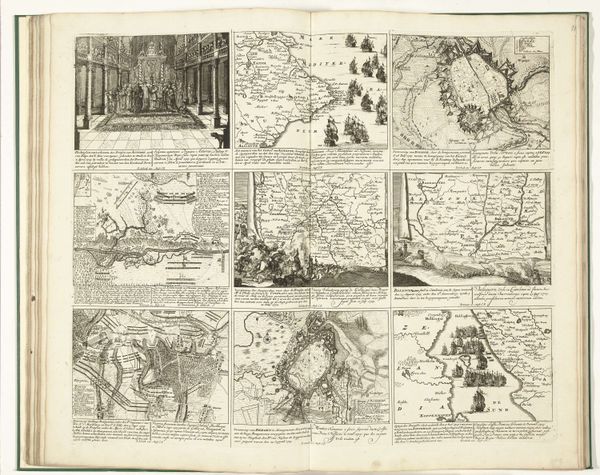
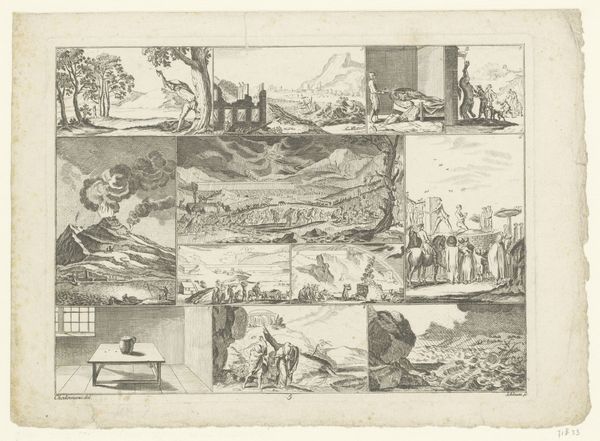
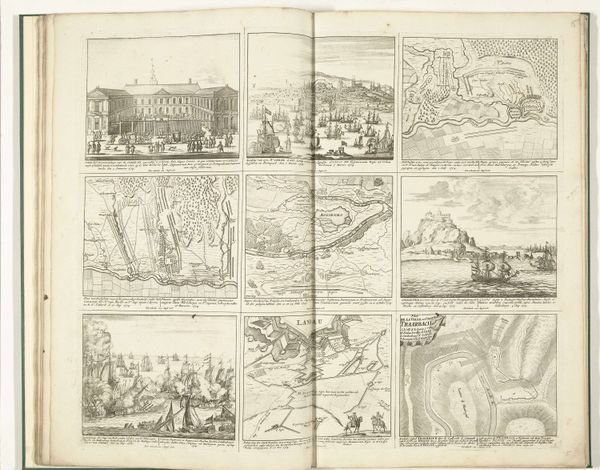
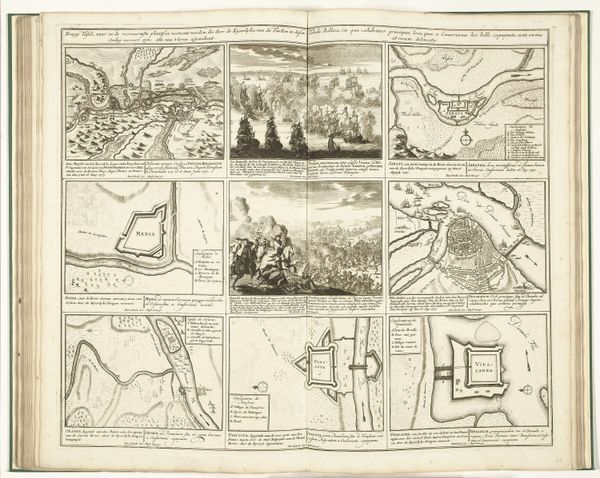
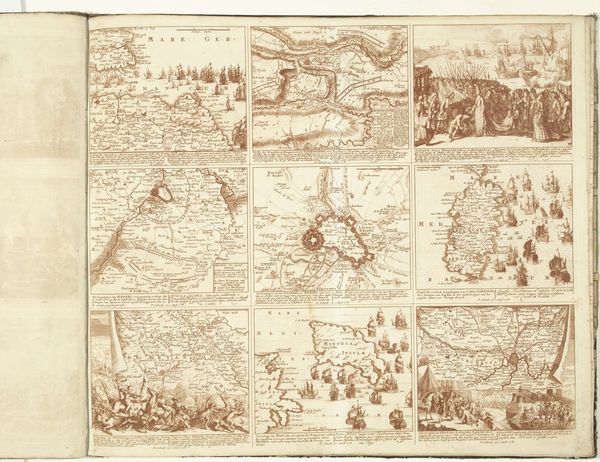
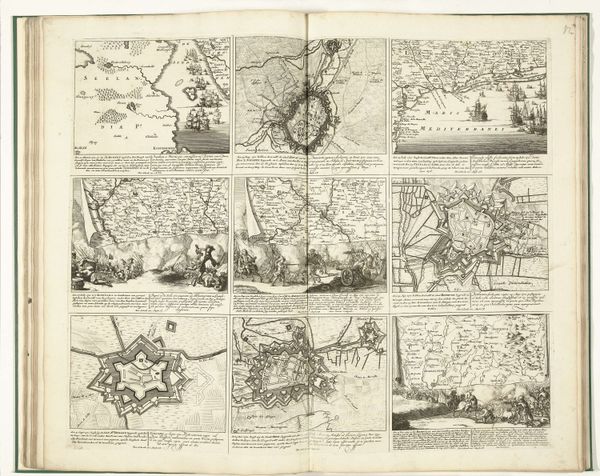
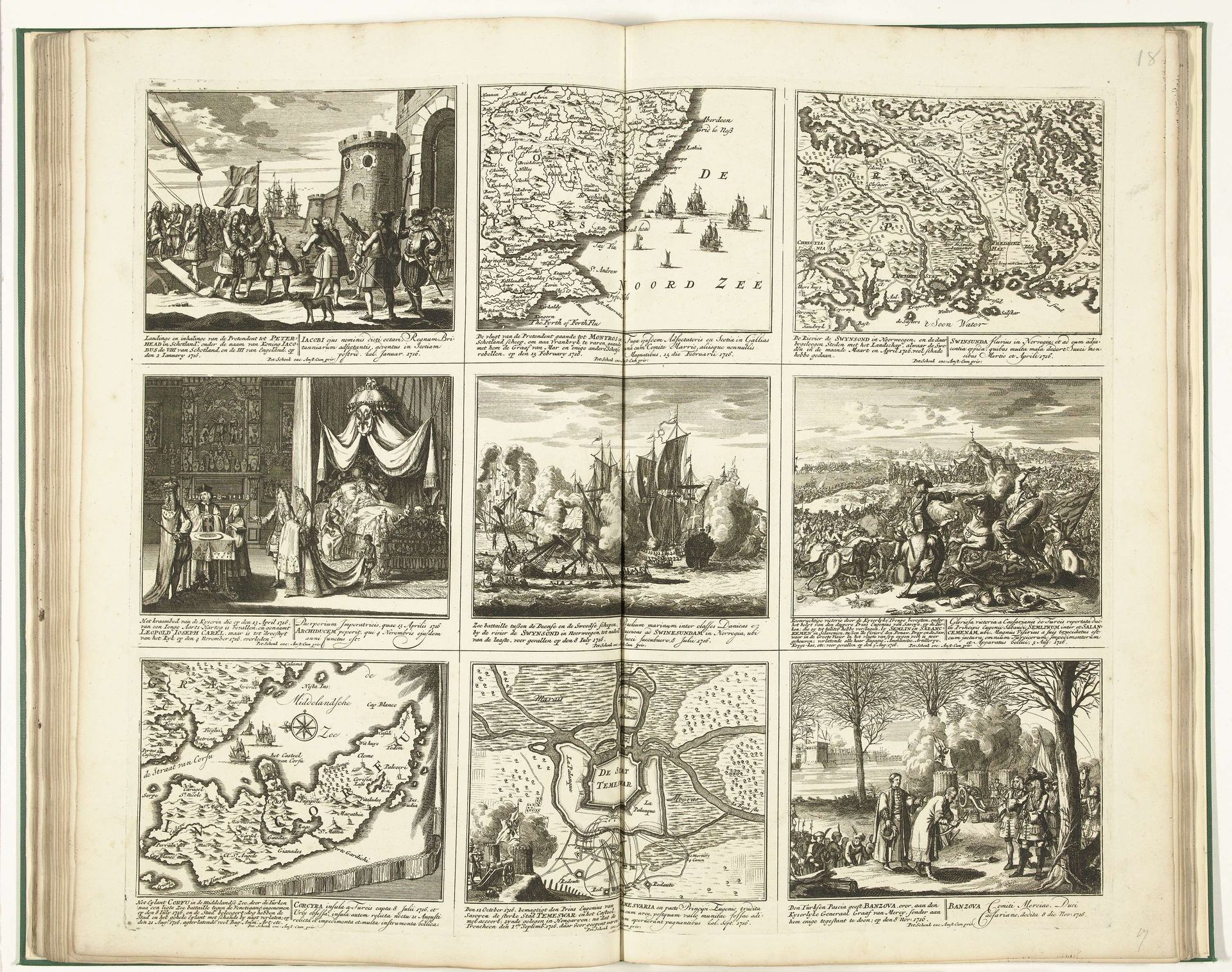
Editor: This is "Schouwburg van den oorlog (blad XVII)" by Pieter Schenk, probably from 1716 to 1722. It's an engraving printed with ink. It's so interesting seeing so many distinct scenes together like this. How would you interpret this series of images? Curator: Each image seems to carry a potent symbol of conflict and its consequences. Look closely – we have sieges, naval battles, surrenders… But they aren’t simply depictions. Each scene has echoes of power structures, social upheaval, the human cost of ambition. What cultural memories might these images evoke? Editor: Cultural memories? You mean like specific historical events people would recognize? Curator: Yes, exactly! Or broader anxieties, ideas about leadership, justice, and morality projected onto the visual field. How are power and authority represented through the poses, clothing, architecture within the frames? Editor: The figure in bed surrounded by people—is that a death scene representing loss of leadership? Curator: Potentially! Consider the dramatic conventions, the stage-like settings – each element functions as a signifier. Pieter Schenk isn't simply showing us war, but prompting us to consider the deeper, cyclical nature of conflict. What patterns or repeated motifs do you notice? Editor: There are maps, too. Almost like the land itself is a prize of war. Curator: Precisely! Landscapes aren't neutral. They represent ownership, strategic advantage. Look at how each element – battleships, conquering armies, crumbling cities—adds a layer to our understanding of the relationship between humans and the territories they claim. Does the repetition of scenes normalize these conflicts or emphasize its futility? Editor: Seeing all of this in a new way. It’s a collection of propaganda and maps of a very conflicted vision of Baroque times. Curator: Indeed, visual symbols act as powerful keys to the past. I, for one, see both triumph and devastation here.
Schouwburg van den oorlog (blad XVII), 1716
Possibly 1716 - 1722

Pieter Schenk
1660 - 1711Location
RijksmuseumArtwork details
- Medium
- drawing, print, ink, engraving
- Dimensions
- height 538 mm, width 635 mm
- Location
- Rijksmuseum
- Copyright
- Rijks Museum: Open Domain
Tags
Comments
Share your thoughts
About this artwork
Editor: This is "Schouwburg van den oorlog (blad XVII)" by Pieter Schenk, probably from 1716 to 1722. It's an engraving printed with ink. It's so interesting seeing so many distinct scenes together like this. How would you interpret this series of images? Curator: Each image seems to carry a potent symbol of conflict and its consequences. Look closely – we have sieges, naval battles, surrenders… But they aren’t simply depictions. Each scene has echoes of power structures, social upheaval, the human cost of ambition. What cultural memories might these images evoke? Editor: Cultural memories? You mean like specific historical events people would recognize? Curator: Yes, exactly! Or broader anxieties, ideas about leadership, justice, and morality projected onto the visual field. How are power and authority represented through the poses, clothing, architecture within the frames? Editor: The figure in bed surrounded by people—is that a death scene representing loss of leadership? Curator: Potentially! Consider the dramatic conventions, the stage-like settings – each element functions as a signifier. Pieter Schenk isn't simply showing us war, but prompting us to consider the deeper, cyclical nature of conflict. What patterns or repeated motifs do you notice? Editor: There are maps, too. Almost like the land itself is a prize of war. Curator: Precisely! Landscapes aren't neutral. They represent ownership, strategic advantage. Look at how each element – battleships, conquering armies, crumbling cities—adds a layer to our understanding of the relationship between humans and the territories they claim. Does the repetition of scenes normalize these conflicts or emphasize its futility? Editor: Seeing all of this in a new way. It’s a collection of propaganda and maps of a very conflicted vision of Baroque times. Curator: Indeed, visual symbols act as powerful keys to the past. I, for one, see both triumph and devastation here.
Comments
Share your thoughts