1886
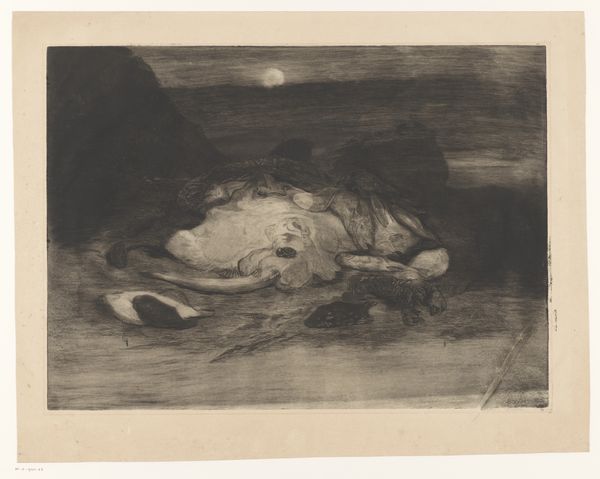
Still-Life


Listen to curator's interpretation
Curatorial notes
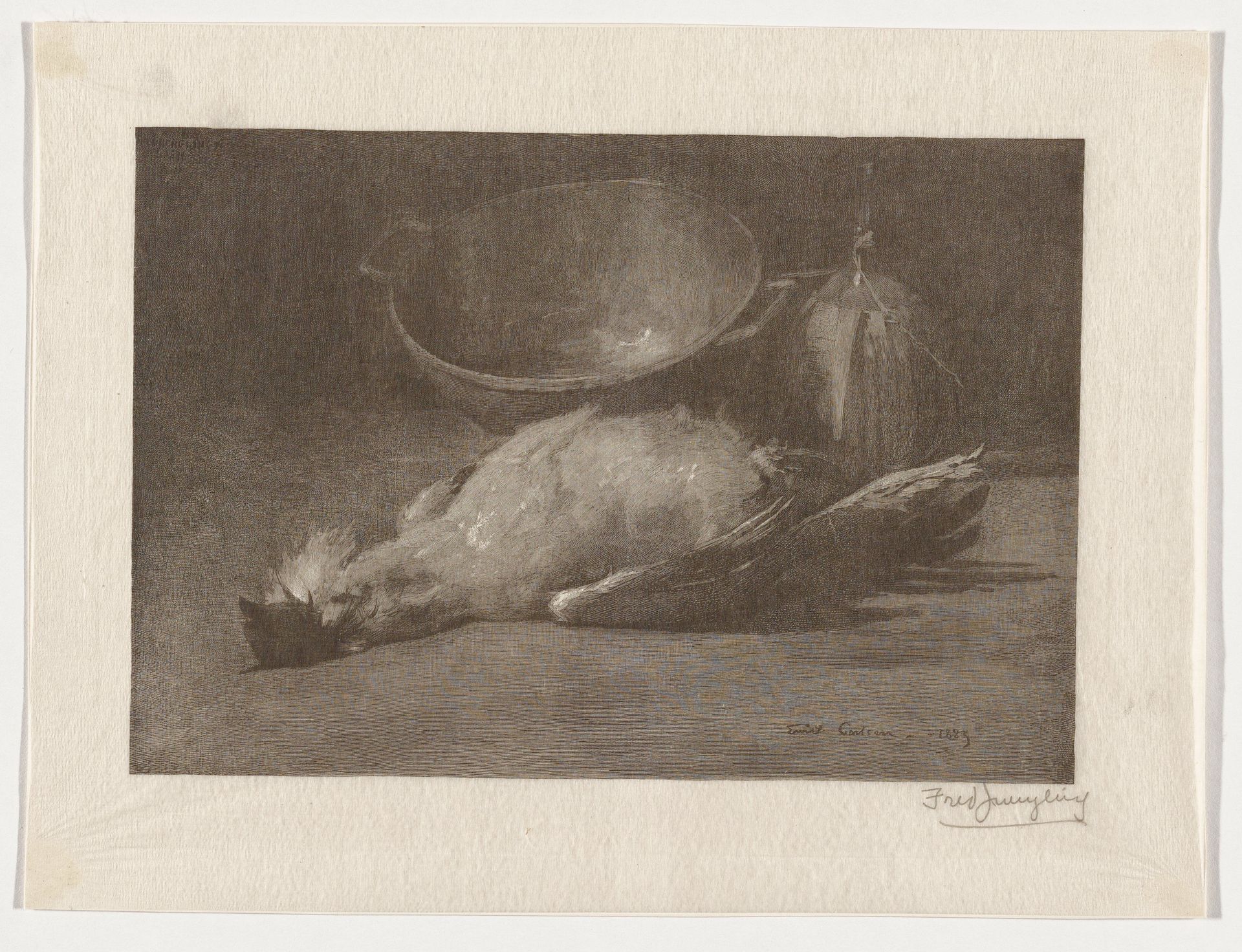
Editor: Here we have Frederick Juengling’s "Still-Life," created in 1886. It’s a print, seemingly a wood engraving, that depicts a dead bird next to a bowl and some kind of fruit. It has a somber, muted quality that's rather striking. How do you interpret this work? Curator: Considering Juengling’s background as an engraver for magazines, this piece reads to me as more than just a traditional still life. Think about the social context of the late 19th century. This image, with its careful rendering of mortality, could be a commentary on the relationship between nature, consumption, and perhaps even social inequality. What feelings does the bird evoke in you? Editor: Sadness, I guess. A sense of finality. Is that intentional? Curator: It certainly could be. Death was far more present in everyday life back then, not as sanitized as it is today. Juengling may be reminding us of the fragility of life, the food chain, and our place within it. But the presence of domestic items prompts further exploration. Are these objects signifiers of social class or commentaries on the exploitation of the natural world for human consumption? Editor: So, it’s not just a pretty picture, but maybe a statement about society? Curator: Precisely. Art rarely exists in a vacuum. It’s essential to consider what’s happening around the artist, what conversations they might be engaging with. We must consider if it could perhaps even be viewed through a contemporary lens reflecting the political aspects of food production and distribution today. Editor: That's fascinating, I never considered that. Looking at it now, it makes me think differently about how we obtain our food. Curator: Exactly! And that’s the power of art. It invites us to look closer, to question, and to connect the past with the present, revealing potentially new insights about our world.