About this artwork
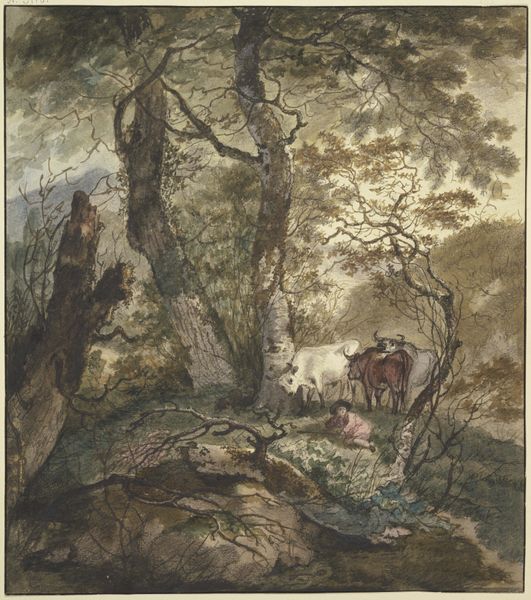
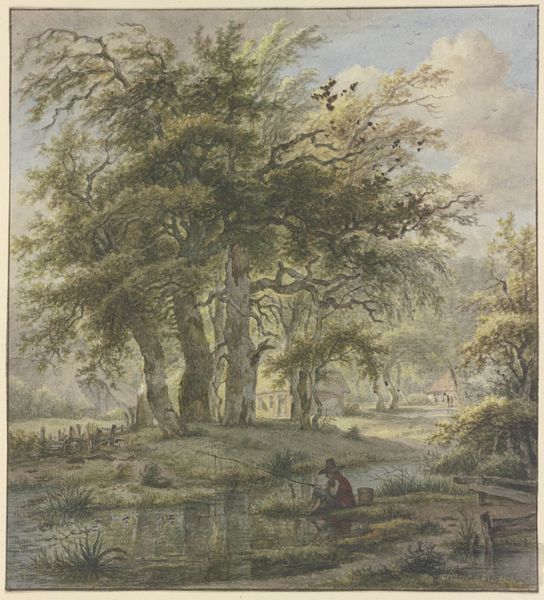
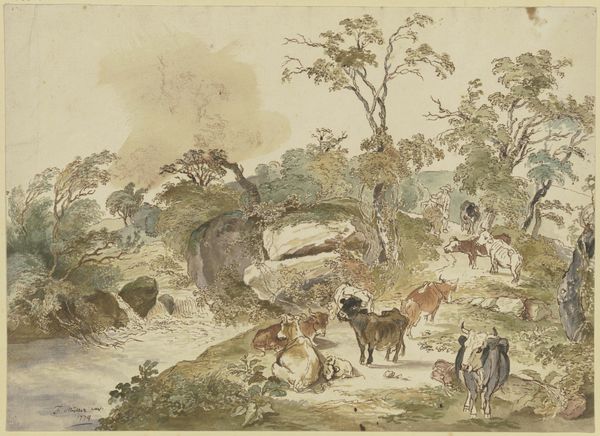
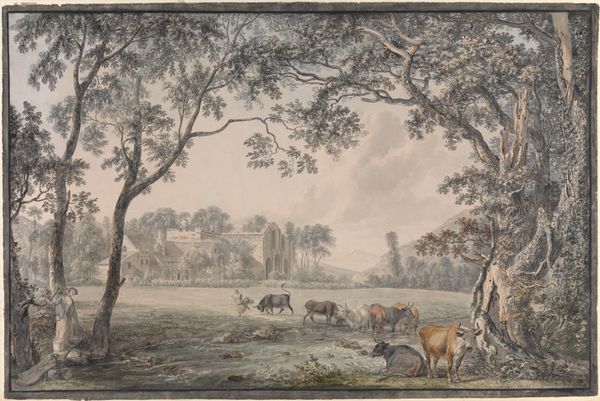
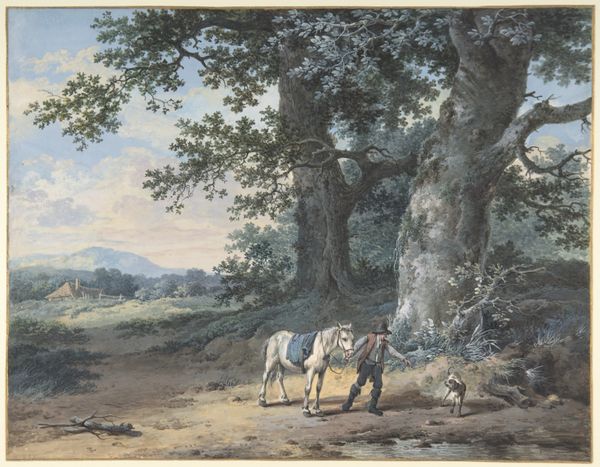
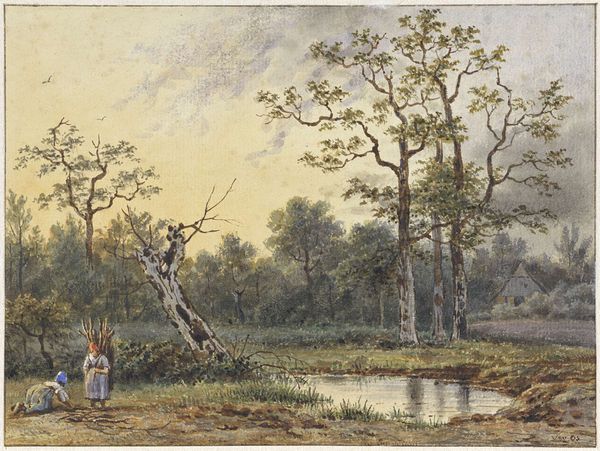
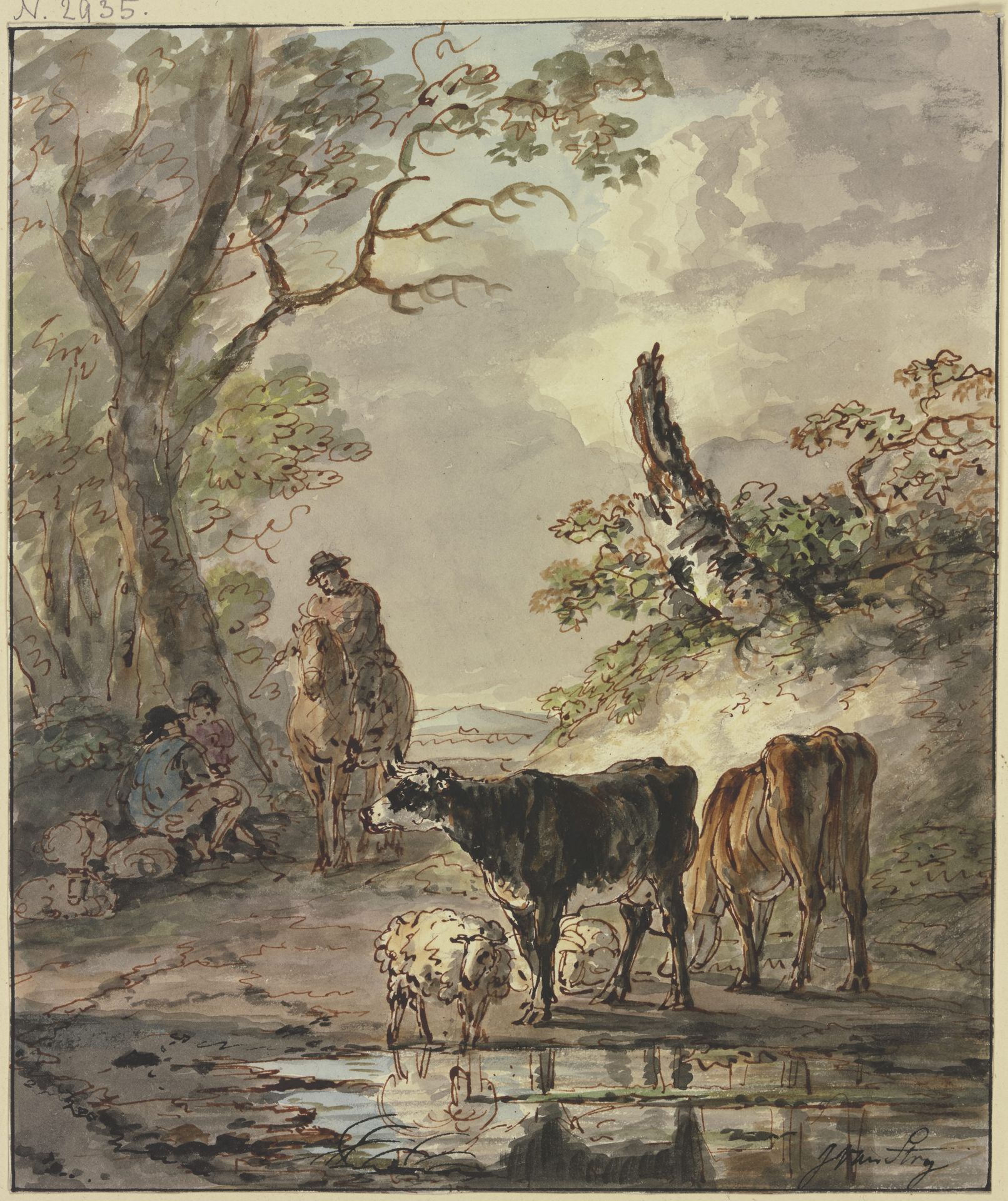
Jacob van Strij created "Resting Shepherds at a Watering Place," a drawing in brown ink and watercolor, now held in the Städel Museum. The composition emphasizes the relationship between man and nature, framed by a palette of earth tones. The scene is carefully constructed, with a large tree on the left balancing a decaying tree trunk on the right, creating a symmetrical framework. Within this structure, Strij arranges shepherds, livestock, and a placid pool. The reflections in the water offer a double vision, questioning the stability of what we perceive as real. The use of brown ink lends a graphic quality, while the watercolor washes soften the overall effect, evoking a sense of pastoral harmony. This artwork subtly challenges notions of pastoral idealization. Strij’s formal choices, from his carefully balanced composition to the mirroring reflections in the water, invite a deeper reading. The drawing prompts us to consider how constructed representations, like this, shape our understanding of nature.


Artwork details
- Medium
- drawing, coloured-pencil, paper, watercolor, ink, chalk
- Location
- Städel Museum
- Copyright
- Public Domain
Tags
drawing
toned paper
coloured-pencil
landscape
paper
watercolor
ink
coloured pencil
romanticism
chalk
15_18th-century
genre-painting
watercolor
Comments
No comments
About this artwork
Jacob van Strij created "Resting Shepherds at a Watering Place," a drawing in brown ink and watercolor, now held in the Städel Museum. The composition emphasizes the relationship between man and nature, framed by a palette of earth tones. The scene is carefully constructed, with a large tree on the left balancing a decaying tree trunk on the right, creating a symmetrical framework. Within this structure, Strij arranges shepherds, livestock, and a placid pool. The reflections in the water offer a double vision, questioning the stability of what we perceive as real. The use of brown ink lends a graphic quality, while the watercolor washes soften the overall effect, evoking a sense of pastoral harmony. This artwork subtly challenges notions of pastoral idealization. Strij’s formal choices, from his carefully balanced composition to the mirroring reflections in the water, invite a deeper reading. The drawing prompts us to consider how constructed representations, like this, shape our understanding of nature.
Comments
No comments