About this artwork
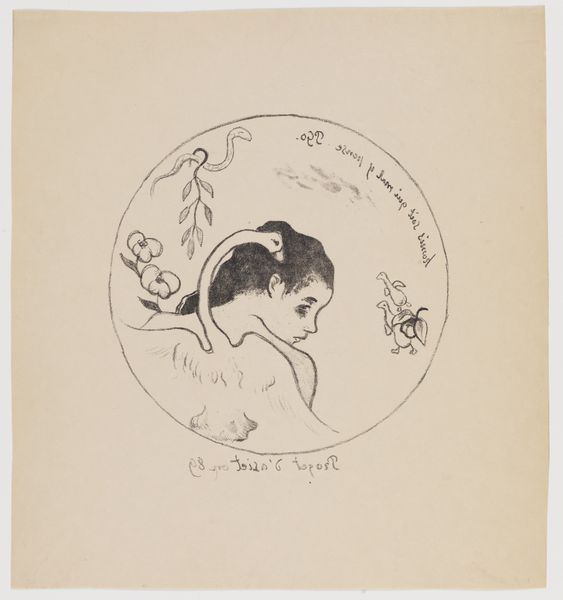
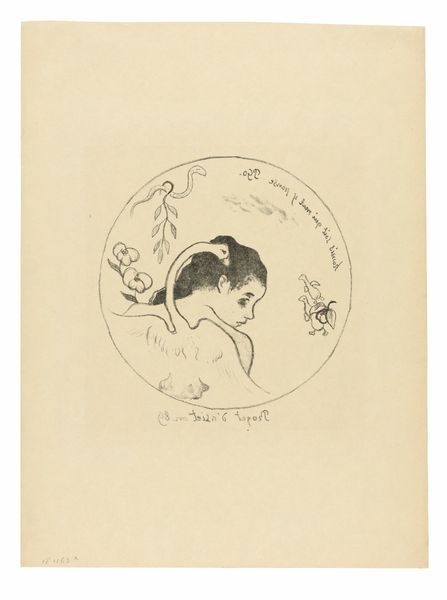
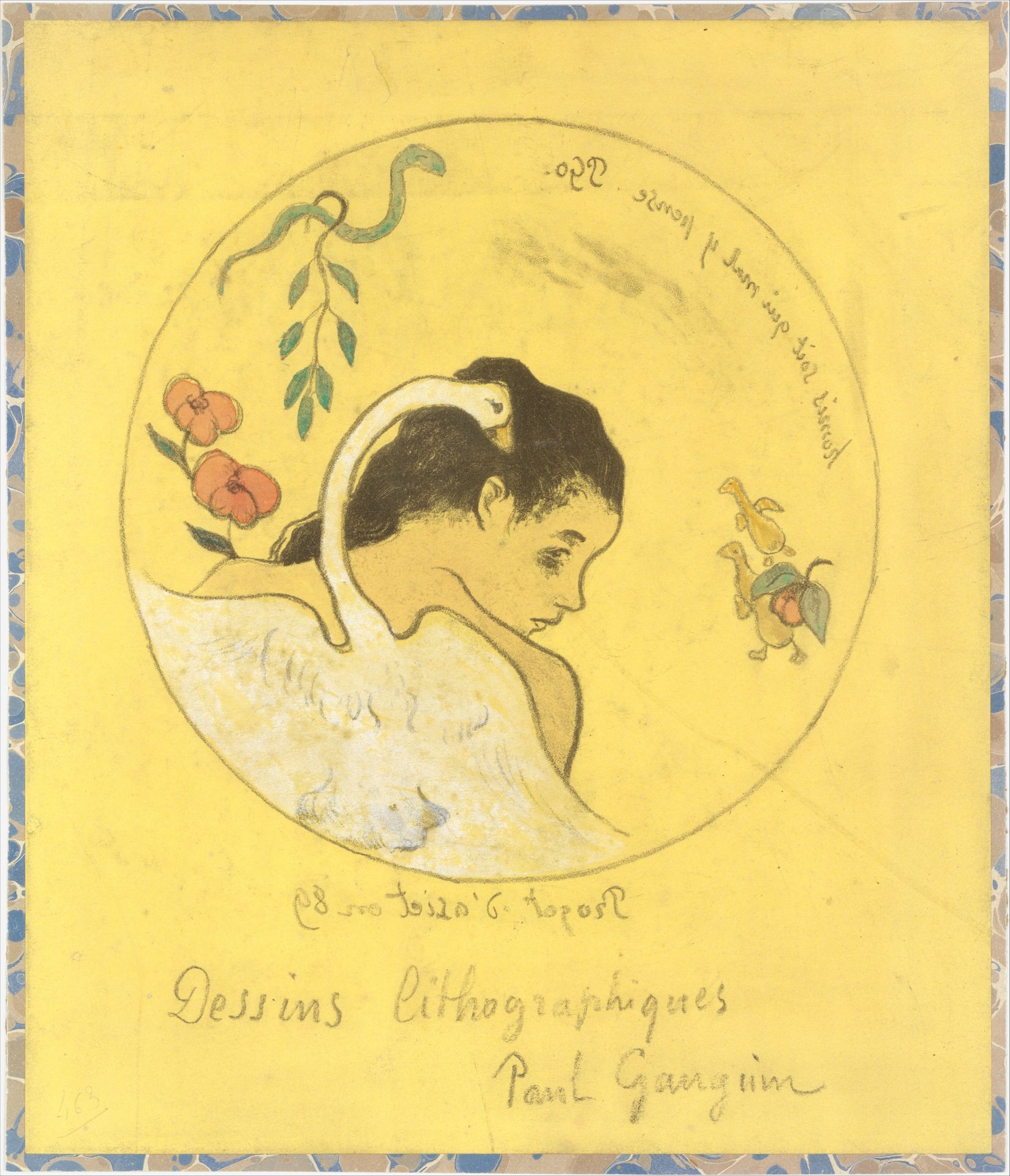
Paul Gauguin created this lithograph as a cover for his "Volpini Suite", using ink on yellow paper. The circular composition cradles a scene of mythical intimacy, its soft hues and gentle curves evoking a dreamlike sensuality. Gauguin uses the classical myth of Leda and the Swan to destabilize traditional artistic and moral conventions. The sinuous lines of the swan intertwine with Leda's form, while the idyllic motifs of the snake, flowers, and birds contrast with the implied act of violation. The phrase "Honi Soit Qui Mal y Pense" which translates to "Shame on those who think evil of it" hints at shifting perceptions of beauty, desire, and transgression. The flatness of the image rejects illusionistic depth, emphasizing the surface as a space for complex arrangements of form. Gauguin invites us to reconsider how we assign meaning and value to visual representations of desire. The print challenges us to confront our own biases and assumptions.
("Leda") Design for a Plate: Shame on Those Who Evil Think (Honi Soit Qui Mal y Pense) ; cover illustration for the "Volpini Suite" entitled Lithographic Drawings (Dessins lithographiques) 1889


Artwork details
- Medium
- drawing, mixed-media, lithograph, print, paper
- Dimensions
- Sheet: 11 15/16 x 10 3/16 in. (30.4 x 25.9 cm)
- Location
- Metropolitan Museum of Art, New York, NY
- Copyright
- Public Domain
Tags
portrait
drawing
mixed-media
lithograph
figuration
paper
coloured pencil
symbolism
profile
Comments
No comments
About this artwork
Paul Gauguin created this lithograph as a cover for his "Volpini Suite", using ink on yellow paper. The circular composition cradles a scene of mythical intimacy, its soft hues and gentle curves evoking a dreamlike sensuality. Gauguin uses the classical myth of Leda and the Swan to destabilize traditional artistic and moral conventions. The sinuous lines of the swan intertwine with Leda's form, while the idyllic motifs of the snake, flowers, and birds contrast with the implied act of violation. The phrase "Honi Soit Qui Mal y Pense" which translates to "Shame on those who think evil of it" hints at shifting perceptions of beauty, desire, and transgression. The flatness of the image rejects illusionistic depth, emphasizing the surface as a space for complex arrangements of form. Gauguin invites us to reconsider how we assign meaning and value to visual representations of desire. The print challenges us to confront our own biases and assumptions.
Comments
No comments