About this artwork
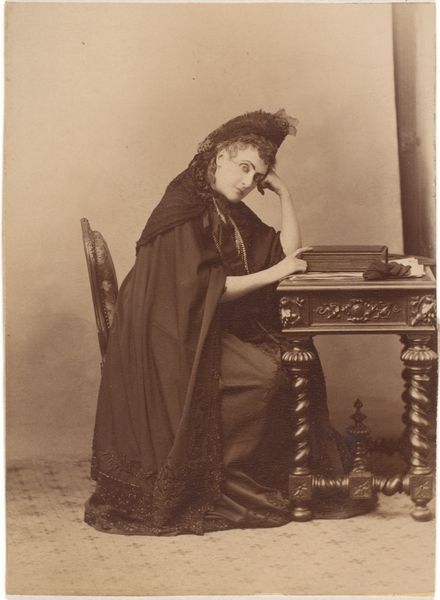
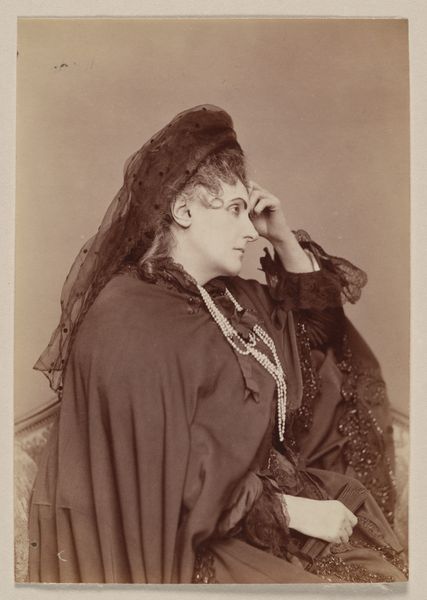
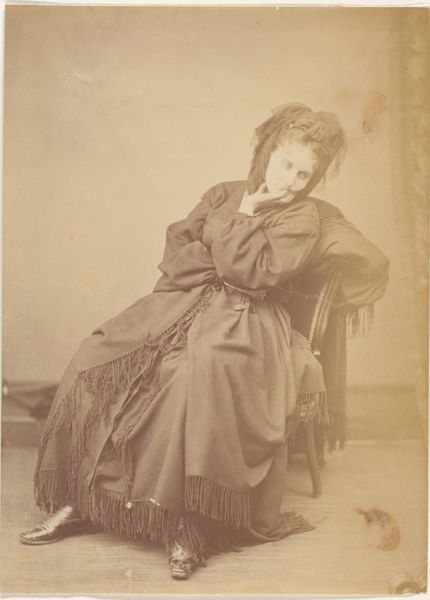
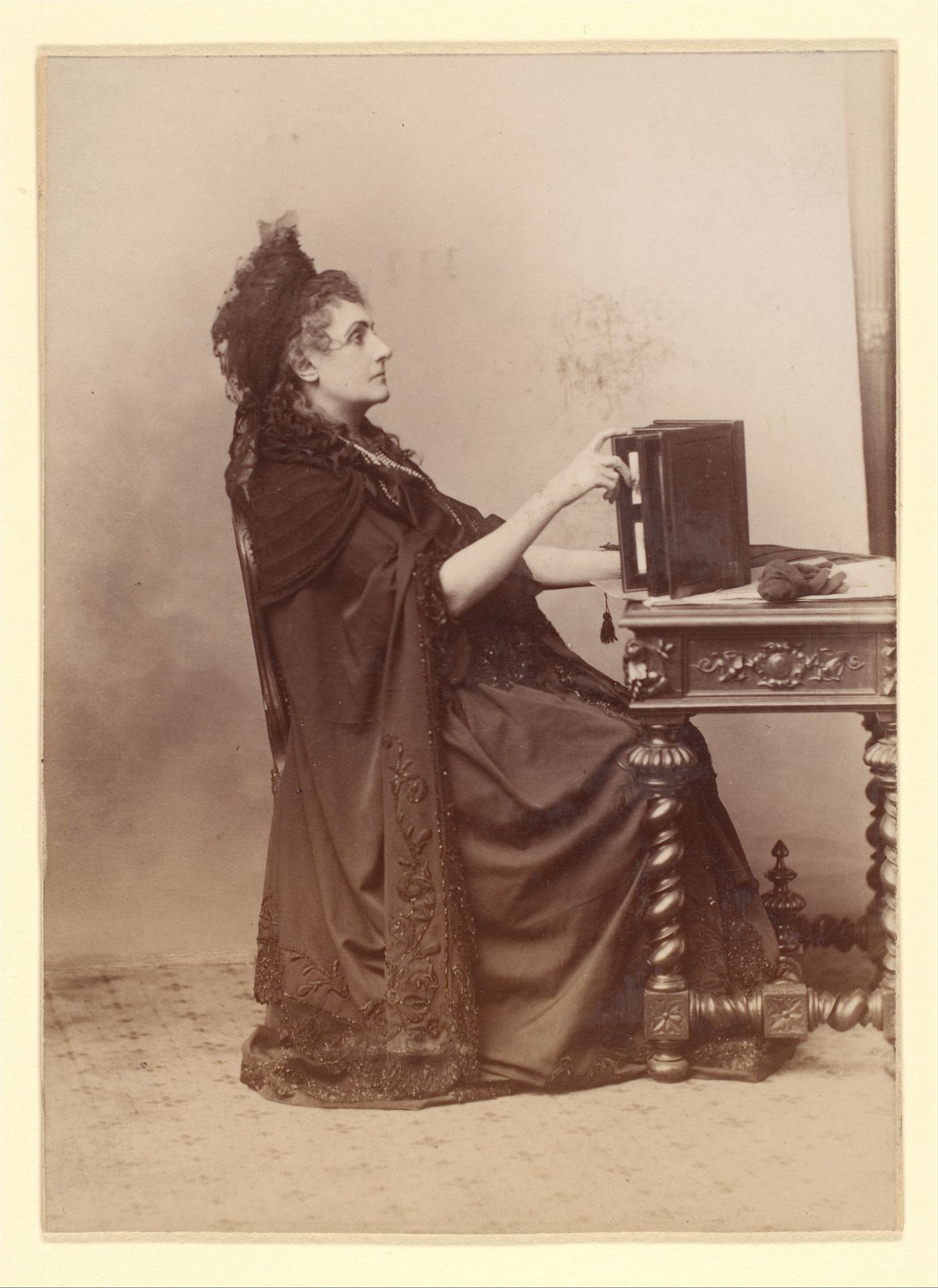
This photograph by Pierre-Louis Pierson captures Countess de Castiglione, a prominent figure in the French Second Empire, seated at a desk with a theatrical gaze. Her elaborate attire and carefully constructed pose, reflect the social and gender expectations of the time, where women's identities were often shaped by appearance and performance. De Castiglione, known for her beauty and influence, used photography as a medium to craft and control her public image. The photograph, staged in Pierson's studio, acts as a tableau vivant, embodying the Countess's self-awareness and defiance of traditional representation. She seems to ask: how can a woman define herself in a world that constantly seeks to define her? The Countess’s expression is not one of demure submission, but of calculated self-assertion. As an emblem of beauty, style, and power, this image reflects the complex interplay between identity, representation, and agency in the 19th century.
À la Barre
1893

Pierre-Louis Pierson
1822 - 1913
The Metropolitan Museum of Art
Metropolitan Museum of Art, New York, NYArtwork details
- Medium
- photography
- Dimensions
- Image: 13.8 x 10 cm (5 7/16 x 3 15/16 in.) Mount: 13.8 x 10 cm (5 7/16 x 3 15/16 in.)
- Location
- Metropolitan Museum of Art, New York, NY
- Copyright
- Public Domain
Tags
Comments
Share your thoughts
About this artwork
This photograph by Pierre-Louis Pierson captures Countess de Castiglione, a prominent figure in the French Second Empire, seated at a desk with a theatrical gaze. Her elaborate attire and carefully constructed pose, reflect the social and gender expectations of the time, where women's identities were often shaped by appearance and performance. De Castiglione, known for her beauty and influence, used photography as a medium to craft and control her public image. The photograph, staged in Pierson's studio, acts as a tableau vivant, embodying the Countess's self-awareness and defiance of traditional representation. She seems to ask: how can a woman define herself in a world that constantly seeks to define her? The Countess’s expression is not one of demure submission, but of calculated self-assertion. As an emblem of beauty, style, and power, this image reflects the complex interplay between identity, representation, and agency in the 19th century.
Comments
Share your thoughts