About this artwork
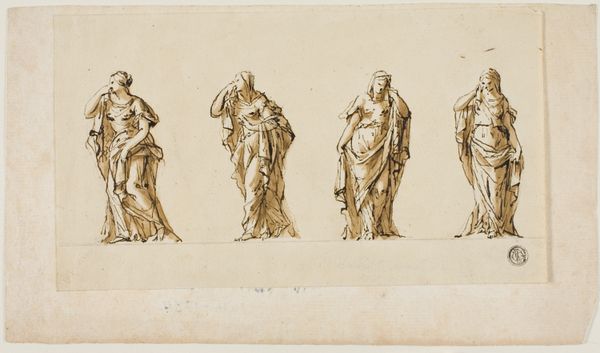
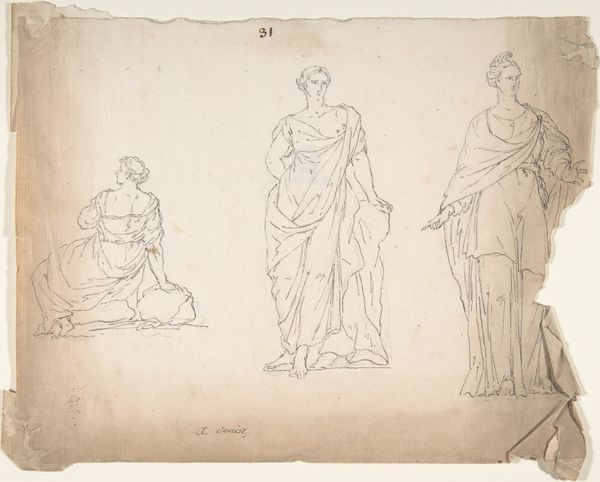
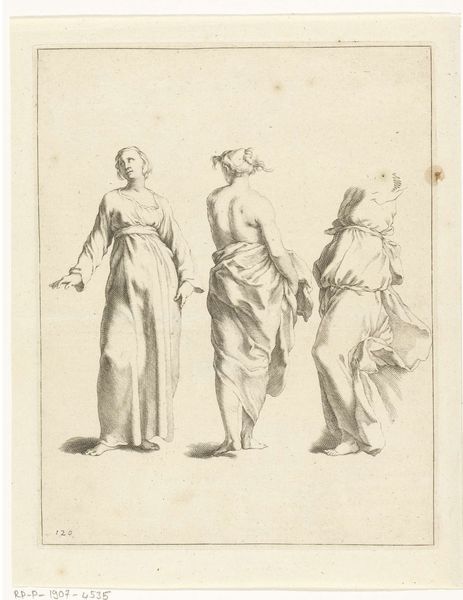
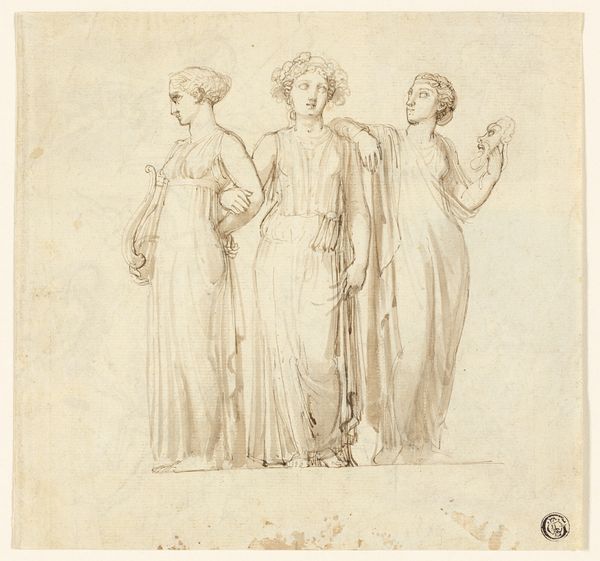
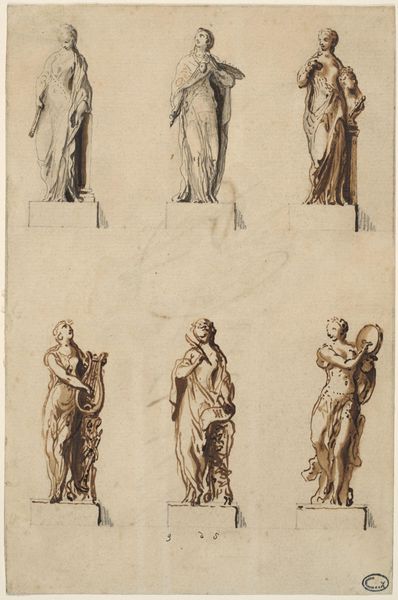
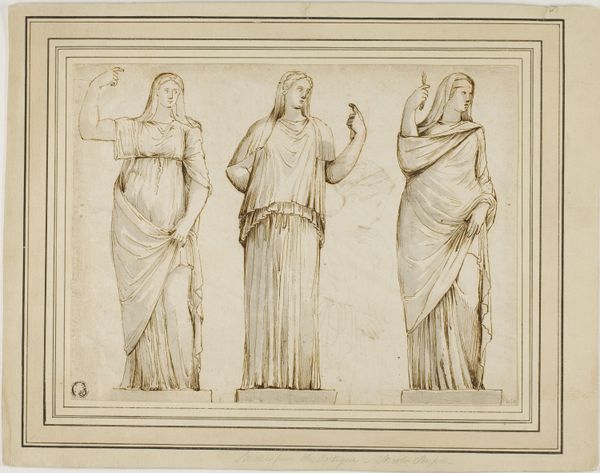
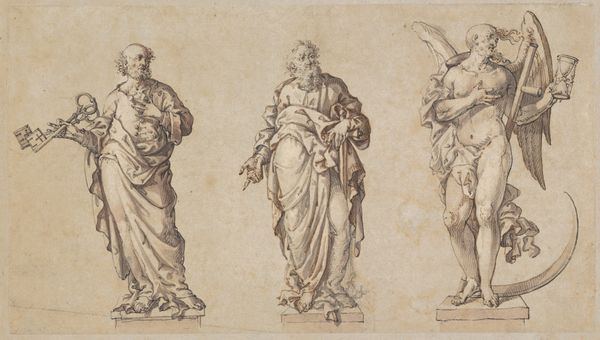
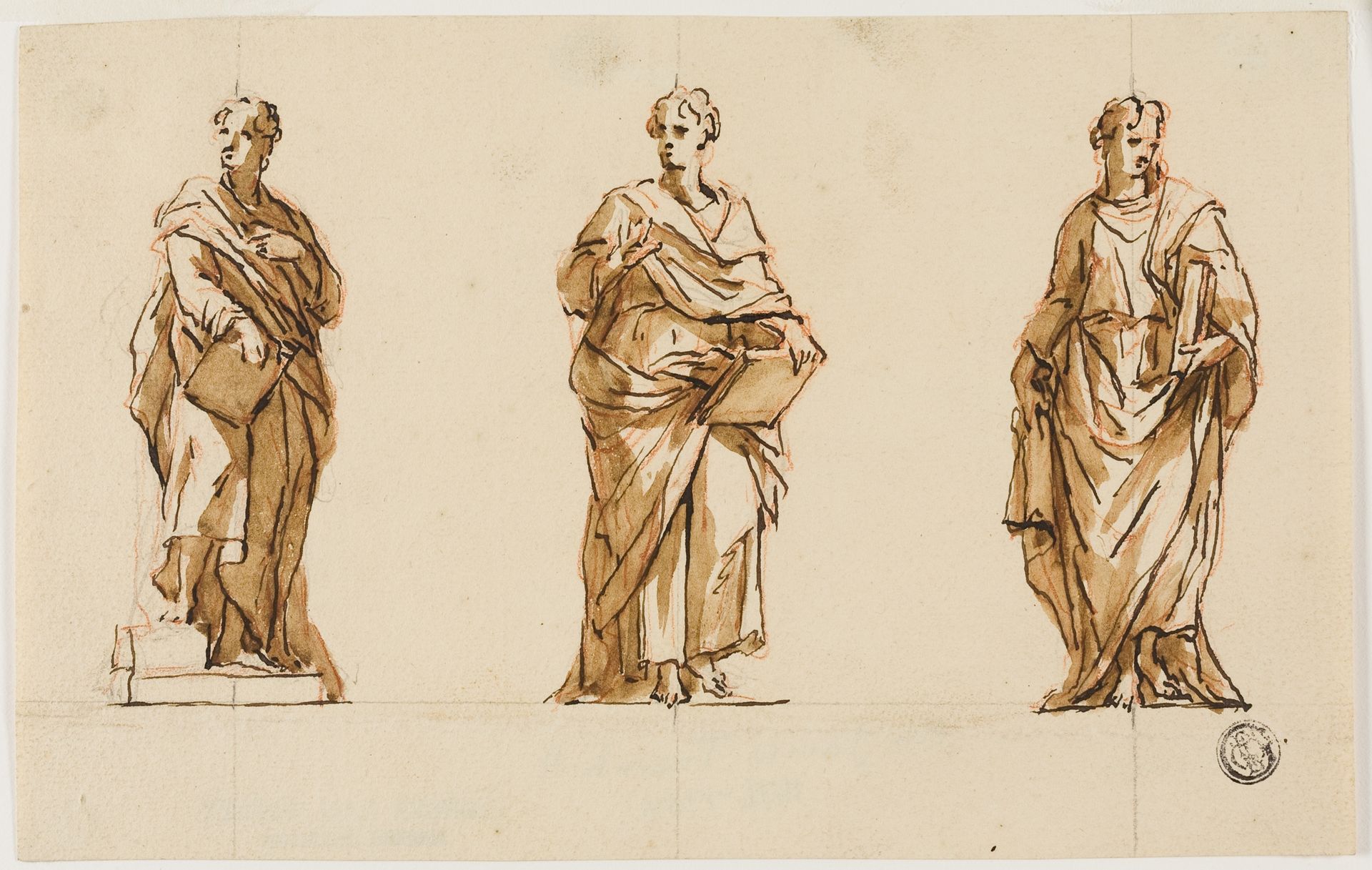
John Michael Rysbrack made these three studies for a statue of John Locke in brown wash on paper. It is likely that this drawing was made in England, where Rysbrack’s workshop was located. We see the English philosopher John Locke, known as the father of liberalism, immortalized in visual form. The image creates meaning through the codes of classical sculpture that dominated the institutions of art at this time. His likeness is ennobled by the flowing robes reminiscent of ancient Roman senators and the fact that is holding a book, likely his ‘Essay Concerning Human Understanding,’ a foundation of Enlightenment thinking. A study such as this sheds light on the politics of imagery during the eighteenth century. The drawing can be read as a statement of social progress and forward thinking, or as a comment on the politics of the era. To understand it better, historical research on the social standing of the artist is essential, as is an understanding of the role of art institutions during the Enlightenment.
Three Studies for Statue of John Locke
c. 1754


Artwork details
- Medium
- drawing, paper, ink, chalk, graphite, pen
- Dimensions
- 136 × 216 mm
- Location
- The Art Institute of Chicago
- Copyright
- Public Domain
Tags
portrait
drawing
baroque
figuration
paper
ink
chalk
graphite
pen
history-painting
Comments
Be the first to share your thoughts about this work.
About this artwork
John Michael Rysbrack made these three studies for a statue of John Locke in brown wash on paper. It is likely that this drawing was made in England, where Rysbrack’s workshop was located. We see the English philosopher John Locke, known as the father of liberalism, immortalized in visual form. The image creates meaning through the codes of classical sculpture that dominated the institutions of art at this time. His likeness is ennobled by the flowing robes reminiscent of ancient Roman senators and the fact that is holding a book, likely his ‘Essay Concerning Human Understanding,’ a foundation of Enlightenment thinking. A study such as this sheds light on the politics of imagery during the eighteenth century. The drawing can be read as a statement of social progress and forward thinking, or as a comment on the politics of the era. To understand it better, historical research on the social standing of the artist is essential, as is an understanding of the role of art institutions during the Enlightenment.
Comments
Be the first to share your thoughts about this work.