About this artwork
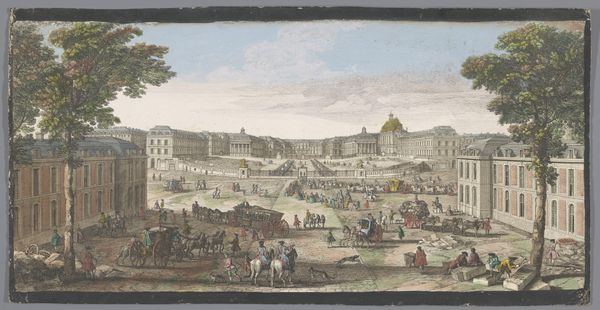
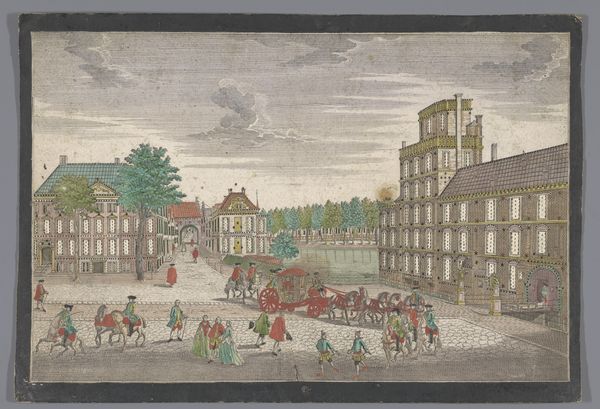
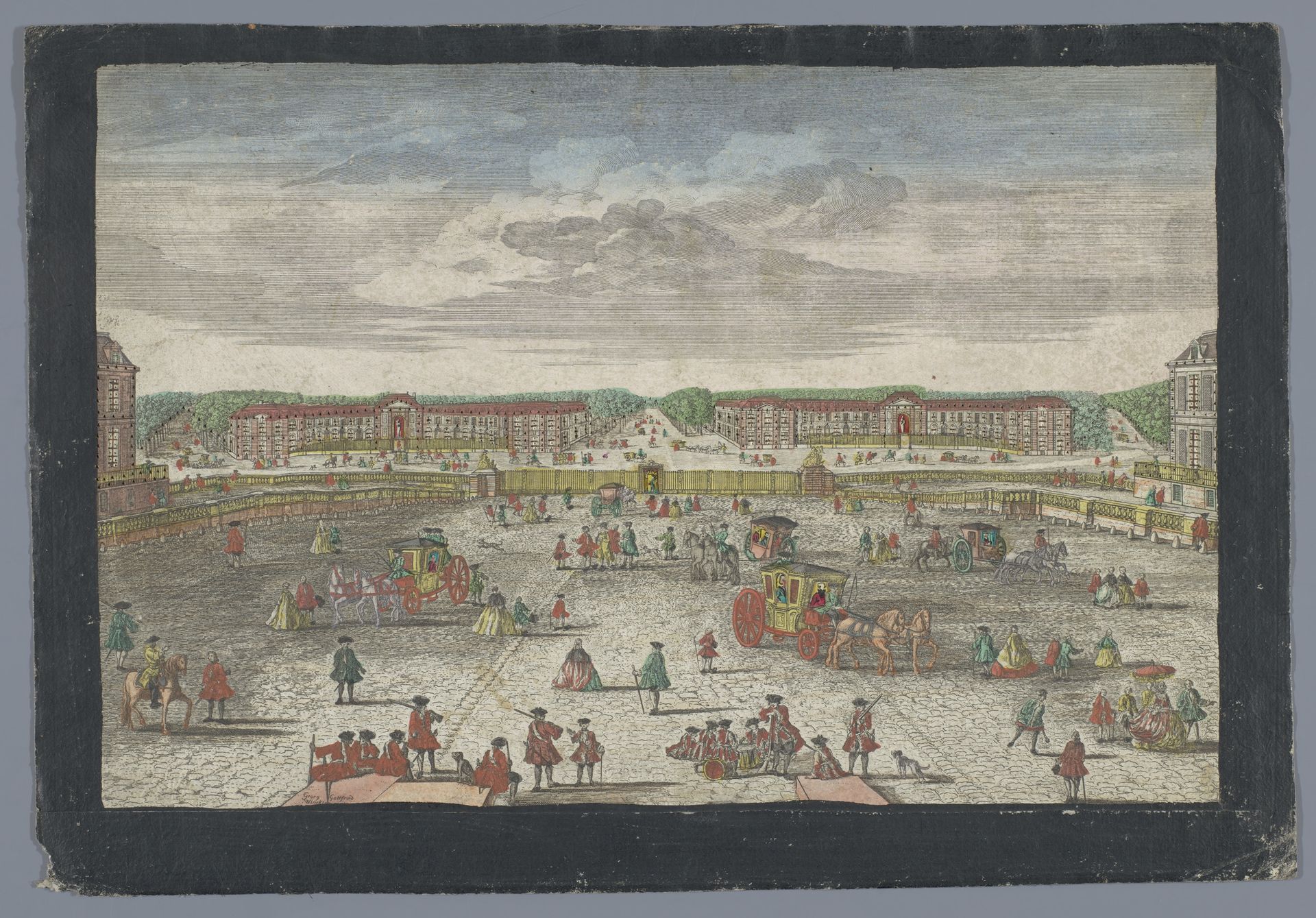
This is Georg Balthasar Probst’s rendition of the Versailles Palace stables, an engraving of moderate size. Immediately, the composition strikes you with its strict, almost geometric order. Probst meticulously arranges architectural elements and figures, which creates an impression of structured hierarchy, reflective of 18th century social codes. Notice how the perspective, while aiming for depth, flattens the scene, emphasizing the surface and patterned arrangement. The soft hues of the colour palette further unify the composition. The regularity and balanced design suggest not just a physical space, but a stage upon which social roles are performed. What Probst captures here is a world meticulously constructed, where every element – from the architecture to the people populating the square – contributes to a carefully maintained order. The artwork thus becomes an exercise in understanding the semiotics of power and representation. This print is not merely a depiction of Versailles, but a study in the architecture of social life, reflecting and reinforcing the values of its time.
Gezicht op de stallen van het Paleis van Versailles
1742 - 1801

Georg Balthasar Probst
1732 - 1801Location
RijksmuseumArtwork details
- Dimensions
- height 305 mm, width 444 mm
- Location
- Rijksmuseum
- Copyright
- Rijks Museum: Open Domain
Tags
Comments
Share your thoughts
About this artwork
This is Georg Balthasar Probst’s rendition of the Versailles Palace stables, an engraving of moderate size. Immediately, the composition strikes you with its strict, almost geometric order. Probst meticulously arranges architectural elements and figures, which creates an impression of structured hierarchy, reflective of 18th century social codes. Notice how the perspective, while aiming for depth, flattens the scene, emphasizing the surface and patterned arrangement. The soft hues of the colour palette further unify the composition. The regularity and balanced design suggest not just a physical space, but a stage upon which social roles are performed. What Probst captures here is a world meticulously constructed, where every element – from the architecture to the people populating the square – contributes to a carefully maintained order. The artwork thus becomes an exercise in understanding the semiotics of power and representation. This print is not merely a depiction of Versailles, but a study in the architecture of social life, reflecting and reinforcing the values of its time.
Comments
Share your thoughts