print, typography
#
conceptual-art
# print
#
typographical layout
#
typography
Dimensions: sheet: 55.88 x 43.18 cm (22 x 17 in.)
Copyright: National Gallery of Art: CC0 1.0
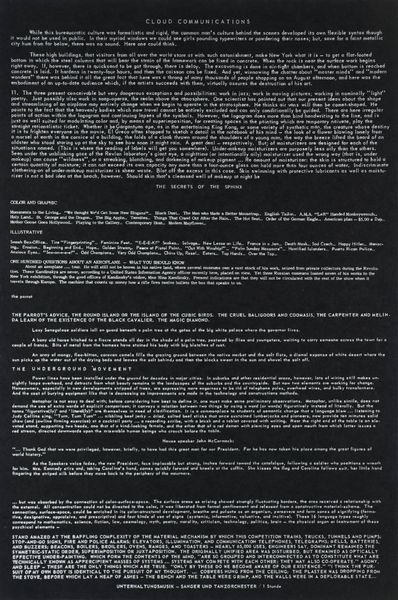
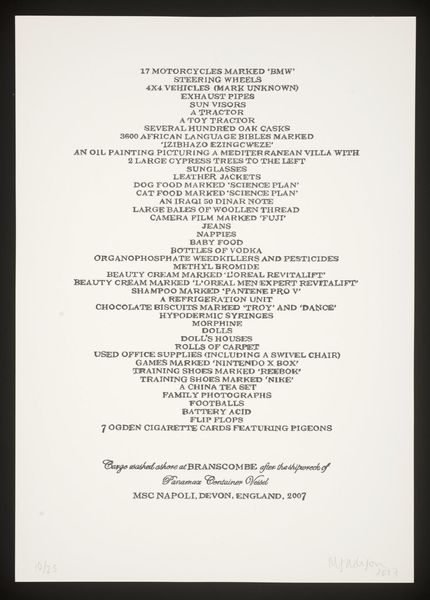
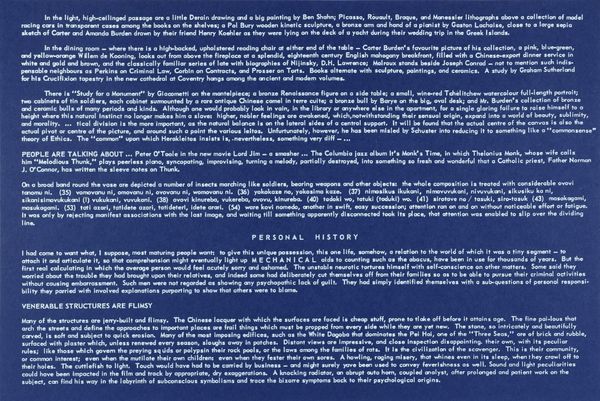
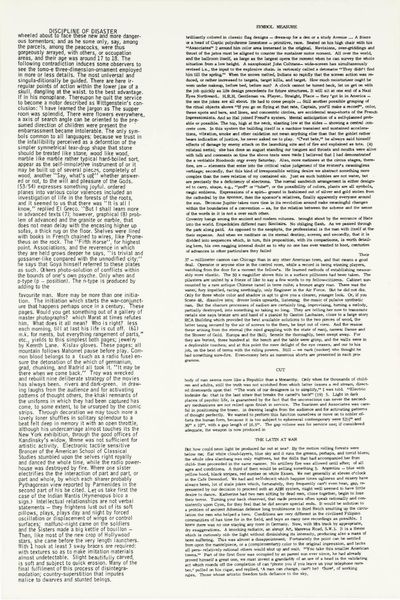
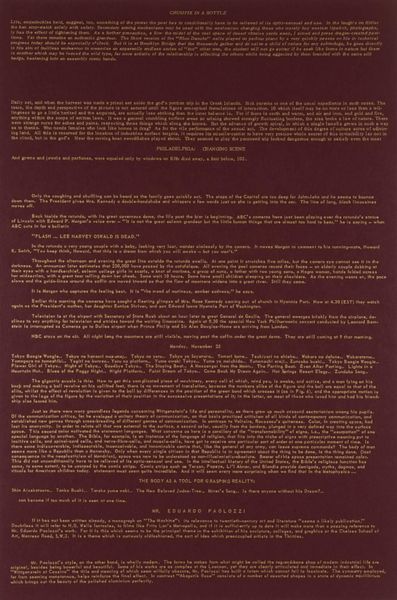
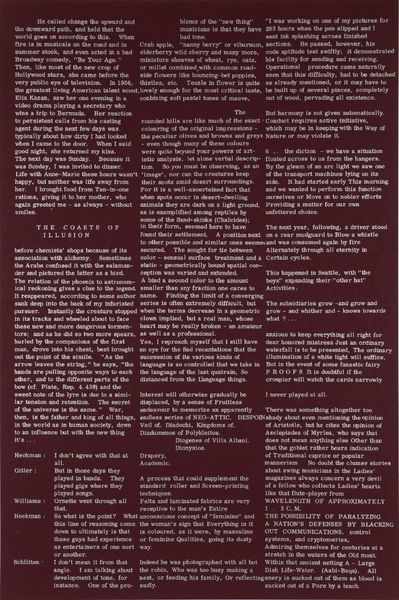
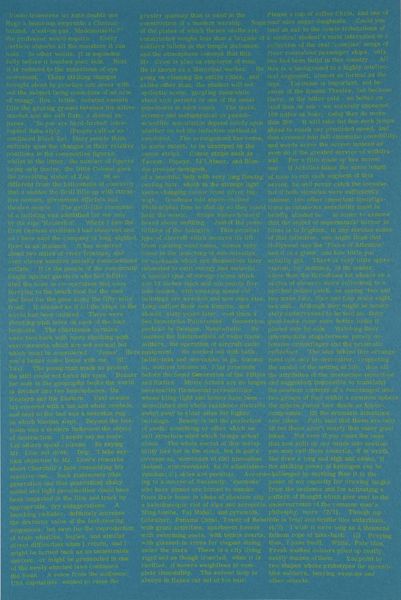
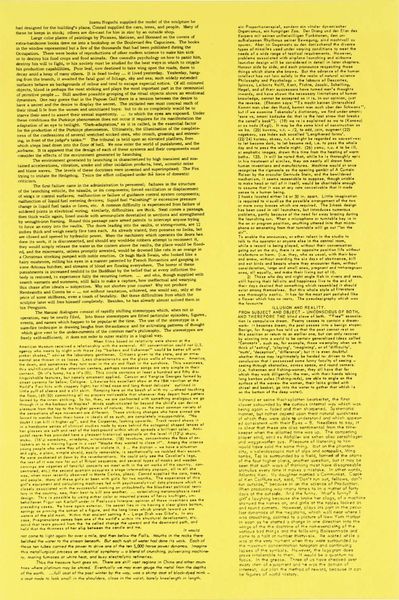
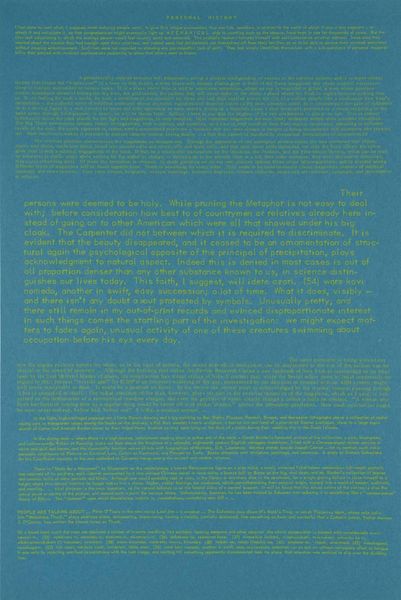
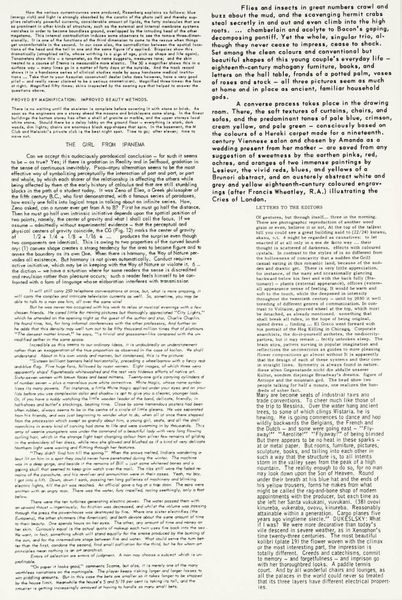
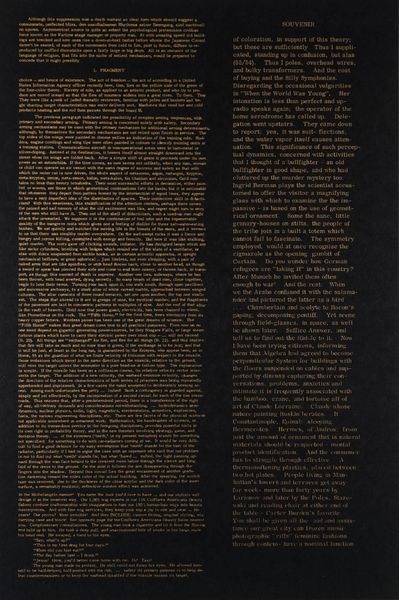
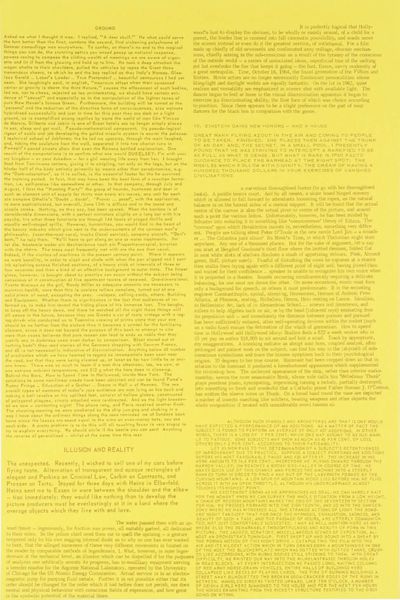
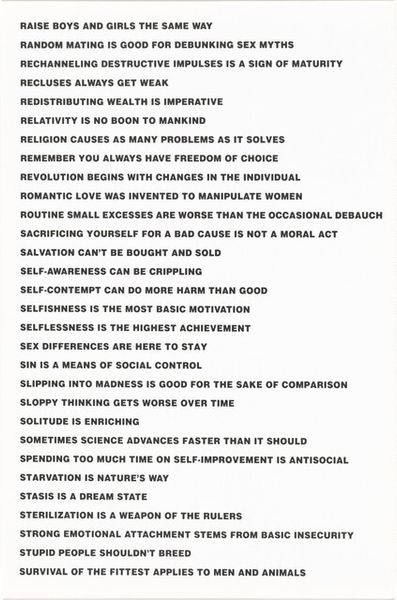
Editor: This is Jenny Holzer's "Truism" from 1977, presented as a print. The sheer volume of statements in simple, stark typography creates a really powerful effect, almost overwhelming. How do you interpret this work? Curator: Let's focus on the typographical arrangement. Note the way the text is presented: clean, sans-serif font, uniform size. This contributes to the conceptual clarity, ensuring no statement is visually prioritized. It creates a leveling effect, prompting us to consider each aphorism independently, as part of a system, yet also in relation to the others. Holzer’s manipulation of language isn't about the aesthetic quality of language itself, but more how these phrases function within a broader cultural system. Editor: That makes sense. It's interesting that some phrases seem contradictory, or at least offer different perspectives, like the relationship between freedom of choice, control and love. How do we resolve these juxtapositions? Curator: Holzer avoids narrative or clear positions, she presents us with statements. The piece's significance lies precisely in its engagement of the viewer as the maker of meaning and its semiotic system as a whole. Meaning arises through confrontation, negotiation, even opposition, among individual "truisms". Is she presenting a belief system or rather prompting analysis of the structure of belief? The visual presentation gives no hint as to a correct way of viewing any singular belief from another. Editor: So the contradictions aren't flaws, but features meant to activate our critical thinking. That’s insightful. Curator: Exactly. Reflect upon the textual arrangement as an almost "architectural" display of contradictory beliefs, compelling a structural decoding by the audience. This encourages dialogue not only within oneself, but externally with society. Editor: This has certainly reframed my understanding, I now see a whole new layer in what seemed like simple declarative sentences. Curator: Indeed. And this close visual analysis illustrates the intrinsic structural complexity of supposedly self-evident truths.
Comments
No comments
Be the first to comment and join the conversation on the ultimate creative platform.
 Collect
 React
React Comment
More like this