About this artwork
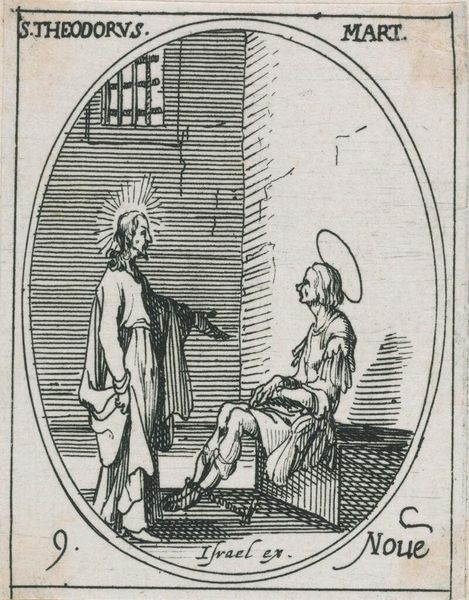
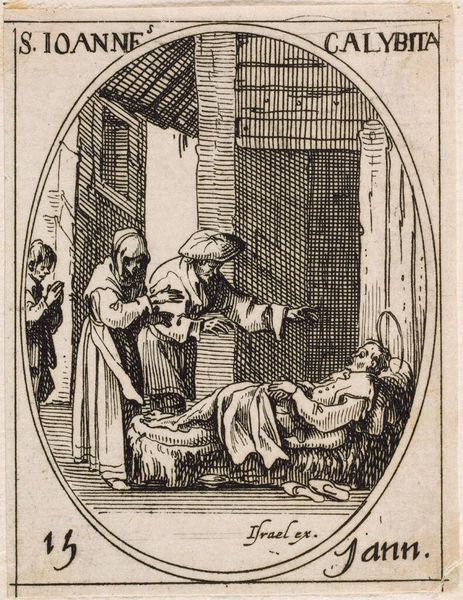
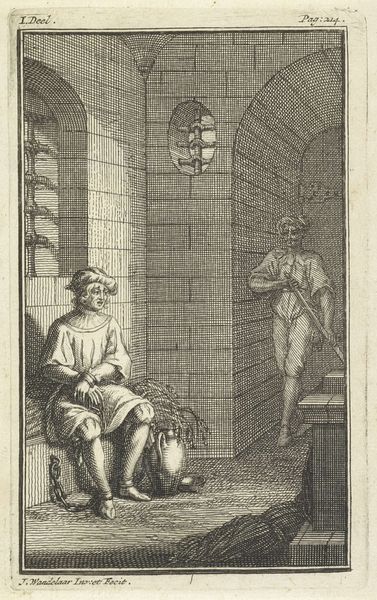
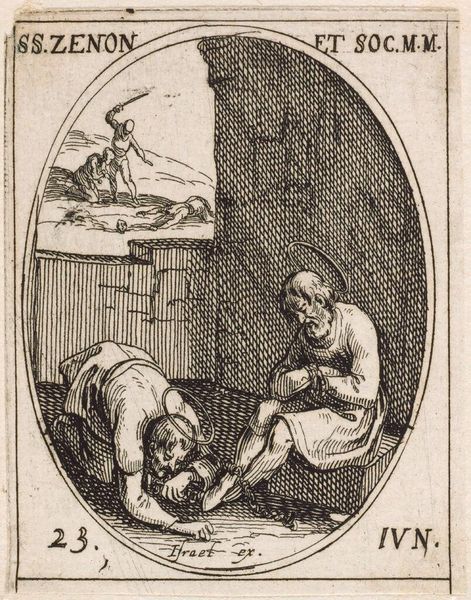
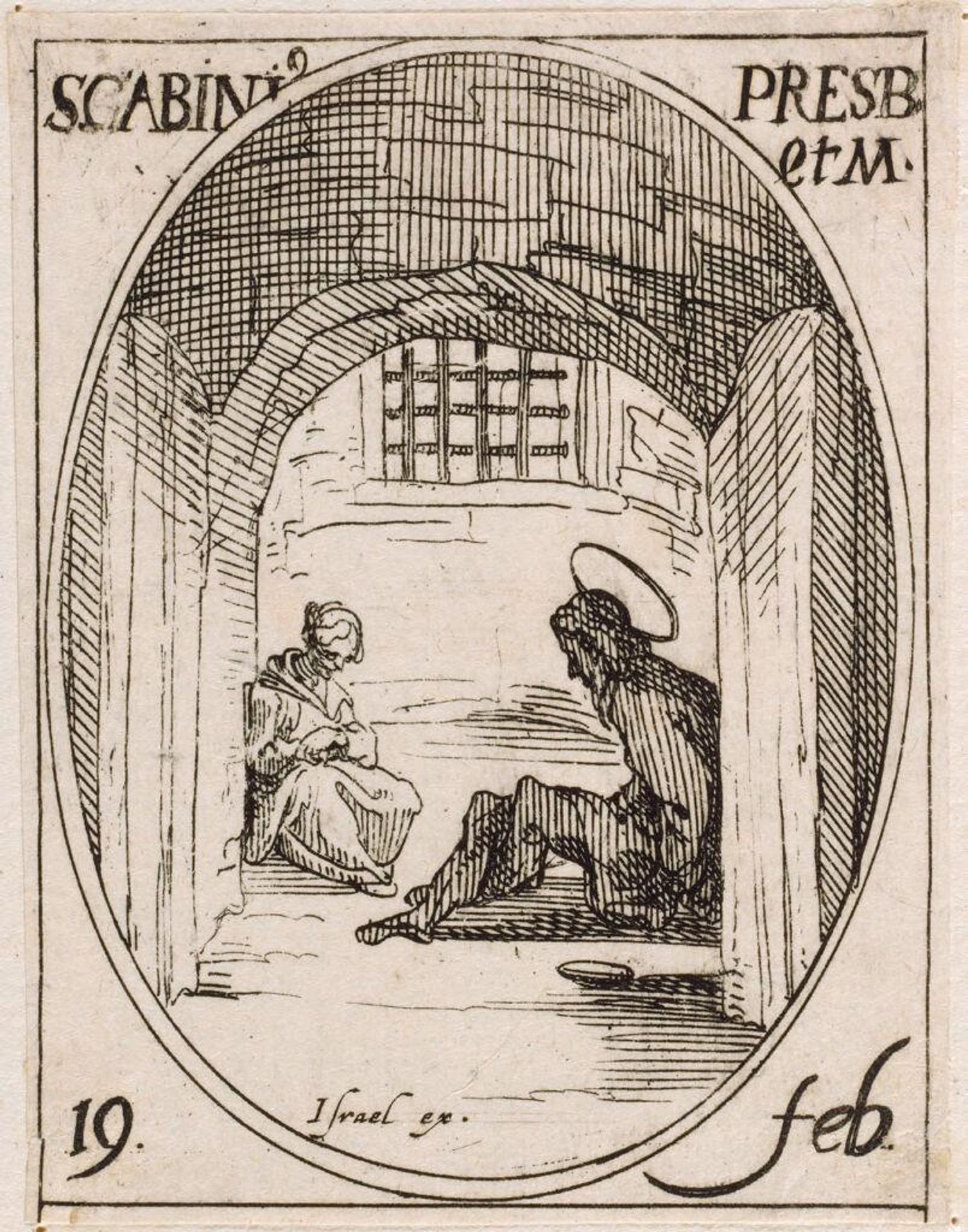
Editor: This is Jacques Callot's etching, "Saint Gabinius." It's quite small, only a few inches, and depicts a somber scene within a prison. What do you see in this piece, beyond the obvious religious narrative? Curator: Well, consider the historical context. Callot created this during a time of intense religious and political upheaval. The stark lines and claustrophobic setting speak to the persecution and silencing of dissenting voices. Editor: So, it's less about the saint himself and more about the broader implications of power and oppression? Curator: Precisely. Gabinius becomes a symbol of resistance, of maintaining faith under duress. The tiny scale only amplifies the vulnerability, doesn’t it? Editor: I see what you mean! It's a powerful statement about resilience in the face of adversity. Curator: Absolutely. And remember, art often reflects and refracts the societal anxieties of its time. This piece is no exception.
Saint Gabinius
c. 17th century


Artwork details
- Dimensions
- 7.6 x 4.9 cm (3 x 1 15/16 in.)
- Location
- Harvard Art Museums
- Copyright
- CC0 1.0
Comments
Share your thoughts
About this artwork
Editor: This is Jacques Callot's etching, "Saint Gabinius." It's quite small, only a few inches, and depicts a somber scene within a prison. What do you see in this piece, beyond the obvious religious narrative? Curator: Well, consider the historical context. Callot created this during a time of intense religious and political upheaval. The stark lines and claustrophobic setting speak to the persecution and silencing of dissenting voices. Editor: So, it's less about the saint himself and more about the broader implications of power and oppression? Curator: Precisely. Gabinius becomes a symbol of resistance, of maintaining faith under duress. The tiny scale only amplifies the vulnerability, doesn’t it? Editor: I see what you mean! It's a powerful statement about resilience in the face of adversity. Curator: Absolutely. And remember, art often reflects and refracts the societal anxieties of its time. This piece is no exception.
Comments
Share your thoughts