About this artwork
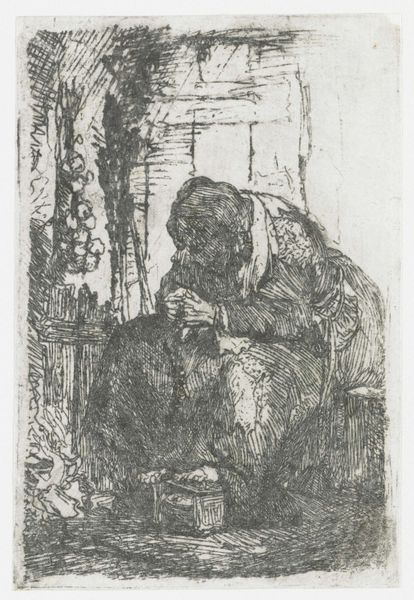
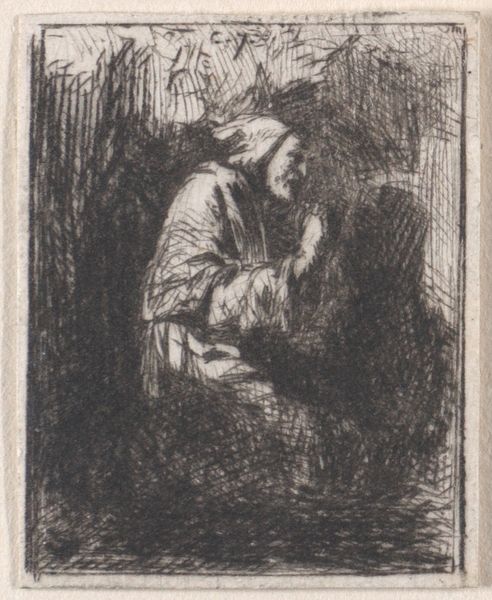
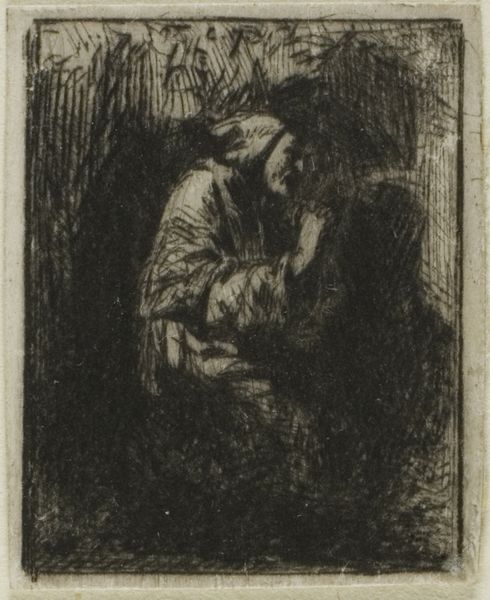
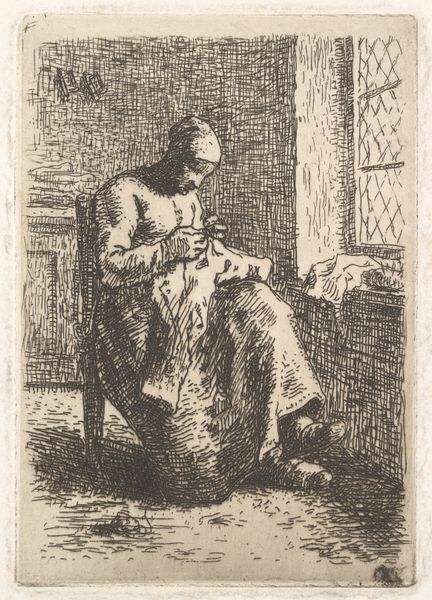
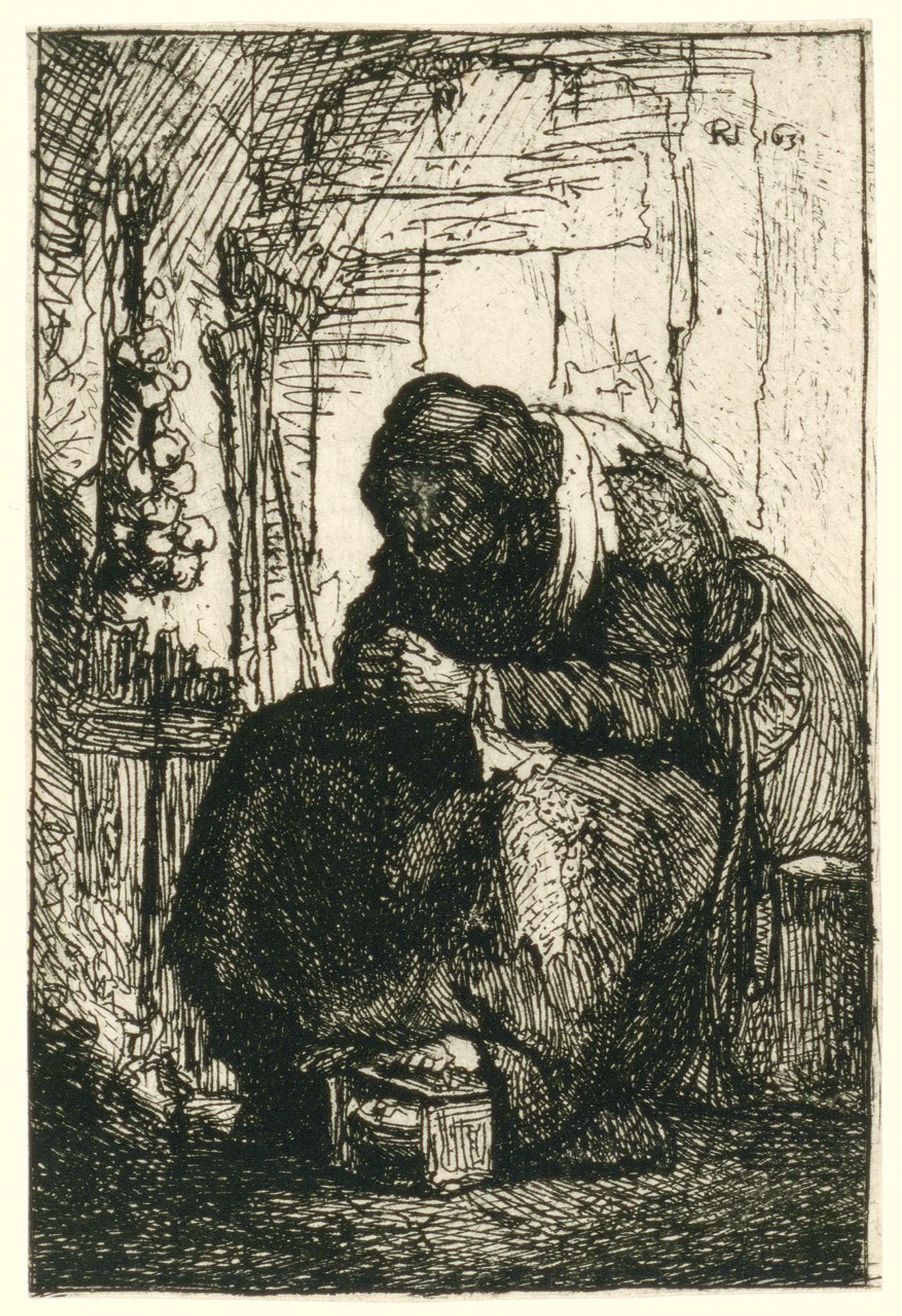
Rembrandt van Rijn created this etching, depicting an old woman seated in a cottage, using delicate lines and contrasting textures. The scene's stark contrast between light and shadow immediately draws your attention. Rembrandt masterfully uses line and shade to create depth and evoke emotion. The woman's hunched posture and the coarse lines forming her garments convey a sense of weariness and age. The string of onions, rendered with varying degrees of detail, introduces a semiotic element, perhaps symbolizing the simplicity and sustenance of rural life. The composition, with its asymmetrical balance, challenges traditional notions of beauty, reflecting Rembrandt’s broader artistic concerns. The etching’s formal qualities—its use of light, line, and texture—function not just aesthetically but also as part of a larger discourse on mortality and the human condition. This artwork, therefore, remains a site of ongoing interpretation and reflection.
Old woman seated in a cottage with a string of onions on the wall 1631

Artwork details
- Medium
- drawing, paper, ink
- Copyright
- Public domain
Tags
portrait
drawing
narrative-art
baroque
paper
ink
genre-painting
realism
Comments
No comments
About this artwork
Rembrandt van Rijn created this etching, depicting an old woman seated in a cottage, using delicate lines and contrasting textures. The scene's stark contrast between light and shadow immediately draws your attention. Rembrandt masterfully uses line and shade to create depth and evoke emotion. The woman's hunched posture and the coarse lines forming her garments convey a sense of weariness and age. The string of onions, rendered with varying degrees of detail, introduces a semiotic element, perhaps symbolizing the simplicity and sustenance of rural life. The composition, with its asymmetrical balance, challenges traditional notions of beauty, reflecting Rembrandt’s broader artistic concerns. The etching’s formal qualities—its use of light, line, and texture—function not just aesthetically but also as part of a larger discourse on mortality and the human condition. This artwork, therefore, remains a site of ongoing interpretation and reflection.
Comments
No comments