print, etching
# print
#
etching
#
mannerism
#
figuration
#
history-painting
#
nude
Dimensions: height 59 mm, width 45 mm
Copyright: Rijks Museum: Open Domain
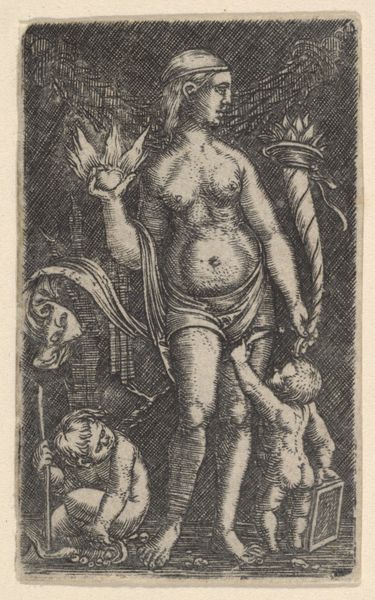
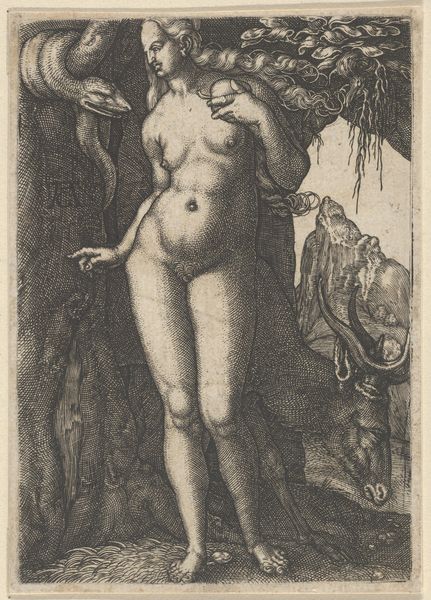
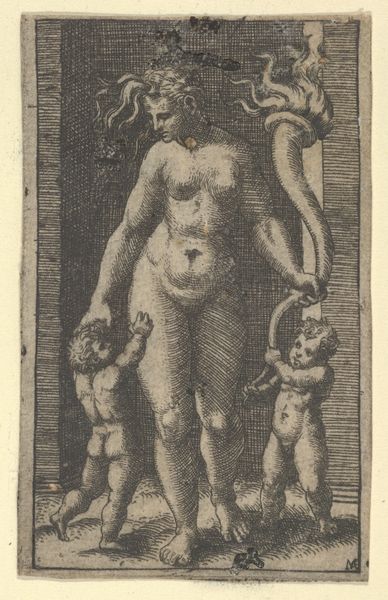
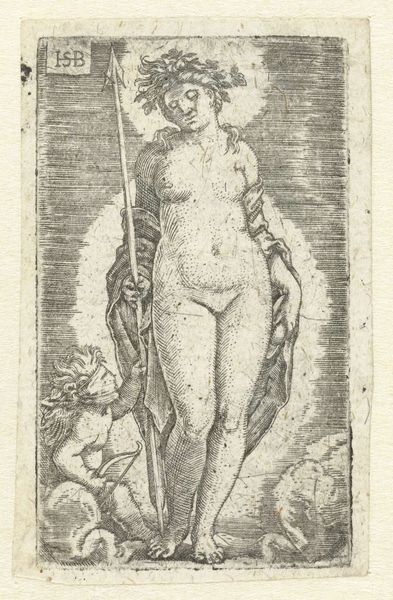
Curator: Here we have "Ops", an etching created between 1552 and 1584 by Nikolaus Solis. What are your first impressions? Editor: Austere and unsettling. She's so exposed, yet stoic. There’s a vulnerability but also this… defiance in her stance. Almost daring you to look away. Curator: Indeed. Solis, working in the Mannerist style, often explored allegorical themes. Ops, or Rhea, was the ancient Greek goddess of fertility, motherhood, and the harvest. The animals surrounding her - a bull, a wolf, and what looks like a lion - likely reference her connection to nature and abundance. Editor: I get it. So the nude figure is representing not just womanhood but some kind of primal power? Curator: Precisely. Think about the societal constraints of the 16th century. The presentation of a female nude, especially within a historical context, held complex social and political weight. These images often negotiated the lines between reverence and objectification, power and submission. Editor: It feels inherently rebellious for its time, doesn’t it? Showing that raw feminine force. It makes me wonder, how would the original audience respond? Were they shocked, inspired, confused? Curator: That's the fascinating question. The art world, like any social arena, then as now, had its progressive and conservative camps. I think, within courtly circles and among intellectual elites, there would be lively debate around the print's symbolism and meaning, given its connections to classical antiquity. It was likely circulated among a learned, probably largely male, audience. Editor: It definitely sparks my curiosity, making me dig into its layers. It's like unlocking a puzzle that spans centuries. I really appreciate Solis revealing the figure with the stark etching technique. What do you make of the style? Curator: Mannerism’s characteristics are on display here: the artificiality, stylized poses and perhaps exaggerated emotional tenor—a reaction against the balanced naturalism of the High Renaissance. These prints gave artists freedom from rigid religious guidelines and became powerful channels for conveying complex ideas to broader audiences. Editor: Makes you wonder about the state of artistic license through the years. I appreciate being allowed into this slice of artistic freedom, even so many years later. Curator: Agreed, let’s move on and delve into more thought provoking and historical perspectives!
Comments
No comments
Be the first to comment and join the conversation on the ultimate creative platform.
 Collect
 React
React Comment
More like this