About this artwork
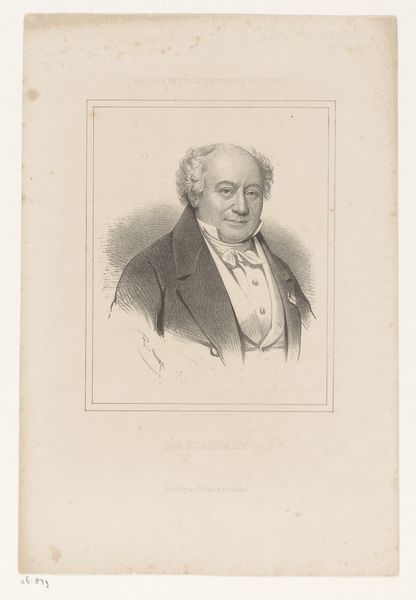
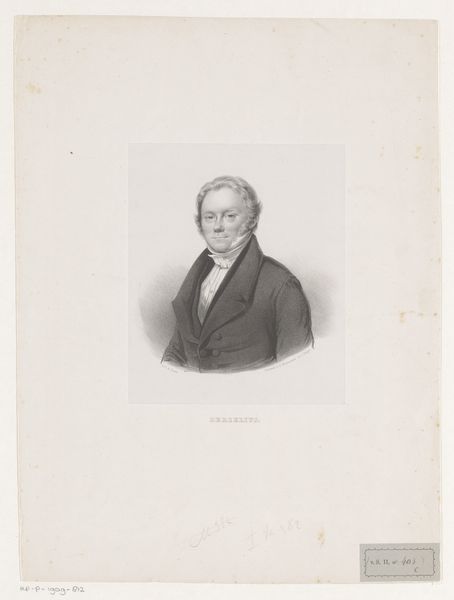
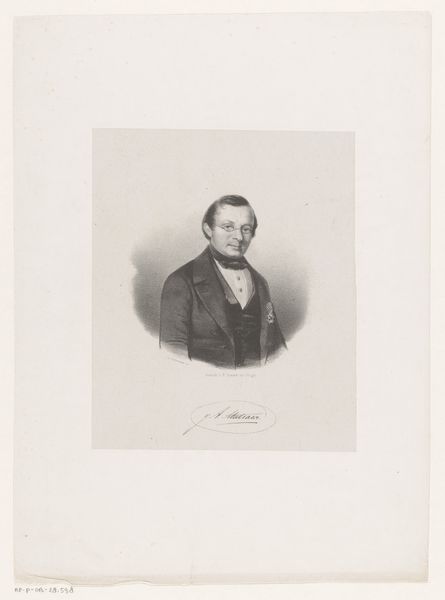
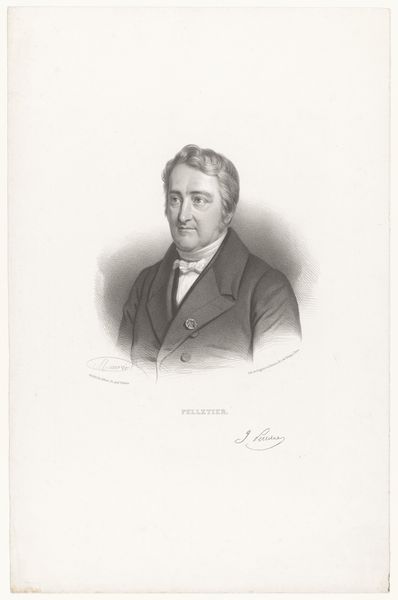
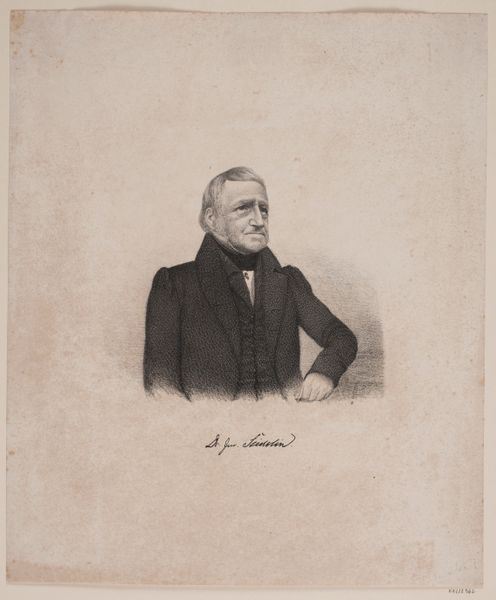
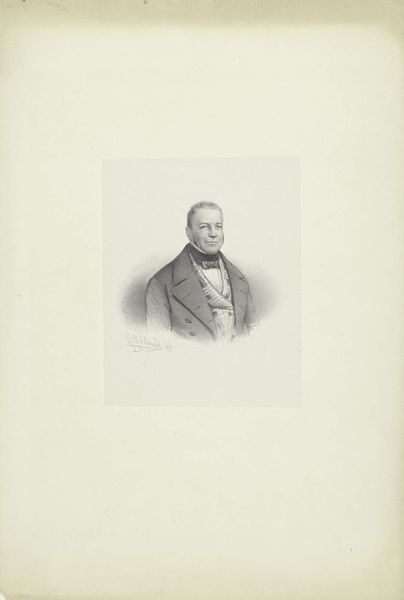
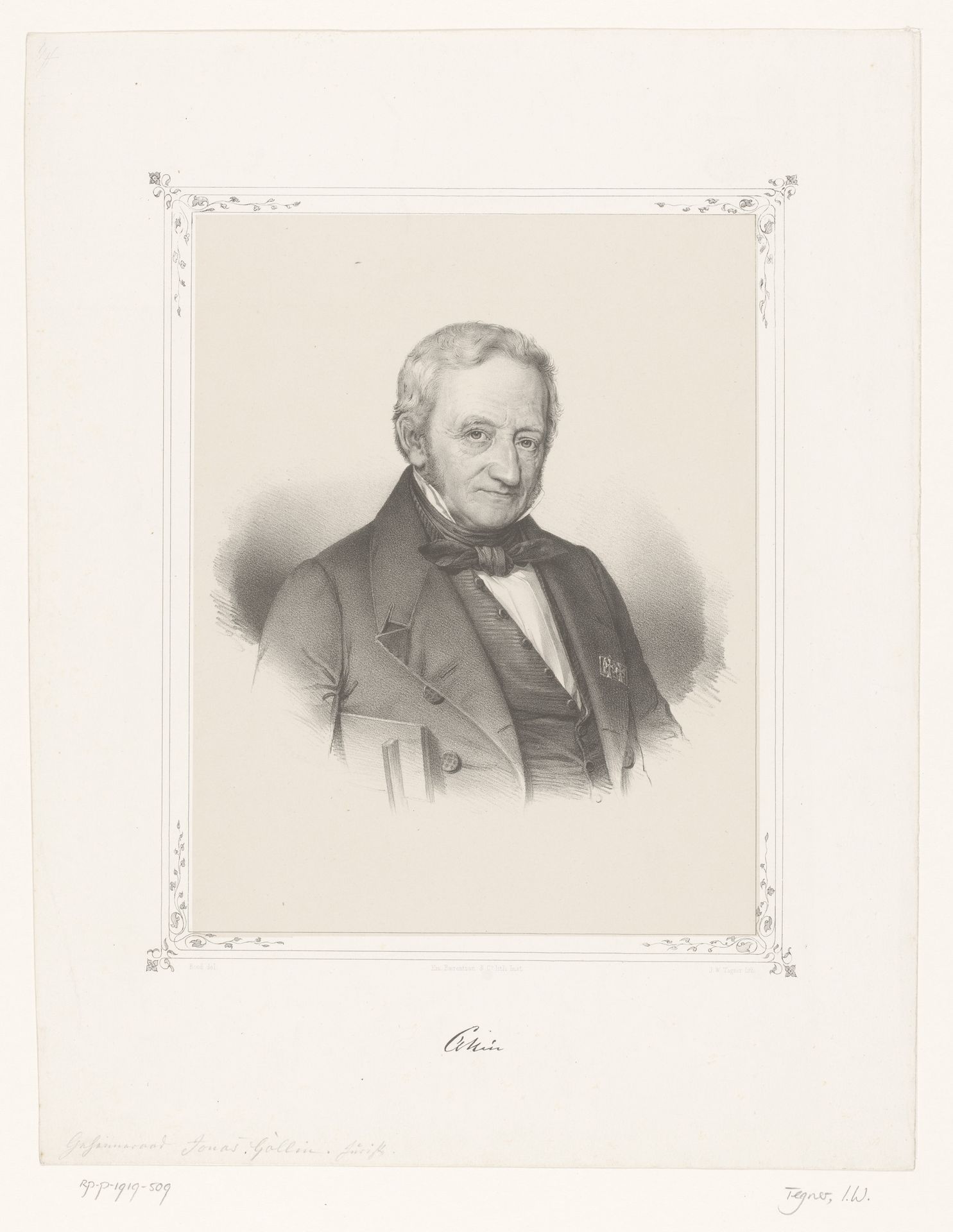
Isaac Wilhelm Tegner made this portrait of an unknown man, possibly Jonas Gollin, using lithography. This artwork provides us a glimpse into the social and cultural values of 19th-century portraiture in Europe. Lithography, a printing technique that rose to prominence in the 1800s, made images more widely accessible. This portrait, with its focus on details of the man's dress, creates meaning through visual codes, indicating his social standing and perhaps his profession. The man's formal attire, complete with a bow tie and what appears to be a medal, suggests that he was a member of the bourgeoisie. The Rijksmuseum, where this print is housed, like other museums, plays a role in shaping our understanding of art and history. They offer opportunities for research, allowing art historians to delve into the social conditions, institutional histories, and cultural references that shape artistic production. By studying these elements, we can better understand the significance of art and its place within society.
Portret van een onbekende man, mogelijk Jonas Gollin
1837 - 1893

Isaac Wilhelm Tegner
1815 - 1893Location
RijksmuseumArtwork details
- Medium
- drawing, pencil
- Dimensions
- height 357 mm, width 278 mm
- Location
- Rijksmuseum
- Copyright
- Rijks Museum: Open Domain
Tags
Comments
Share your thoughts
About this artwork
Isaac Wilhelm Tegner made this portrait of an unknown man, possibly Jonas Gollin, using lithography. This artwork provides us a glimpse into the social and cultural values of 19th-century portraiture in Europe. Lithography, a printing technique that rose to prominence in the 1800s, made images more widely accessible. This portrait, with its focus on details of the man's dress, creates meaning through visual codes, indicating his social standing and perhaps his profession. The man's formal attire, complete with a bow tie and what appears to be a medal, suggests that he was a member of the bourgeoisie. The Rijksmuseum, where this print is housed, like other museums, plays a role in shaping our understanding of art and history. They offer opportunities for research, allowing art historians to delve into the social conditions, institutional histories, and cultural references that shape artistic production. By studying these elements, we can better understand the significance of art and its place within society.
Comments
Share your thoughts