c. 1680 - 1695
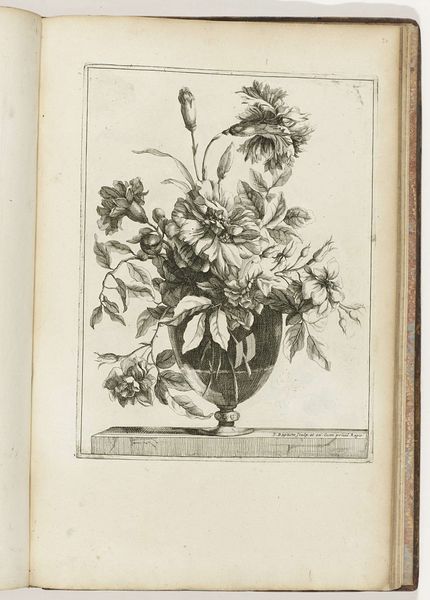
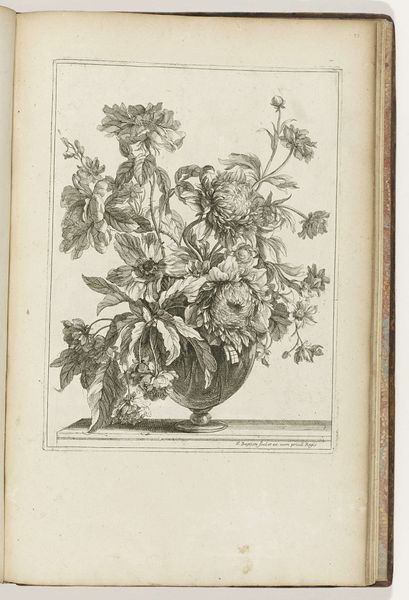
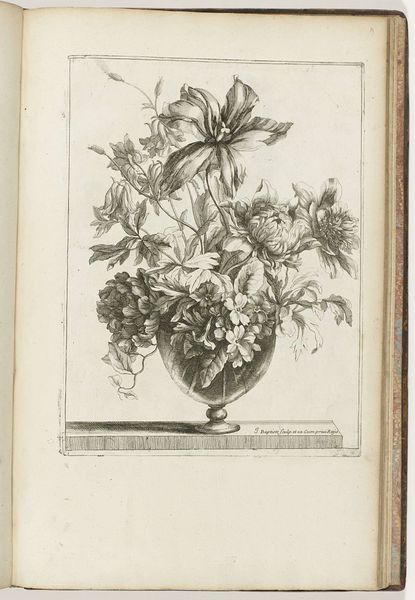
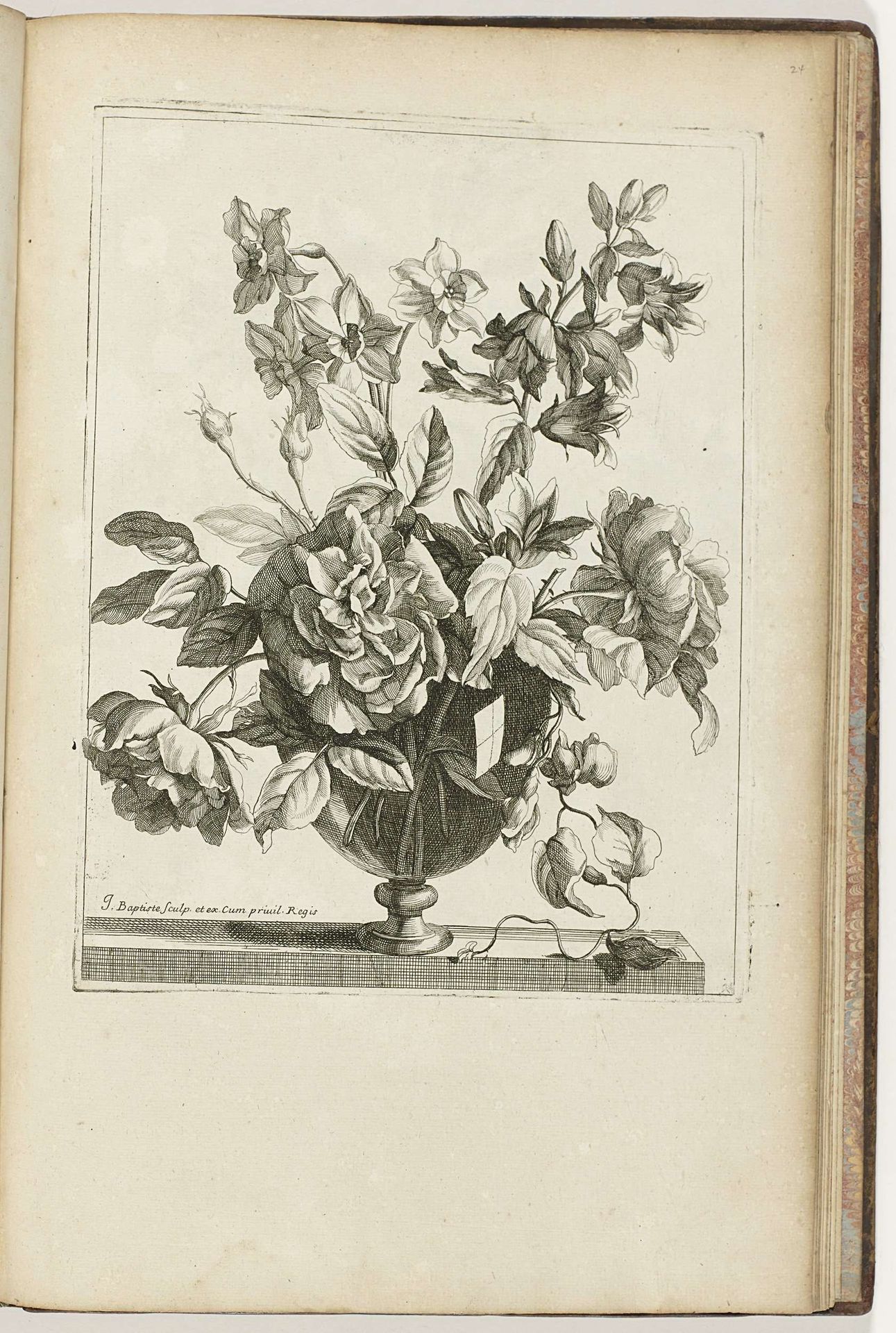
Boeket in glazen vaas

Jean-Baptiste Monnoyer
1636 - 1699Location
RijksmuseumListen to curator's interpretation
Curatorial notes
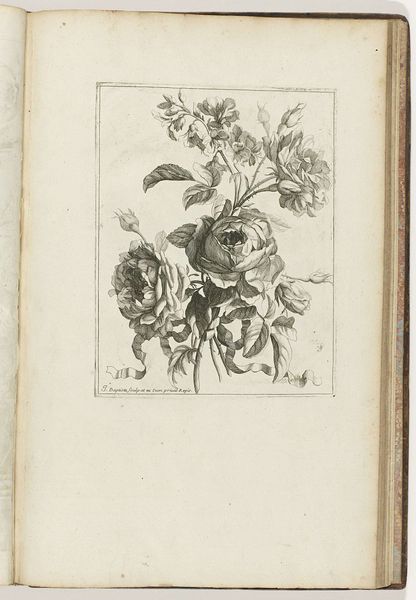
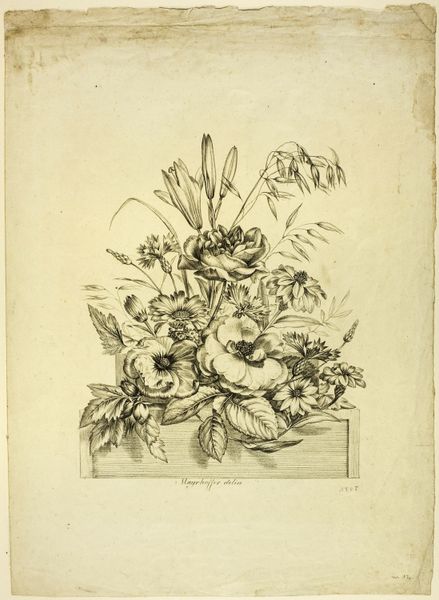
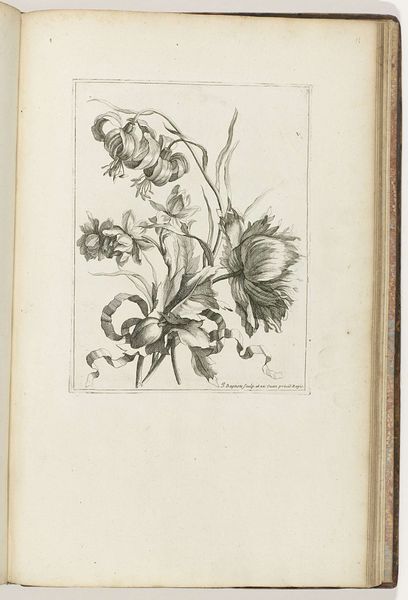
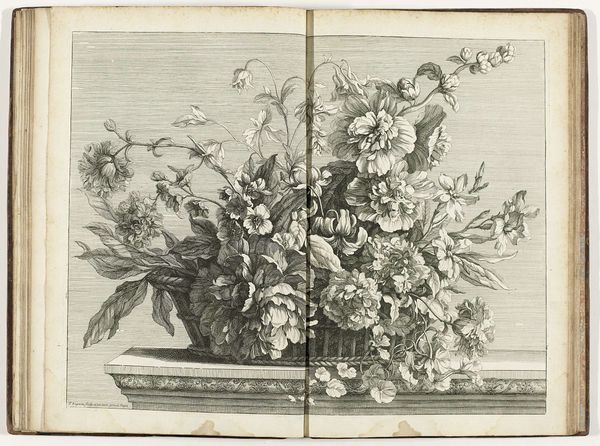
This is 'Boeket in glazen vaas' by Jean-Baptiste Monnoyer, created as an engraving. The composition is dominated by a lush arrangement of flowers in a glass vase, poised on a ledge. The lines create varied textures, from the delicate petals to the smooth surface of the vase. Consider the structural contrast: the fragility of the flowers against the solidity of the vase and ledge. Monnoyer uses the engraving technique to create a tension between depth and flatness. This tension is not just visual. It invites us to think about the surface and the void, and the way an image can both represent and obscure. Notice the deliberate placement and the implied lines connecting each floral element. Through this, Monnoyer challenges our understanding of space and representation. What is represented and how? What systems of meaning does the work draw upon and subvert? The beauty of the work lies in its ability to continuously question our perception and understanding.