About this artwork
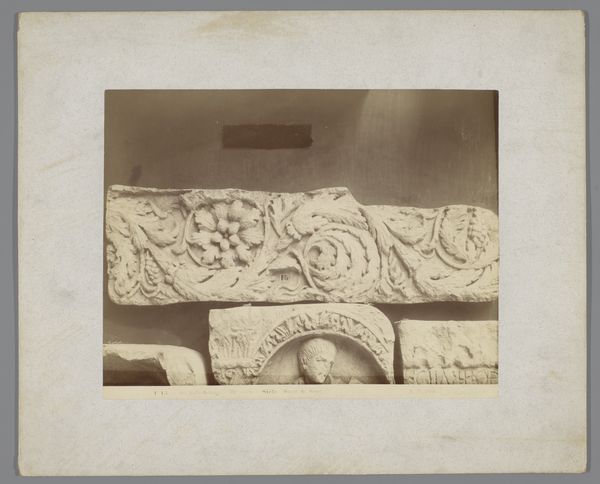
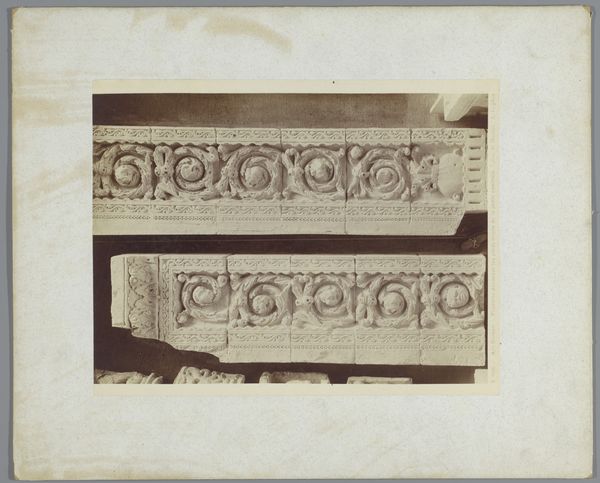
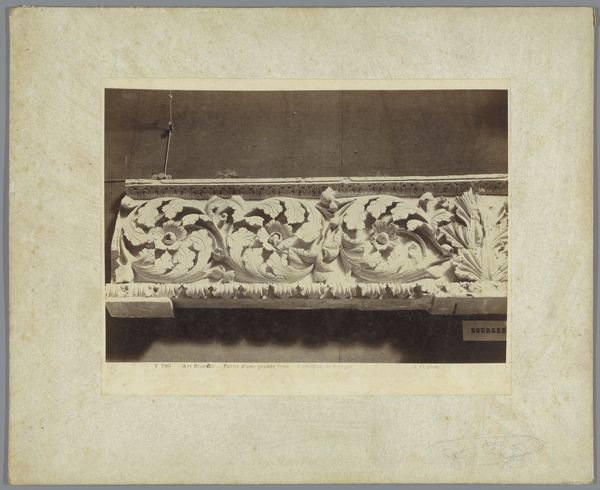
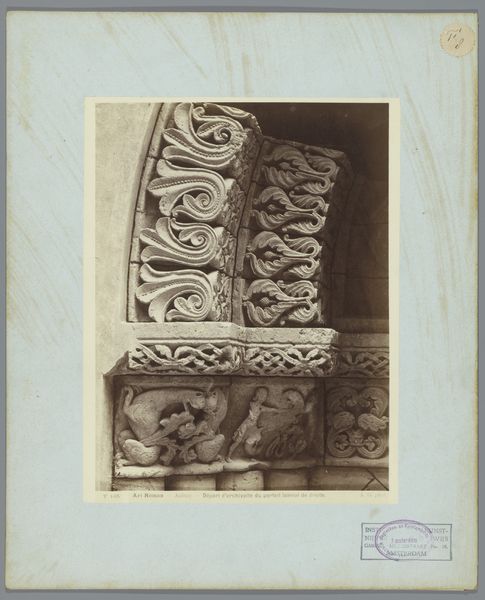
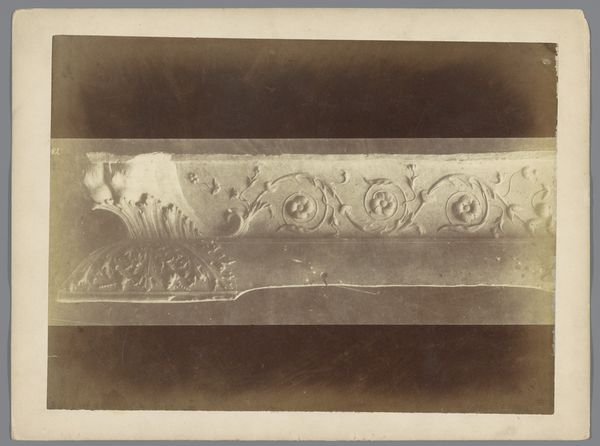
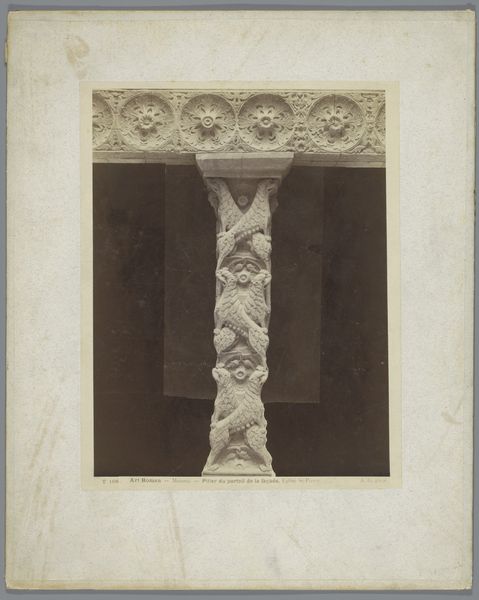
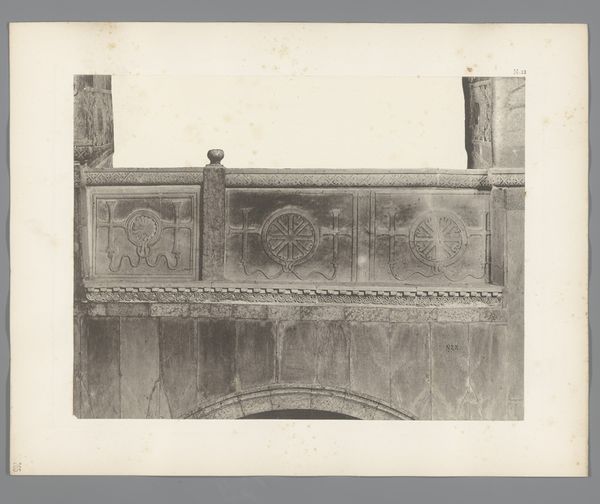
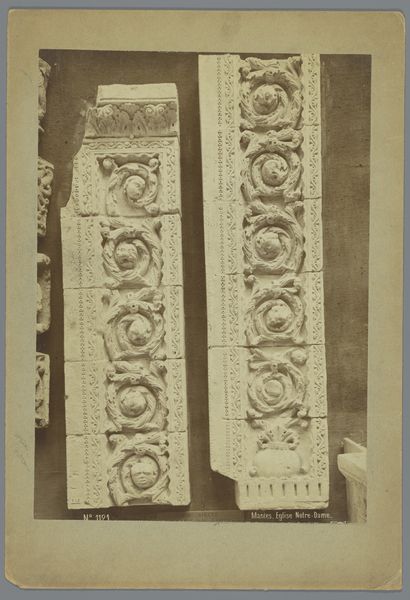
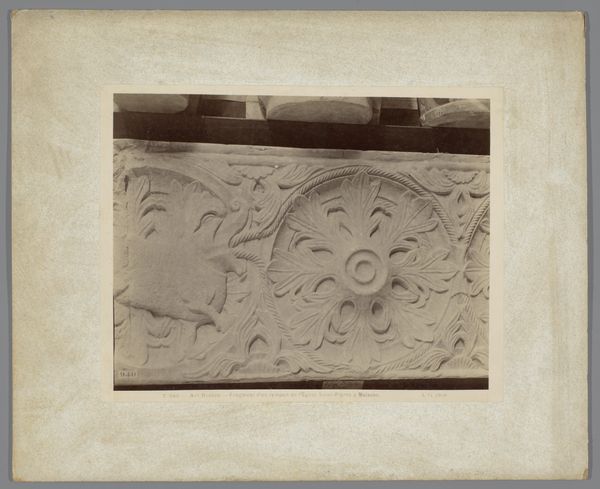
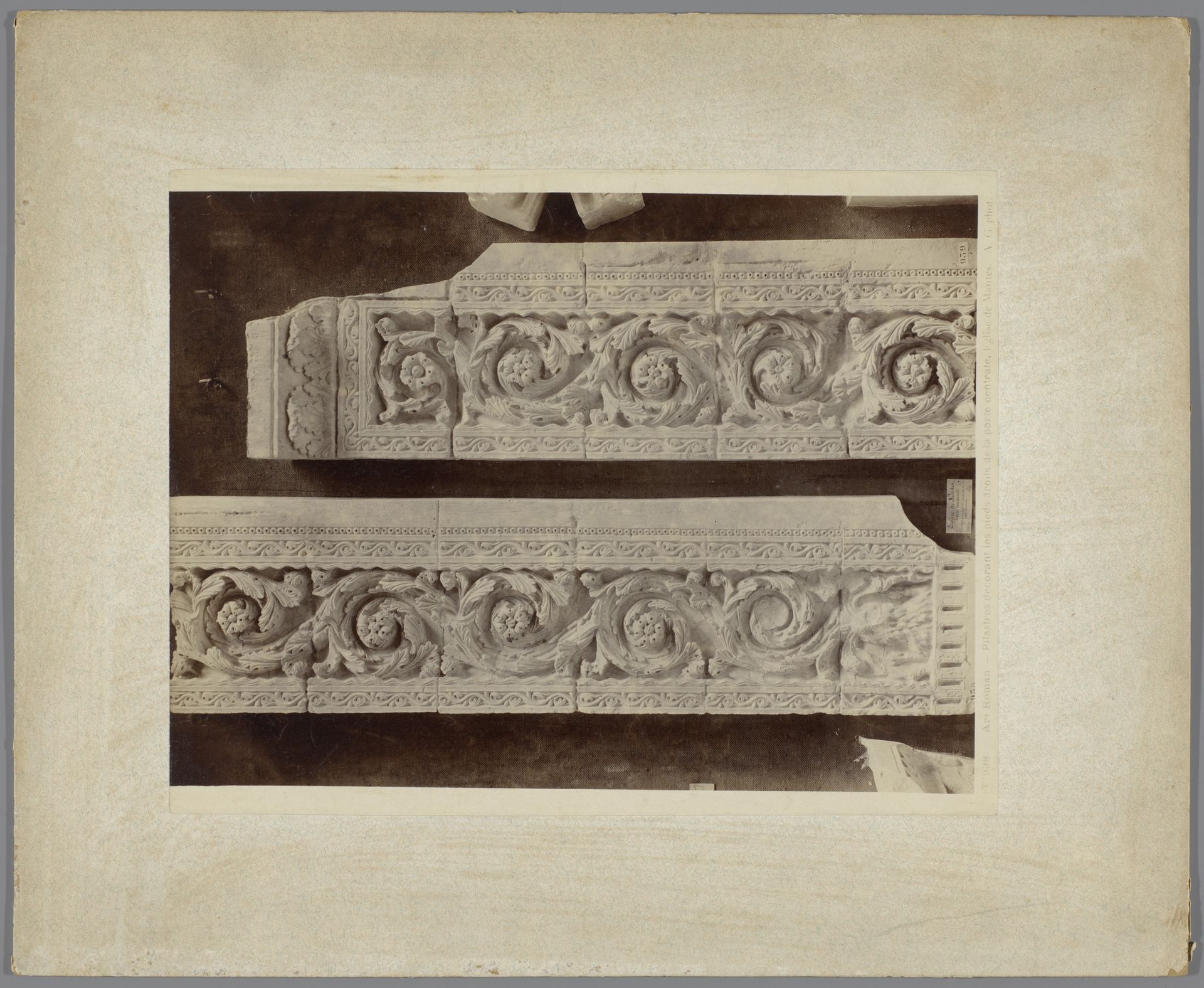
Curator: This gelatin-silver print captures decorative pilasters from the church of Mantes, sometime between 1850 and 1900, currently held in the Rijksmuseum collection. Adolphe Giraudon, the photographer, has given us quite a detailed study. Editor: My first impression is one of delicate solidity. Isn’t that strange? I mean, stone carving photographed to emphasize pattern... it feels both permanent and fleeting. Like a memory of grandeur. Curator: A fascinating point. The photograph highlights the enduring motifs: rosettes, scrolls. These are Romanesque details, signifiers of a specific religious order and the period's commitment to elaborate architectural symbolism. Editor: Symbolism, yes. But also sheer joy in craft, wouldn't you say? Those floral patterns, endlessly repeated. They speak of abundance and nature, all channeled through this rigorous, almost mathematical rhythm. Curator: Precisely! The church, the ultimate symbol of community and the divine, would incorporate naturalistic elements to elevate its spiritual power and invite worship. Consider the rosette itself, a potent symbol throughout cultures representing the cosmos and cyclical time. Editor: It also strikes me that they’re presented almost like relics or studies. Out of context, these architectural details become artifacts. Curator: Indeed. This echoes photography's early use in cataloging historical artifacts, a record for the archive and later reflection. It freezes an ephemeral architectural detail. The image becomes a vessel itself. Editor: So it does. The church becomes a faint presence, remembered only by the shadows cast by its details. What once stood grand becomes this study of ornament. Almost poetic, isn't it? Curator: Absolutely, this image beautifully marries documentation with evocative remembrance, allowing us to contemplate architectural and spiritual history in a single frame. Editor: Leaving me with that poignant feeling, that echo, of things both past and remarkably present.
Decoratieve pilasters van de kerk van Mantes 1850 - 1900

Adolphe Giraudon
1849 - 1929Location
RijksmuseumArtwork details
- Medium
- carving, print, photography, gelatin-silver-print
- Dimensions
- height 370 mm, width 303 mm
- Location
- Rijksmuseum
- Copyright
- Rijks Museum: Open Domain
Tags
portrait
carving
photography
romanesque
gelatin-silver-print
Comments
No comments
About this artwork
Curator: This gelatin-silver print captures decorative pilasters from the church of Mantes, sometime between 1850 and 1900, currently held in the Rijksmuseum collection. Adolphe Giraudon, the photographer, has given us quite a detailed study. Editor: My first impression is one of delicate solidity. Isn’t that strange? I mean, stone carving photographed to emphasize pattern... it feels both permanent and fleeting. Like a memory of grandeur. Curator: A fascinating point. The photograph highlights the enduring motifs: rosettes, scrolls. These are Romanesque details, signifiers of a specific religious order and the period's commitment to elaborate architectural symbolism. Editor: Symbolism, yes. But also sheer joy in craft, wouldn't you say? Those floral patterns, endlessly repeated. They speak of abundance and nature, all channeled through this rigorous, almost mathematical rhythm. Curator: Precisely! The church, the ultimate symbol of community and the divine, would incorporate naturalistic elements to elevate its spiritual power and invite worship. Consider the rosette itself, a potent symbol throughout cultures representing the cosmos and cyclical time. Editor: It also strikes me that they’re presented almost like relics or studies. Out of context, these architectural details become artifacts. Curator: Indeed. This echoes photography's early use in cataloging historical artifacts, a record for the archive and later reflection. It freezes an ephemeral architectural detail. The image becomes a vessel itself. Editor: So it does. The church becomes a faint presence, remembered only by the shadows cast by its details. What once stood grand becomes this study of ornament. Almost poetic, isn't it? Curator: Absolutely, this image beautifully marries documentation with evocative remembrance, allowing us to contemplate architectural and spiritual history in a single frame. Editor: Leaving me with that poignant feeling, that echo, of things both past and remarkably present.
Comments
No comments