About this artwork
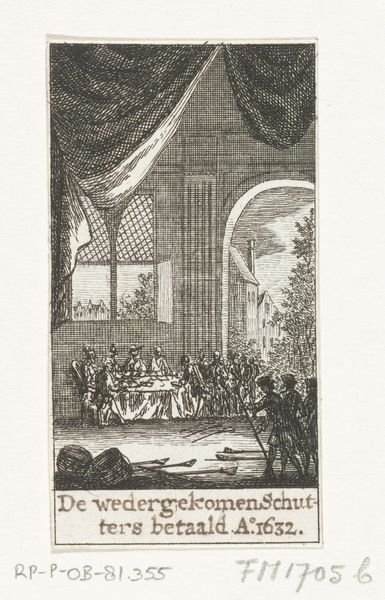
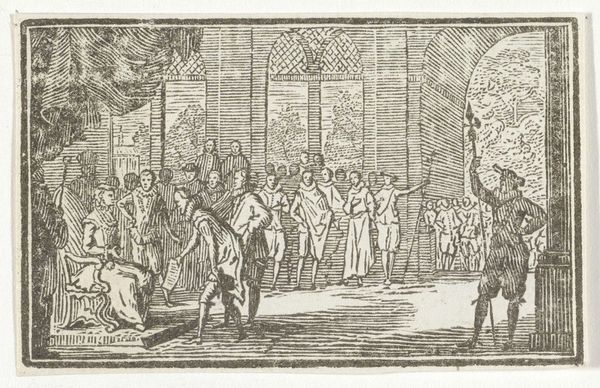
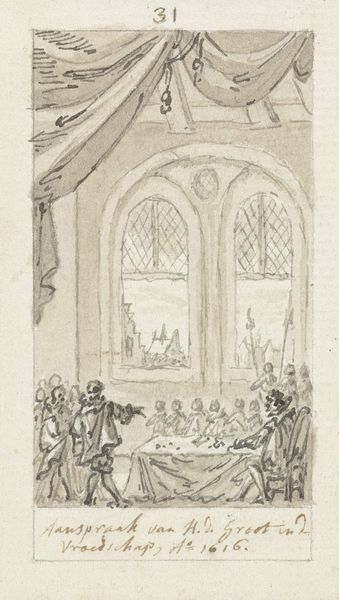
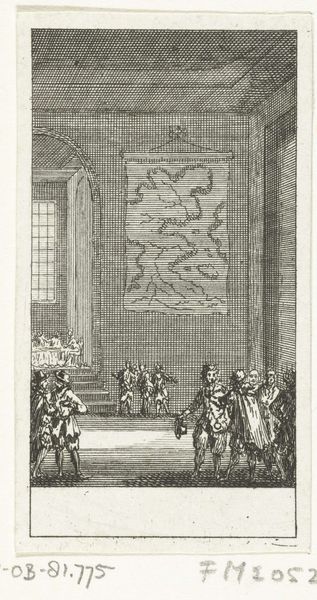
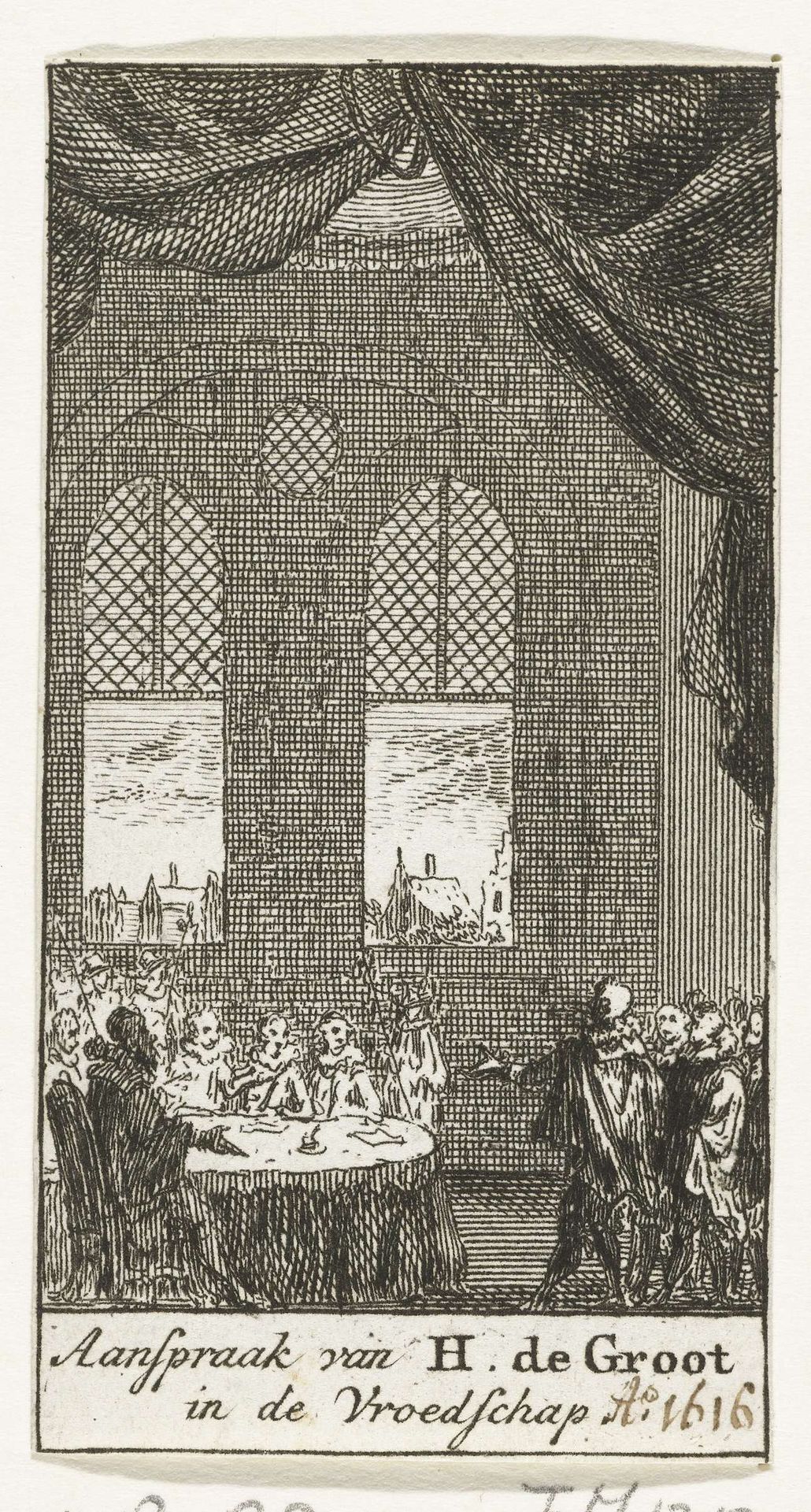
Curator: Here we have a piece titled "Hugo de Groot pleit in de Amsterdamse vroedschap voor tolerantie, 1616", an engraving by Simon Fokke, made sometime between 1722 and 1784. Editor: Gosh, it's like looking into a tiny, intensely patterned world. The textures practically vibrate against each other! What do you make of it formally? Curator: The composition employs a rather rigid structure, typical of Baroque line engravings. Notice the pronounced verticality, reinforced by the window placement and the severe drapery. Fokke has meticulously constructed depth through contrasting hatched lines. Editor: It feels less like observing a scene and more like witnessing a very serious game of chess, all sharp angles and calculated moves. There is a stark emotional restraint despite the weighty subject matter. It has a weird appeal. Curator: Indeed. The print commemorates Hugo de Groot’s appeal for tolerance before the Amsterdam council. Fokke utilizes a conventional historical genre format here. De Groot, identifiable stage right, projects an assured rhetorical posture within a carefully considered setting. Editor: That setting, with its window overlooking city life, seems deliberately symbolic – the plea is connected directly to Amsterdam's physical and social well-being, don't you think? Also, is it just me or do the councilmen around that table look like a row of carefully posed, powdered dolls? Curator: Perhaps Fokke is subtly underscoring their detachment from the immediate needs and challenges outside of those walls? It might imply a subtle critique aimed at the political inertia during that era. The light seems mostly to emanate from these individuals and highlight this symbolic moment of great speech within that hall. Editor: A potent suggestion, and those repetitive crisscrossings lend this print an unsettling kind of vibrancy. You know, I began perceiving the entire work less as history and more as a commentary on historical process itself. So fascinating how static and alive it is at once! Curator: Absolutely. This meticulous composition forces us to reflect on enduring issues like governance and tolerance as ongoing concerns with reverberations both historical and continuing in modern life.
Hugo de Groot pleit in de Amsterdamse vroedschap voor tolerantie, 1616
1722 - 1784

Simon Fokke
1712 - 1784Location
RijksmuseumArtwork details
- Medium
- print, engraving
- Dimensions
- height 80 mm, width 42 mm
- Location
- Rijksmuseum
- Copyright
- Rijks Museum: Open Domain
Tags
Comments
Share your thoughts
About this artwork
Curator: Here we have a piece titled "Hugo de Groot pleit in de Amsterdamse vroedschap voor tolerantie, 1616", an engraving by Simon Fokke, made sometime between 1722 and 1784. Editor: Gosh, it's like looking into a tiny, intensely patterned world. The textures practically vibrate against each other! What do you make of it formally? Curator: The composition employs a rather rigid structure, typical of Baroque line engravings. Notice the pronounced verticality, reinforced by the window placement and the severe drapery. Fokke has meticulously constructed depth through contrasting hatched lines. Editor: It feels less like observing a scene and more like witnessing a very serious game of chess, all sharp angles and calculated moves. There is a stark emotional restraint despite the weighty subject matter. It has a weird appeal. Curator: Indeed. The print commemorates Hugo de Groot’s appeal for tolerance before the Amsterdam council. Fokke utilizes a conventional historical genre format here. De Groot, identifiable stage right, projects an assured rhetorical posture within a carefully considered setting. Editor: That setting, with its window overlooking city life, seems deliberately symbolic – the plea is connected directly to Amsterdam's physical and social well-being, don't you think? Also, is it just me or do the councilmen around that table look like a row of carefully posed, powdered dolls? Curator: Perhaps Fokke is subtly underscoring their detachment from the immediate needs and challenges outside of those walls? It might imply a subtle critique aimed at the political inertia during that era. The light seems mostly to emanate from these individuals and highlight this symbolic moment of great speech within that hall. Editor: A potent suggestion, and those repetitive crisscrossings lend this print an unsettling kind of vibrancy. You know, I began perceiving the entire work less as history and more as a commentary on historical process itself. So fascinating how static and alive it is at once! Curator: Absolutely. This meticulous composition forces us to reflect on enduring issues like governance and tolerance as ongoing concerns with reverberations both historical and continuing in modern life.
Comments
Share your thoughts