About this artwork
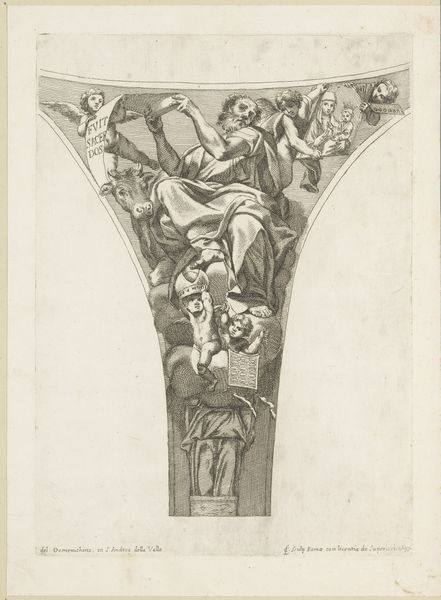
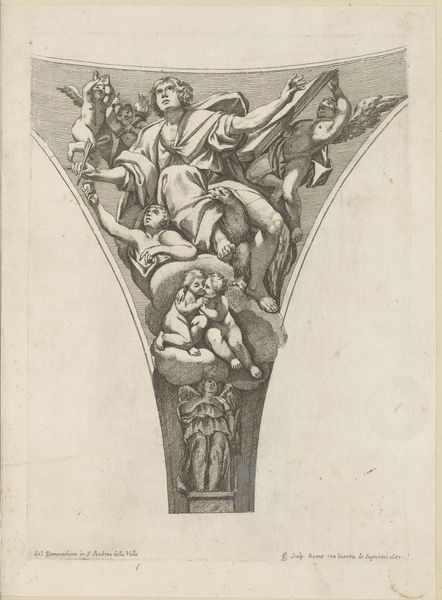
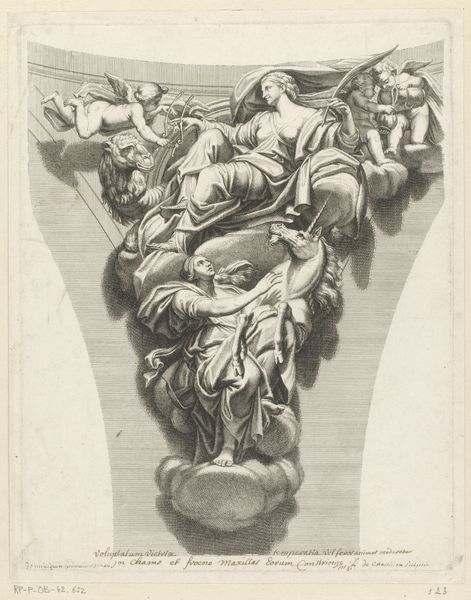
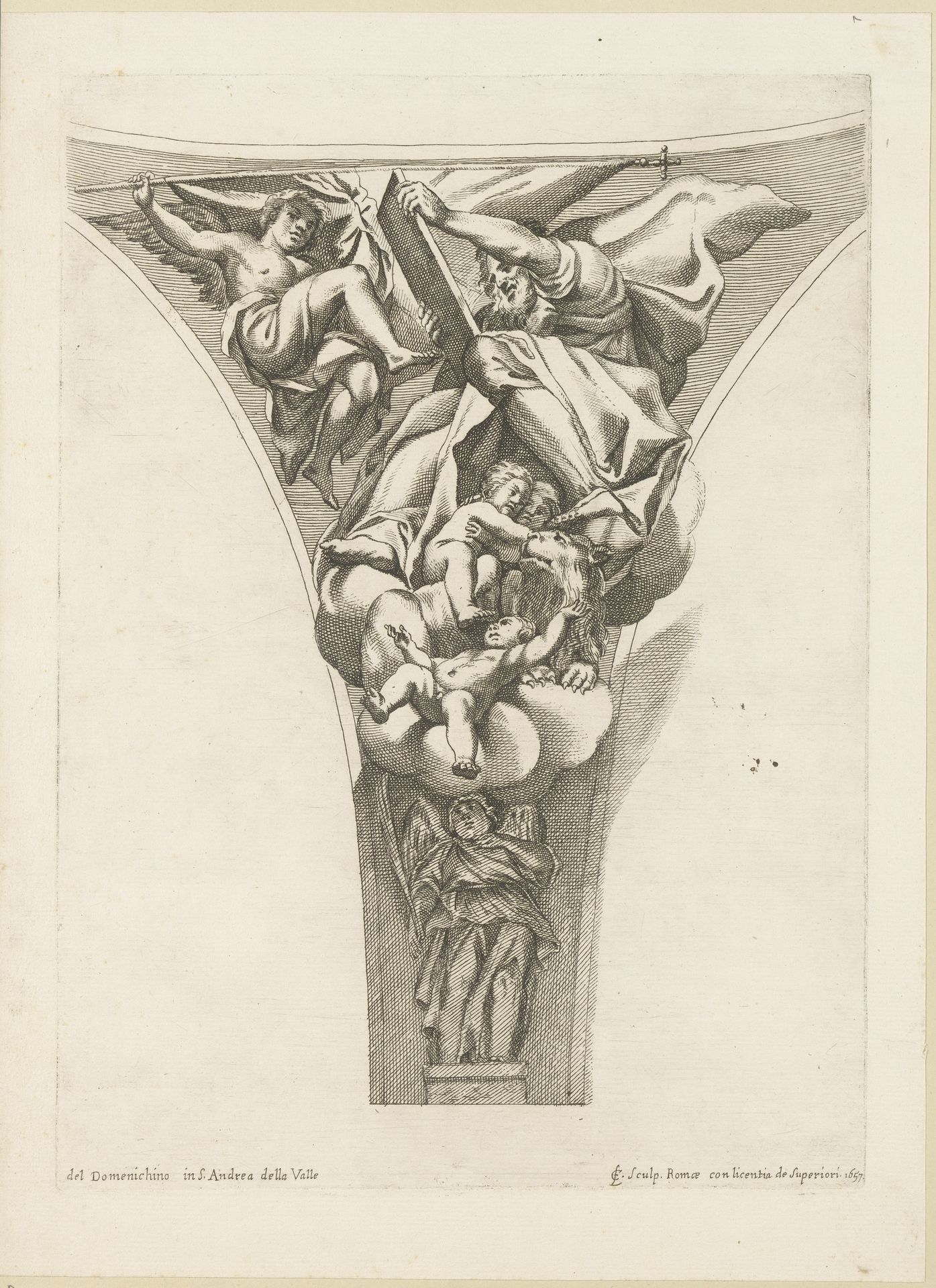
Stephan Colbenschlag created this print of Marcus the Evangelist in the 17th century. Notice the dynamic composition of the work; it has a very clear structure, almost like a pyramid, and the image is framed within a strong arch shape. The artist uses a formal structure to convey meaning. The figures are arranged in a hierarchy, the angel at the bottom, then the children, Marcus, and finally the winged figure at the top. This visual layering invites us to consider how the artwork's structure mirrors theological concepts of divine order. The medium of printmaking itself adds another layer of meaning. The precision of the lines, achieved through engraving, creates a sense of clarity and order. This echoes the theological notion of divine law and structure. The artwork destabilizes any simple reading, and it invites deeper contemplation.

Artwork details
- Medium
- print, engraving
- Dimensions
- height 323 mm, width 235 mm
- Copyright
- Rijks Museum: Open Domain
Tags
Comments
Share your thoughts
About this artwork
Stephan Colbenschlag created this print of Marcus the Evangelist in the 17th century. Notice the dynamic composition of the work; it has a very clear structure, almost like a pyramid, and the image is framed within a strong arch shape. The artist uses a formal structure to convey meaning. The figures are arranged in a hierarchy, the angel at the bottom, then the children, Marcus, and finally the winged figure at the top. This visual layering invites us to consider how the artwork's structure mirrors theological concepts of divine order. The medium of printmaking itself adds another layer of meaning. The precision of the lines, achieved through engraving, creates a sense of clarity and order. This echoes the theological notion of divine law and structure. The artwork destabilizes any simple reading, and it invites deeper contemplation.
Comments
Share your thoughts