1890
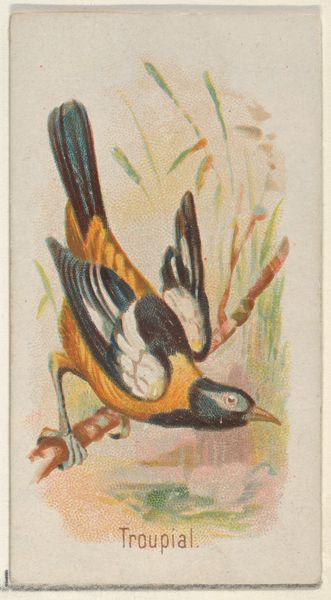
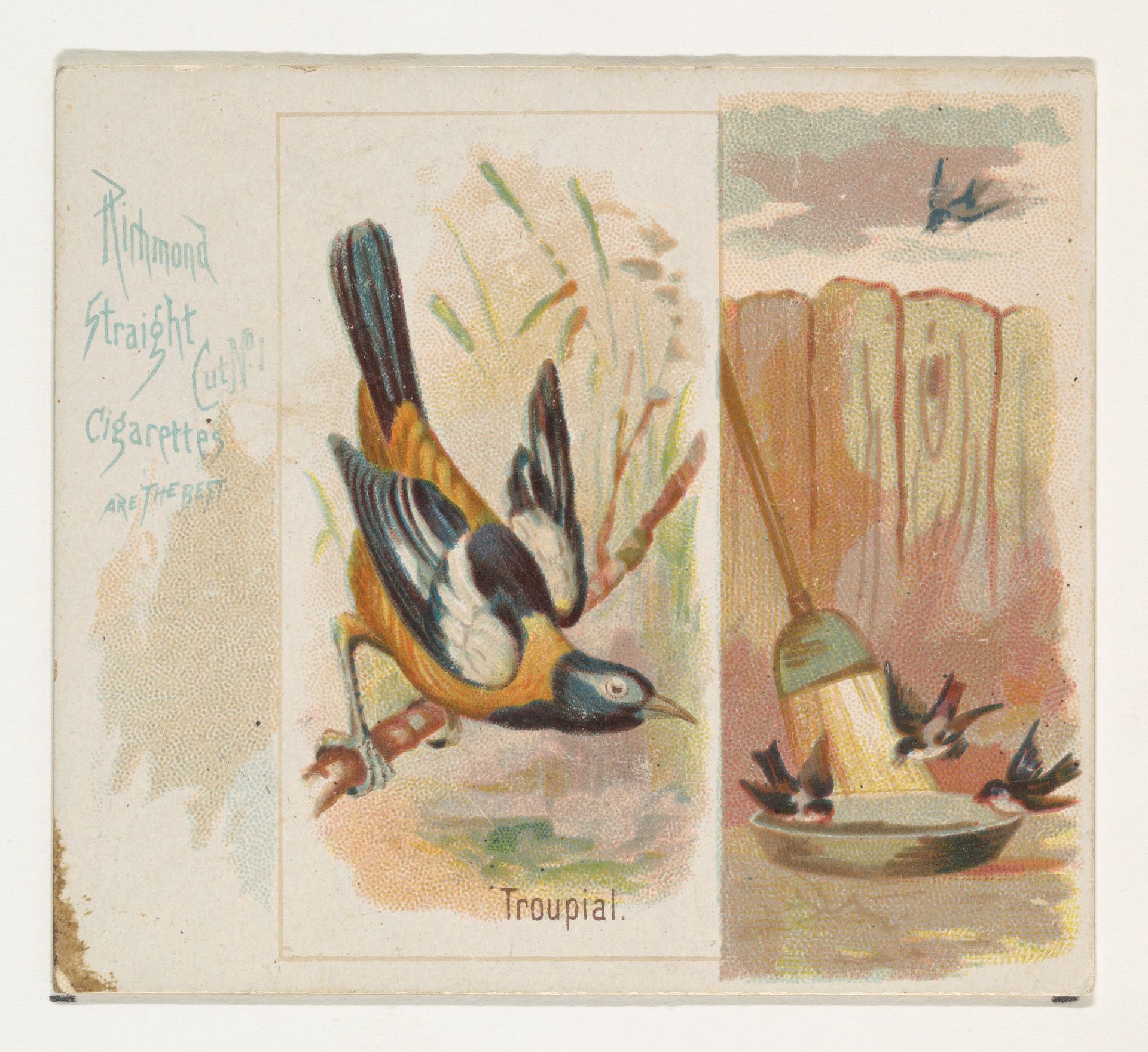
Troupial, from the Song Birds of the World series (N42) for Allen & Ginter Cigarettes


Listen to curator's interpretation
Curatorial notes
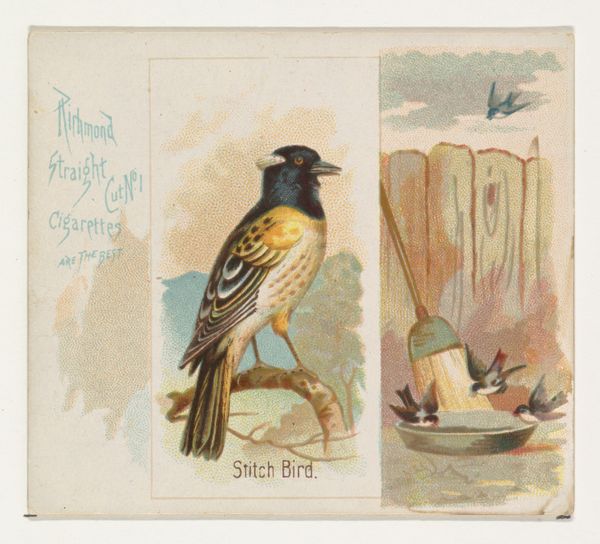
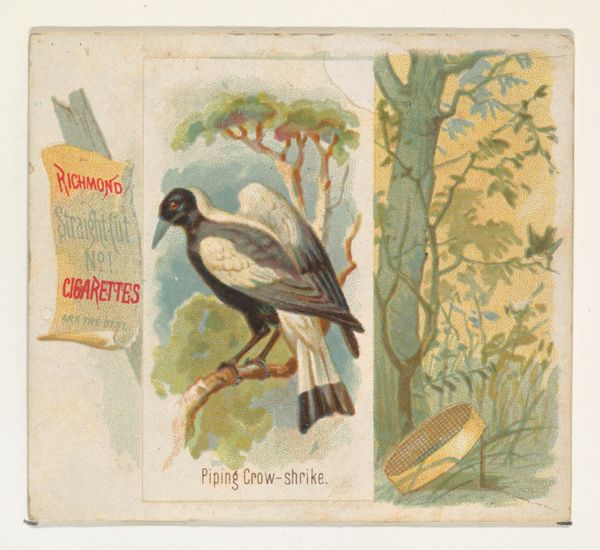
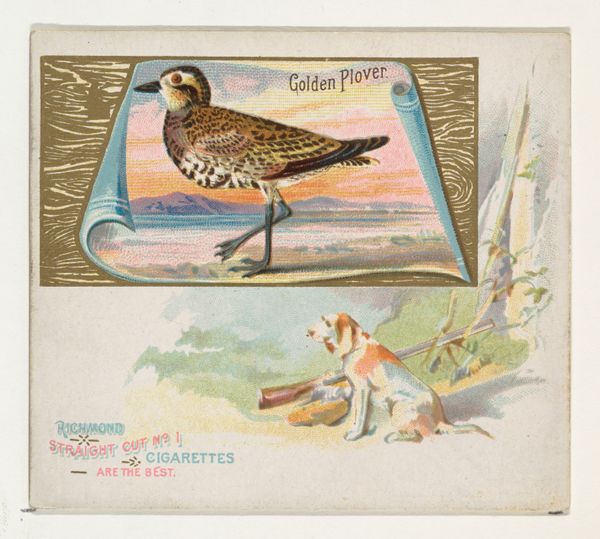
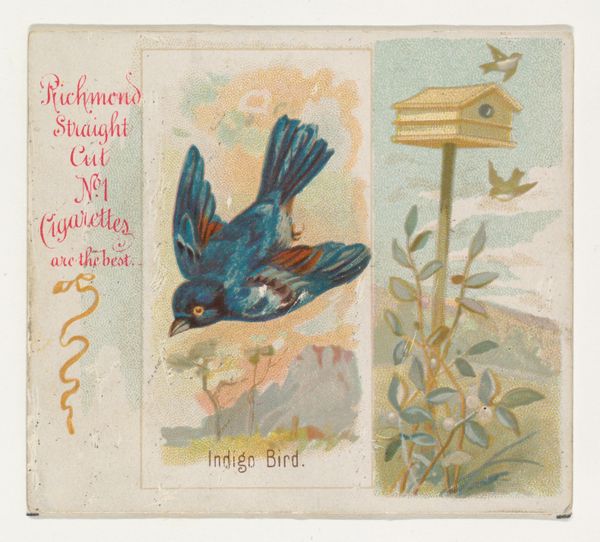
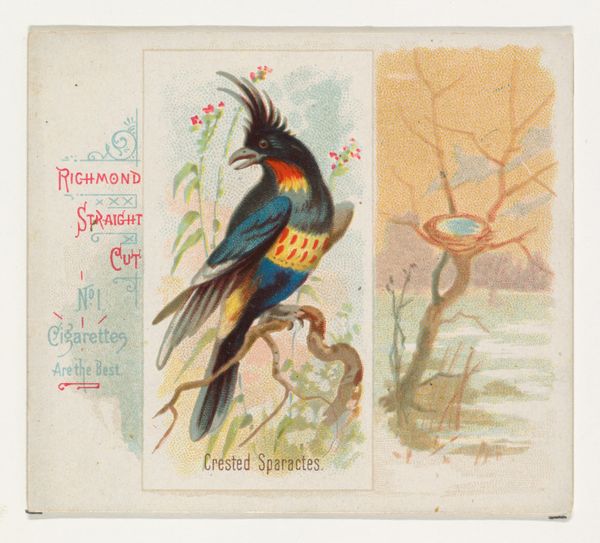
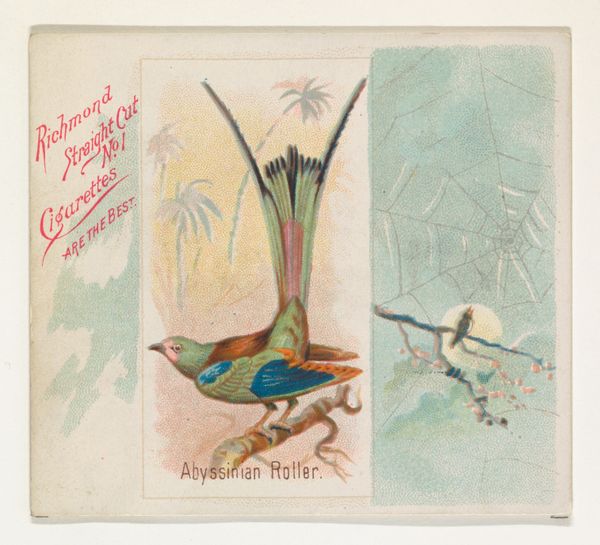
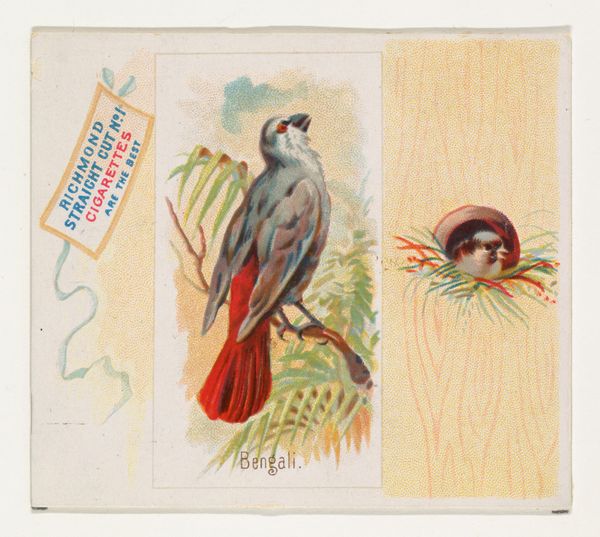
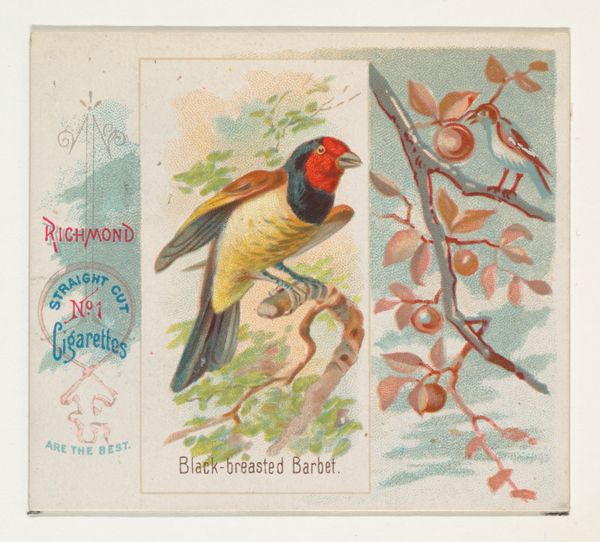
Editor: Here we have "Troupial, from the Song Birds of the World series" created in 1890, using colored pencils as a print, and brought to us by Allen & Ginter. The lithograph reminds me of old trading cards. What do you notice when you view it? Curator: Well, on the surface, it's an innocuous image, but placing it in its historical context is vital. This was produced during the height of the colonial era, as part of a marketing campaign by a tobacco company. Do you think it's innocent, a mere depiction of nature? Editor: Not necessarily, especially given what you mentioned about colonialism. Is there some connection there? Curator: Absolutely. Consider the “Song Birds of the World” title itself. Who gets to define "the world?" These cards weren’t just about selling cigarettes; they were about asserting a certain worldview. Depicting birds in this idealized, almost clinical manner subtly reinforces a sense of dominance over nature and, by extension, the "exotic" lands from which these birds originate. It hints at the imperial gaze. Editor: I didn’t think about that aspect! So, it’s not just pretty birds; it's about power? Curator: Precisely! Also, notice the style which points to Japonisme, then gaining prominence in the West. What might be problematic about Western artists appropriating Japanese aesthetics? Editor: It seems as though there is a real risk of diluting its artistic context and robbing the culture from where it originates of its own traditions. Curator: Indeed. It is important to critically assess images like this by understanding the complex ways in which commerce, colonialism, and cultural exchange intertwine. Editor: I am seeing a different perspective when understanding the deeper societal messages art conveys. Curator: Absolutely! Let’s strive to create more space for thoughtful dialogue between art history, and critical theory so we can begin unpacking hidden cultural agendas.