

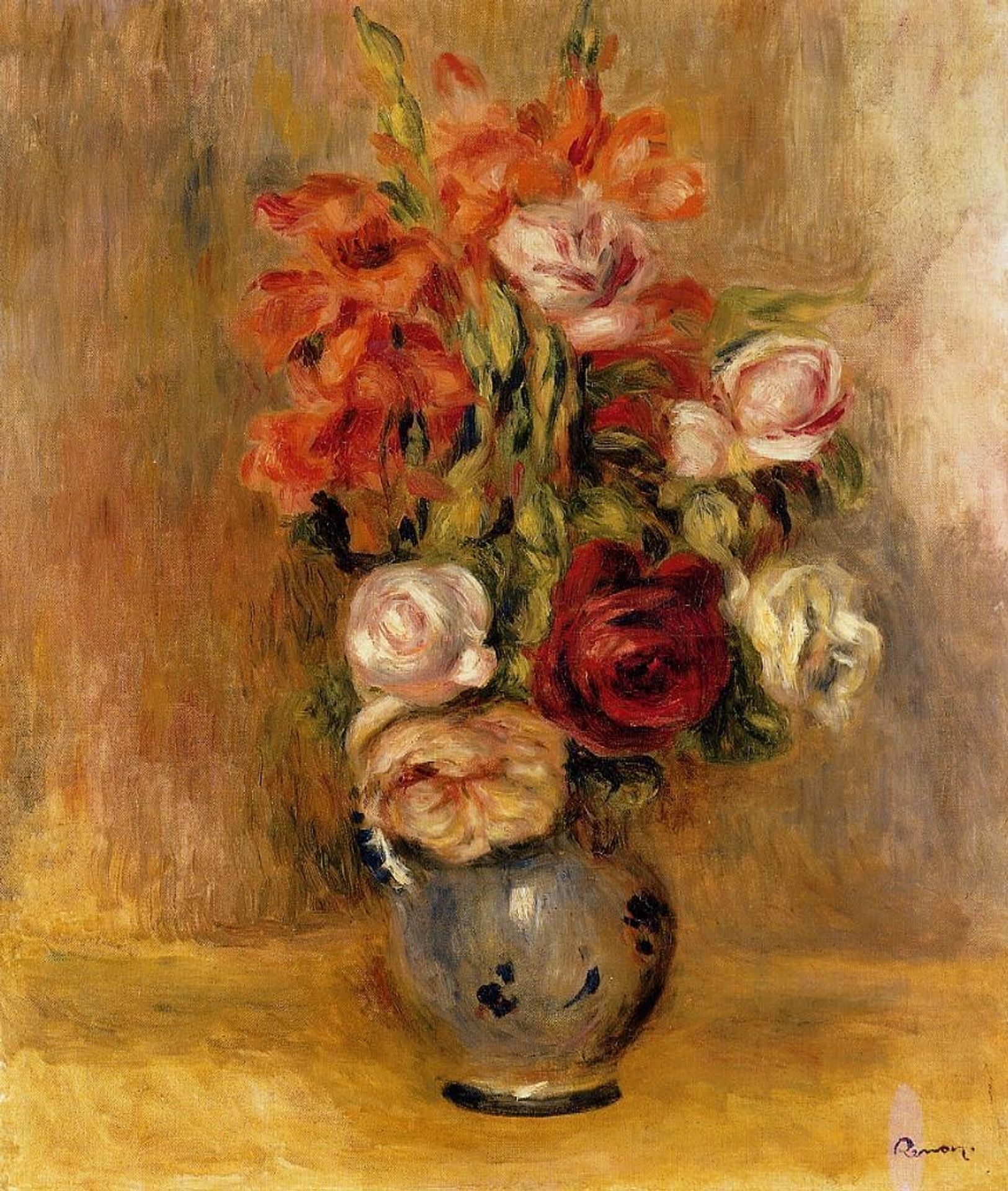
1909
Vase of Gladiolas and Roses

Pierre-Auguste Renoir
1841 - 1919Location
Private CollectionListen to curator's interpretation
Curatorial notes
Editor: This is Renoir's "Vase of Gladiolas and Roses," painted in 1909 using oil paints. The overall effect is really soft and romantic. What do you see in this piece? Curator: On the surface, it's a beautiful still life, yes. But Renoir was painting during a time of immense social change. Think about it: industrialization, growing socialist movements, shifting roles for women. How does this painting, with its focus on traditional beauty and domesticity, either reinforce or perhaps subtly challenge those power structures? Editor: I hadn't thought about it that way. It seems so apolitical. Curator: Precisely. And that's the question, isn't it? Is art ever truly apolitical? Consider the viewers of Renoir’s time; how might this subject matter have been received, especially among women either confined to or freed from domestic expectations? Look at how the blooms are arranged: are they constrained or overflowing with the promise of abundance? Editor: I see your point. The overflowing vase and vivid colors could represent a sort of contained exuberance, maybe hinting at the changing societal landscape? Curator: Exactly! Even the seemingly simple choice of subject matter – flowers, typically associated with femininity – could be interpreted within the evolving gender dynamics of the early 20th century. What if these opulent arrangements reflect a coded expression of repressed desires or untapped potential? Or celebrate emerging feminine strength? Editor: It's amazing to think about those undercurrents in what I initially saw as just a pretty painting. I never would have thought of the socio-historical context without you pointing it out. Curator: Art always speaks to—and from—its time. By engaging with the historical and cultural forces that shaped Renoir’s world, we can deepen our understanding of his art and its continued relevance.